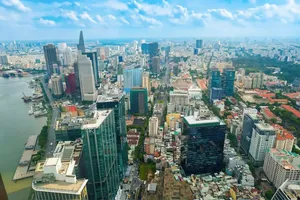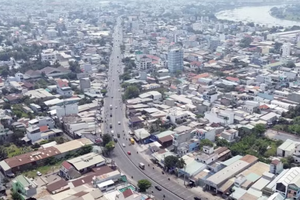
The World Bank (WB) has officially reclassified Vietnam as an upper-middle-income economy, according to its annual country income classification released on July 1, the WB's representative office in Vietnam announced on July 2.
Vietnam's gross national income (GNI) per capita increased from US$4,490 in 2024 to US$4,970 in 2025. The increase moved the country from the lower-middle-income category to the upper-middle-income group.
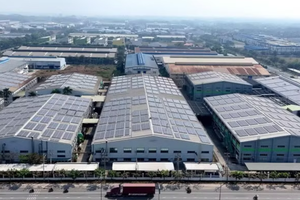
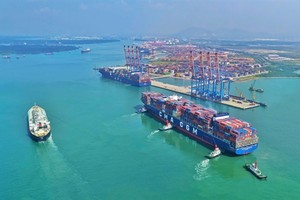
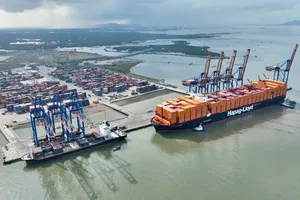
According to the World Bank, Vietnam's upgrade was driven by strong economic growth and exports. During 2024 and 2025, exports expanded by more than 15 percent, while gross domestic product (GDP) growth reached 7 percent and 8 percent, respectively.
Vietnam aims to become a developing country with a modern industrial base and upper-middle-income status by 2030, before becoming a high-income developed country by 2045. To achieve these goals, the Government is targeting annual economic growth of 10 percent or higher in the coming years.
This year, the World Bank assessed 218 economies, with six countries moving to higher income classifications. Along with Vietnam, the Philippines, Sri Lanka, Jordan and Micronesia were upgraded from the lower-middle-income group to the upper-middle-income category. Togo was reclassified from the low-income group to the lower-middle-income category.
The World Bank classifies economies based on the previous year's gross national income per capita, adjusted for exchange rate fluctuations. Countries are grouped into four income categories including low, lower-middle, upper-middle and high income.
For this year's classification, the GNI per capita threshold for lower-middle-income economies ranges from US$1,176 to US$4,635, while the upper-middle-income category ranges from US$4,636 to US$14,375. These thresholds increased slightly from the previous year due to inflation.
The income classification determines countries' eligibility for concessional financing and development assistance and helps economists monitor global economic trends. However, the World Bank said the reclassification of the six countries does not affect its current lending policies.