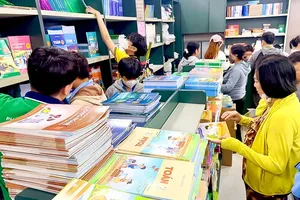
In the 2025–2026 academic year, Vietnam has more than 23 million general education students, from primary to upper secondary levels. With less than six months remaining before the start of the 2026–2027 school year, preparations for the nationwide implementation of a unified textbook set require urgency, determination, and coordinated efforts from all relevant stakeholders. Sai Gon Giai Phong (SGGP) gathered opinions from leaders of the Ministry of Education and Training, local education departments, and textbook publishers.
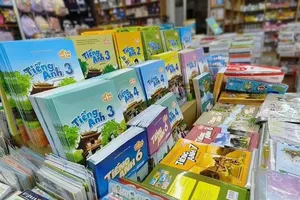
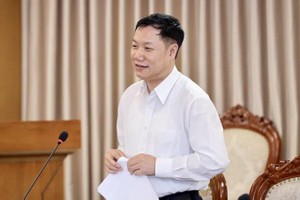
Associate Professor Nguyen Van Tung, a member of the Members’ Council of Vietnam Education Publishing House, affirmed that the supply of textbooks will be fully ensured before the new school year begins. Since late December 2025, the entire publishing system has shifted into an accelerated working mode, focusing on revising textbook content, advancing printing tenders, developing teacher training plans, and organizing nationwide distribution. With a guiding principle of providing textbooks not for profit, cost control and affordability have been prioritized to meet social welfare objectives.
Earlier, in January 2024, Vietnam Education Publishing House reduced retail prices by 9.6 percent for the Ket noi tri thuc voi cuoc song (Connecting knowledge with life) series and by 11.2 percent for the Chan troi sang tao ( Horizon of creativity) series. In November 2024, following the Ministry of Education and Training’s introduction of price ceilings for textbooks, the publisher further adjusted prices to ensure that all titles comply with the regulated framework and state management requirements.
At present, the Ket noi tri thuc voi cuoc song series is priced about 3 percent lower than Chan troi sang tao and approximately 9 percent lower on average than other textbook sets. This price difference does not stem from reduced quality in paper, printing, or production standards, but rather from economies of scale, as the series has been widely adopted by most localities and schools in recent years, resulting in high print volumes and lower unit costs.
The selection of “Ket noi tri thuc voi cuoc song” as the unified national textbook set for the 2026–2027 academic year is both a great honor and a significant responsibility for Vietnam Education Publishing House. The publisher has committed to optimizing production processes and further reducing costs to continue lowering textbook prices from the upcoming school year.
In parallel with printed textbooks, the publisher is expanding digital learning materials by applying advances in science, technology, and artificial intelligence to better serve teaching and learning needs. Preparations are also underway for nationwide teacher training on the new textbook set, alongside a commitment to deliver sufficient, synchronized, and timely textbook supplies to teachers and students ahead of the new academic year.
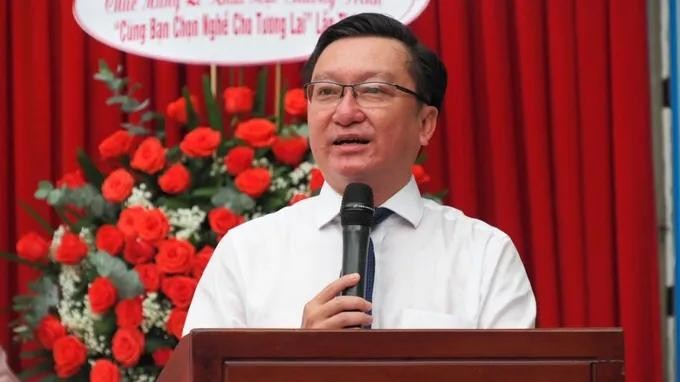
Nguyen Bao Quoc, Deputy Director of the Ho Chi Minh City Department of Education and Training, emphasized that schools are proactively reviewing textbook demand. To prepare for the rollout of a unified textbook set, principals are directing subject departments to carefully examine the structure and content of the selected materials through in‑school professional meetings and inter‑school cluster activities.
This process is intended to ensure that textbook use aligns with actual teaching practices. Teacher training, he noted, should be integrated into each school’s regular professional development plan and complemented by teachers’ capacity for self‑study and self‑improvement, thereby ensuring practicality, effectiveness, and the avoidance of waste.
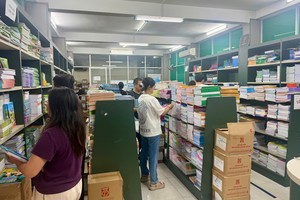
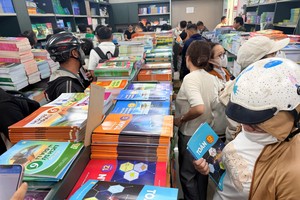
For effective implementation, schools are required to review and redesign their education plans, curriculum distribution, and teaching schedules to ensure consistency in instruction as well as student assessment and evaluation. Since the beginning of the second semester of the 2025–2026 academic year, the Ho Chi Minh City Department of Education and Training has instructed schools to urgently assess textbook demand for the 2026–2027 academic year in detail by grade level and subject, while also reviewing training needs for teachers and administrators. Schools must proactively ensure access to textbooks for all students, particularly those in disadvantaged areas and policy beneficiary families, so that no student is without textbooks at the start of the new school year.

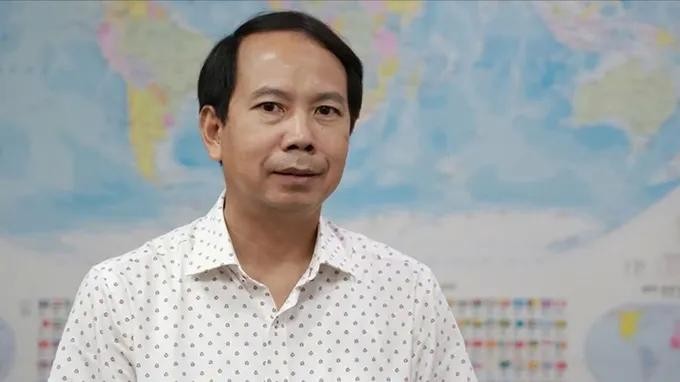
Pham Tan Ngoc Thuy, Deputy Director of the Da Nang Department of Education and Training, has proposed granting greater flexibility at the local level. The adoption of a unified national textbook set represents a significant step in Vietnam’s ongoing general education reform, aimed at ensuring fairness, consistency, and improved quality. Past curriculum and textbook reforms have demonstrated that each stage requires tailored approaches aligned with the nation’s development context and evolving educational objectives.
This reform does not represent a return to outdated thinking or methods. Instead, it seeks to consolidate the strengths and best practices of previously implemented textbook sets while addressing limitations identified in teaching practice. A unified textbook system will facilitate more consistent assessment, teacher training, and education management, thereby enhancing the overall effectiveness of the national education system.
At the same time, the initiative places high demands on content quality and pedagogical approach. The textbook set must be scientifically sound, modern, and comprehensive, while remaining flexible enough to suit diverse teaching and learning conditions across regions, particularly in remote or disadvantaged areas. Implementation also requires thorough preparation in terms of personnel and resources. The education sector must organize systematic and continuous teacher training to ensure educators fully grasp the content, methodology, and underlying philosophy of the new textbooks, while standardizing teaching equipment, supplementary materials, and assessment methods to ensure consistency.
To maximize effectiveness, local authorities should be allowed a certain degree of flexibility to supplement and expand teaching content related to regional history, geography, and culture, in alignment with the overarching curriculum and principles of the unified textbooks. The rollout should follow a clear roadmap, avoiding abrupt changes and allowing sufficient time for teachers, schools, parents, and students to prepare and adapt.