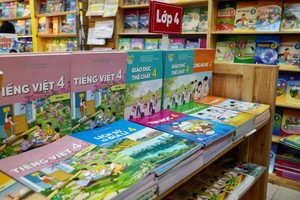
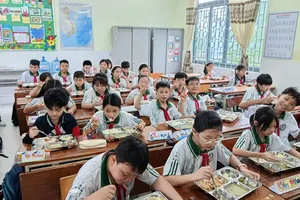
The provision of free textbooks starting from the academic year 2029-2030 is regarded as a humane initiative that promotes equity in educational access for students; however, careful consideration is still required regarding the implementation of a model that maximizes effectiveness and minimizes waste.
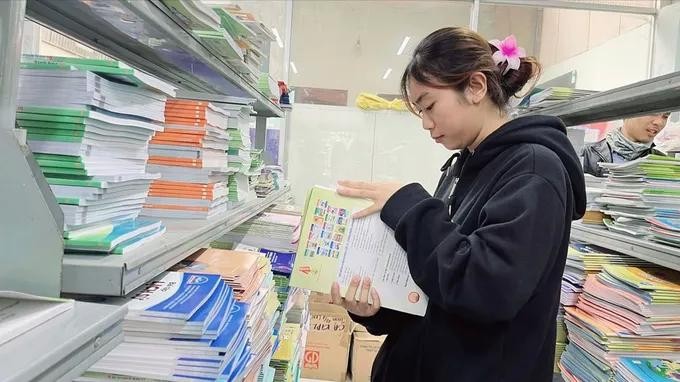
Free textbook lending system will be adopted via shared libraries by 2029
The Ministry of Education and Training has recently issued a draft decree outlining the implementation of free textbooks for students in general education and learners at educational institutions following the general education curriculum and the continuing education program at the high school level.
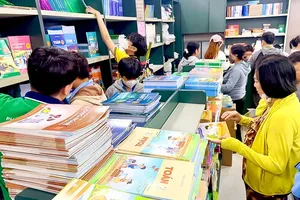
Accordingly, the distribution of free textbooks will be carried out through a shared library model starting from the academic year 2029-2030. The Government will invest in the procurement of textbooks, which include printed books and Braille books, to equip the libraries of educational institutions. Students and teachers will be able to borrow textbooks for use during the academic year or semester, after which the books will be returned for continued management and reuse.
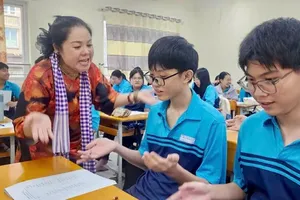
This initiative has received strong support from teachers and parents. Teacher Dang Thi Kim Nam from Le Thanh Duy Primary School in Ba Ria Ward, Ho Chi Minh City, stated that the cost of purchasing textbooks each year ranges from VND200,000 (US$7.59) to VND500,000 per set. When the Government provides textbooks, the financial burden of purchasing them at the beginning of the year is alleviated for parents, especially those from low-income families.
Similarly, Nguyen Thi Thuy, principal of the Huu Nghi School for Blind Children in Phu My Ward, Ho Chi Minh City, expressed support for the policy, particularly its inclusion of Braille textbooks. “Previously, all students at the school were provided with textbooks. However, since the 2018 general education curriculum was introduced, the cost of a single Braille textbook set has become prohibitively high, while availability remains limited, making it unaffordable for both the school and most parents,” she said.
Subsidy options for textbooks considered
Nguyen Dinh Quoc Hung, principal of Nguyen Trung Truc Primary and Secondary School in Xuan Son Commune, said that effective implementation of the policy would require practical solutions to avoid waste.
According to Hung, for many years, ethnic minority and disadvantaged students have received textbook support from the State and donors. Many schools have also maintained annual used textbook donation drives, helping ensure that all students have access to learning materials. However, he noted that at his school, only a portion of students actually need used textbooks. “In the short term, textbooks should be provided based on actual demand. Mass distribution could lead to unnecessary waste,” he said.
The draft resolution also assigns schools the responsibility for distributing and managing textbooks, requiring compensation in cases where books are lost or damaged. Hung pointed out that this would place additional pressure on schools, which would need to allocate extra space and personnel for management. Requiring parents to compensate for lost or damaged books could also prove difficult in practice.
Nguyen Thi Thuy added that students with disabilities, particularly those who are visually impaired, often face limitations in awareness and personal item management. Some may unintentionally damage textbooks during use, creating challenges for schools in managing, preserving, and recovering materials, as well as enforcing compensation requirements. She suggested that implementation should be flexible, with management mechanisms tailored to specialized schools.
Being a parent of a child who is studying at Hoa Binh Primary School in HCMC’s Saigon Ward, Ms. Pham Thi Thao said that many textbooks now include exercises completed directly in the books, making it difficult for students to avoid writing in them. She stated that if the borrowing procedures and compensation requirements were implemented, she would rather buy books for her child, who is able to use textbooks with ease, suggesting that the authorities ought to contemplate maximum subsidy policies rather than providing textbooks on loan.
Teacher Dang Thi Kim Nam suggested mobilizing social resources to provide free textbooks for students. She cited Hoa Vang Commune in the Central City of Da Nang as a recent example, where 100 percent of students are set to receive free textbooks from the 2026–2027 academic year through social funding. “This is an effective approach that not only reduces pressure on the state budget but also demonstrates the engagement of businesses and donors in supporting education,” she said.
A sociological survey of 33,200 parents conducted in early 2025 revealed that 94.7 percent of respondents support the provision of free textbooks. However, the data also indicated that more than 50 percent of parents still opted to purchase an additional set of textbooks for their children to use at home.