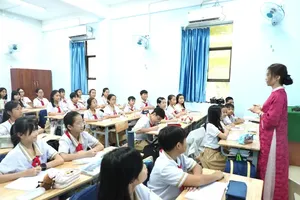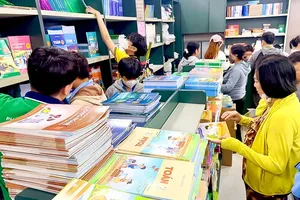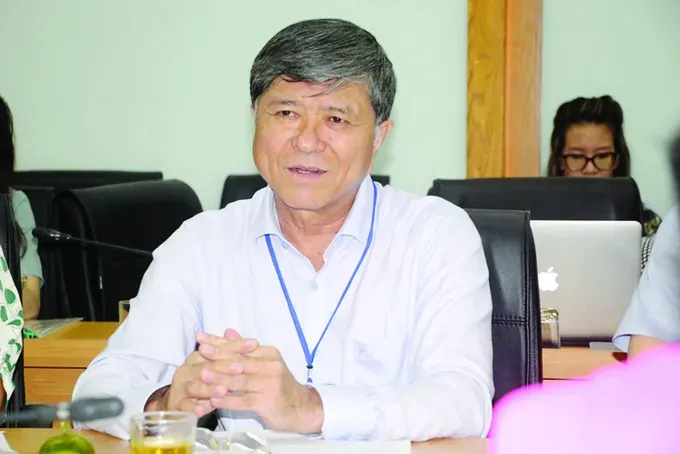
In the 2026-2027 academic year, HCMC anticipates over 197,000 students entering first grade, nearly 185,000 entering sixth grade, and more than 169,000 ninth graders graduating from junior high school. Director of the HCMC Department of Education and Training Nguyen Van Hieu firmly asserted that the education sector guarantees to accommodate 100 percent of the students’ enrollment demands through clever and highly adaptable planning.
Statistics from a recent survey by the Socio-Cultural Committee of the HCMC People’s Council reveal that to achieve the target of 300 classrooms per 10,000 school-age residents in the 2026-2030 period, the city must invest in an additional 18,962 classrooms. Ingenious solutions must be deployed by the education sector to fulfill this high demand due to the immense pressure of mechanical population growth.
The HCMC Department of Education and Training has petitioned various ministries to facilitate flexible mechanisms for converting land usage purposes into educational land. Most notably, it’s executing an innovative arrangement to cleverly repurpose surplus administrative headquarters following recent organizational restructuring, strategically prioritizing them as learning facilities for students. The municipality is currently mobilizing its utmost resources to materialize the ambitious goal of 300 classrooms per 10,000 school-age residents.
Within the medium-term public investment plan for 2026-2030, it anticipates 631 transitional projects and 1,125 new ones, yielding a total of 12,814 newly constructed classrooms, which is estimated to satisfy approximately 67 percent of the demand. The remaining classroom deficit will be addressed through robust investments from social mobilization.
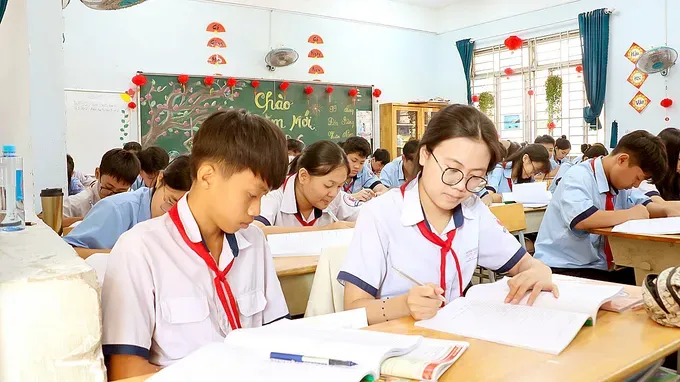
A matter currently captivating public attention is the availability of study places following the demanding 10th-grade public high school entrance examination, which is notoriously perceived as exerting excessive pressure.
During the 2025-2026 academic year, the total volume of ninth-grade graduates citywide surged by nearly 43,000 students compared to the preceding year. Specifically, Area 1 (formerly HCMC) witnessed the most substantial increase of over 27,000 students, followed by Area 2 (formerly Binh Duong Province) with an influx of over 8,000, and Area 3 (formerly Ba Ria - Vung Tau Province) with an addition of more than 7,000 students.
If strictly adhered to the standard capacity of 45 students per class, the public high school system across all three areas could only accommodate 103,739 students, representing a mere 61 percent of the total junior high graduates.
To skillfully maintain the historical 70-percent public high school admission rate, the HCMC Department of Education and Training instructed all public high schools to comprehensively audit their infrastructural conditions. By proactively proposing repairs and equipment procurement, the city executed a clever spatial arrangement to successfully expand the intake capacity to 118,356 slots.
Should students not secure a public high school placement, they retain an array of alternative educational pathways, encompassing private high schools, vocational and continuing education centers, continuing education centers, as well as intermediate programs within colleges and intermediate schools.
For the 2026-2027 academic year, the network of vocational and continuing education centers boasts 18,916 enrollment slots; intermediate programs within affiliated colleges and intermediate schools offer 10,135 slots; and private high schools present a cumulative quota of 32,850 students.
Consequently, aggregating the 10th-grade enrollment quotas of public high schools with all other post-junior-high educational programs, the overarching admission capacity exceeds 180,000 slots. This innovative arrangement provides a comfortable surplus of 11,000 slots compared to the projected 169,000 junior high graduates.
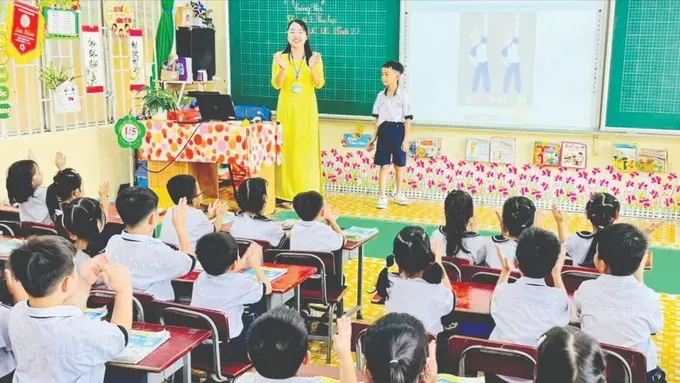
Director Nguyen Van Hieu mentioned feasible policies to answer society’s needs for high-quality laborers following the rearrangement of administrative boundaries, which offers HCMC augmented conditions and potential for socio-economic advancement.
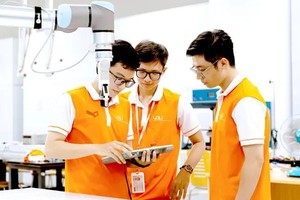
Post-consolidation, the scope of HCMC’s vocational education has been vastly expanded, intelligently diversifying both occupational disciplines and training modalities. In early 2026, the Department advised the HCMC People’s Committee to launch the Program for Enhancing the Quality of Vocational Education across the municipality.
This encompasses the ambitious 2030 objective where the proportion of laborers holding college, university, or postgraduate degrees will attain 20 percent; concurrently, the ratio of learners pursuing fundamental sciences, engineering, and technology will reach at least 28 percent. As of late 2025, the city’s vocational education system allocated 48.62 percent of its training quotas to the college level, and 56.64 percent of enrollment slots to fundamental sciences, engineering, and technology disciplines.
Simultaneously, in alignment with the master scheme to reorganize public universities, colleges, and intermediate schools in HCMC during the 2026-2030 period, the education sector is strategically restructuring 13 colleges and 17 intermediate schools.
This clever reorganization ensures that the reconstituted institutions possess adequate land and infrastructure, allowing them to concentrate intensely on pivotal training sectors while meticulously preserving traditional and specialized professions, thereby safeguarding the enduring educational legacy of each unit.
Furthermore, leveraging an extensive network of training facilities, the education sector is actively promoting a localized vocational training model. This highly practical and innovative approach drastically curtails commuting expenses, facilitates seamless access, and instrumentalizes labor retention. Ultimately, it effectively mitigates migratory pressures while promptly satisfying the dynamic recruitment imperatives of modern enterprises.