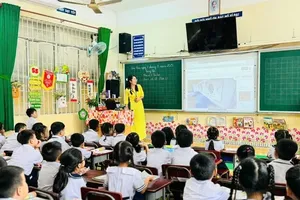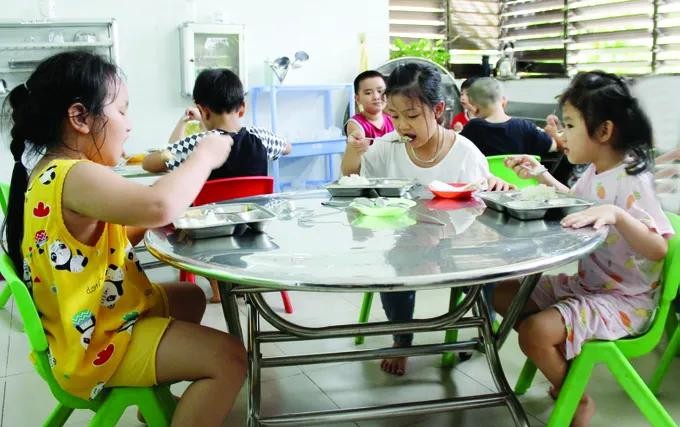
Ho Chi Minh City currently has approximately 3,500 schools serving over 2.6 million students. With many institutions organizing boarding meals, food safety must be held to the highest standards to ensure student health. Meal service providers must also be subject to rigorous supervision.
Reputable raw material suppliers are vital
Over the past month, the son of Phan Thi Thuy in An Khanh Ward, has frequently complained that lunches at his primary school are dry, the portions are small, and the food has an unusual odor. After inquiring within a parent group and receiving similar feedback, the worried mother soon reported the issue to the school, yet meal quality has seen little improvement.
The urgency of the issue was underscored by a recent suspected food poisoning incident involving over 200 students at Binh Quoi Tay Primary School. To date, four schools in Ho Chi Minh City have suspended meal services from the company involved in the incident.
Director Nguyen Thi Nu of T.A. Industrial Catering Company, said the company signs contracts with raw material suppliers that include strict binding clauses to strengthen accountability. In addition to documentation requirements, it also conducts on-site inspections of factories and farms.
A representative of H.P.C. Joint Stock Company similarly emphasized that the most critical factor in ensuring safe meals is the reputation of raw material suppliers.
Stronger oversight urged to protect school meals
Head Pham Khanh Phong Lan of the Ho Chi Minh City Food Safety Department noted that the city has roughly 317 catering companies serving over 3,500 schools. While these entities are appraised and granted food safety certificates, this is merely a baseline for operation. Without regular supervision during actual operations, violations can easily occur. Consequently, the Food Safety Department has required all 317 companies to sign commitments to comply with food safety regulations as a reminder of their legal and public responsibility.
Head Pham Khanh Phong Lan also highlighted inspection regulations as a major hurdle in food safety management. Currently, most corporate inspections must follow pre-approved plans and are announced in advance, limiting their ability to reflect day-to-day operations.
In the first quarter of 2026, authorities inspected approximately 30 percent of supply facilities and recorded ongoing violations. In response, the department has petitioned higher authorities to allow more unannounced inspections based on substantiated reports to better detect infractions.
Nguyen Van Ngai, former Deputy Director of the Ho Chi Minh City Department of Education and Training, proposed that schools establish oversight teams comprising school representatives and parents to monitor both raw materials and finished products. Members of these teams should possess food safety knowledge and maintain independence and objectivity.
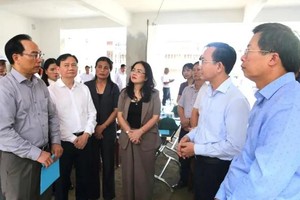
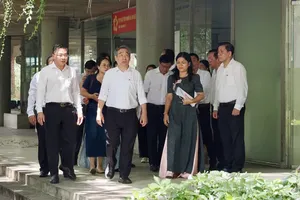
On April 15, the Ho Chi Minh City People's Committee Office announced a conclusion from Vice Chairman Nguyen Manh Cuong regarding the suspected poisoning incident at Binh Quoi Tay Primary School. The Vice Chairman tasked the Food Safety Department with assisting the school in selecting a reputable replacement meal provider of high quality and similar cost to reassure parents.
Additionally, the Department of Health will continue to closely monitor hospitalized cases to ensure students receive the best care for a quick recovery. The Department of Education and Training has been directed to assist the school in identifying and supporting students from disadvantaged backgrounds.
Vice Chairman Nguyen Manh Cuong also urged departments and local authorities to expedite the completion of coordination protocols. The Food Safety Department has been designated as the lead agency for coordinating and advising on the handling of suspected food poisoning cases, including the development of a situational "handbook" and the establishment of a hotline to support localities in managing similar occurrences.