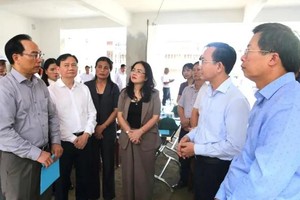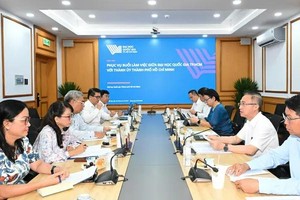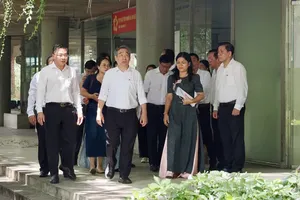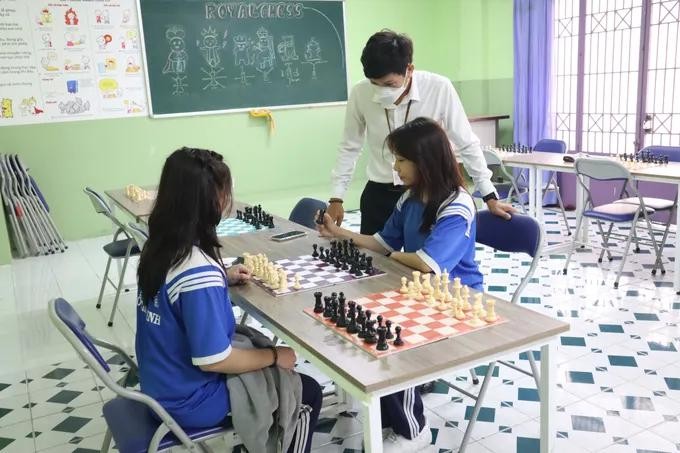
On May 14, a survey delegation from the Culture and Social Affairs Committee of the Ho Chi Minh City People’s Council conducted inspections at three sports-gifted high schools across the city to review proposed support policies for specialized student-athletes.
The delegation was led by Head of the Culture and Social Affairs Committee of the Ho Chi Minh City People’s Council, Cao Thanh Binh.
The survey focused on a draft resolution proposed by the Ho Chi Minh City Department of Education and Training concerning specific support mechanisms for students enrolled in sports-gifted high schools. The delegation visited Binh Chanh Sports Gifted High School in Binh Loi Commune, Nguyen Thi Dinh Sports Gifted High School in Phu Dinh Ward, and Sports Gifted High School in Tan Dinh Ward.
After hearing reports from school administrators on operations, challenges, and recommendations, Mr. Cao Thanh Binh said the current model, which combines sports-gifted students with mainstream high school students, remains inadequate due to the specialized nature of athletic training. According to the committee, sports-gifted students require distinct schedules for study, training, accommodation, nutrition, and daily activities that differ from those of regular students.
The delegation also noted that deteriorating facilities at several schools require comprehensive investment and renovation plans instead of piecemeal repairs carried out in multiple phases. In addition, the city was urged to consider expanding the “three concentrations” boarding model, which integrates cultural education, athletic training, and residential living in one location to help students better recover physically amid intensive training schedules.
The Culture and Social Affairs Committee said it would continue coordinating with the Department of Education and Training and the Department of Culture and Sports to review the operations of sports-gifted high schools, while studying plans to reorganize the system and ensure school facilities align with their assigned training functions.
Regarding proposals related to nutrition, accommodation, transportation, and living support for student-athletes, committee representatives requested the Department of Education and Training to consolidate recommendations from schools and advise city leaders on suitable support policies.
Addressing school repairs and equipment investment, Nguyen Thi Nhat Hang, Deputy Director of the Ho Chi Minh City Department of Education and Training, said the education sector is promoting greater autonomy for schools. Under the current mechanism, funding allocations are based on annual budget estimates submitted by each institution.
Hang said school principals must proactively develop investment plans and submit proposals to management agencies for appraisal and approval when additional facilities or equipment are needed, in order to avoid delays or administrative errors that could affect student benefits.