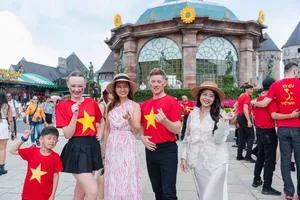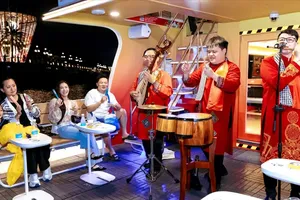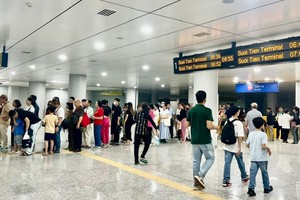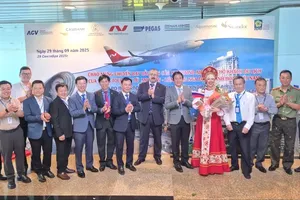
The figure marks the highest first-half performance in recent years and represents 49.2 percent of the full-year target.
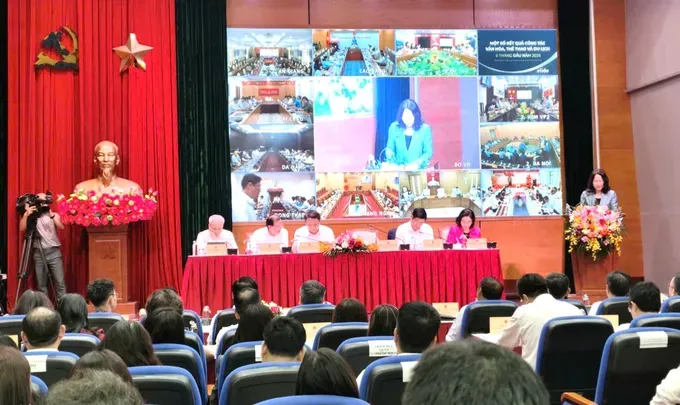
Deputy Minister of Culture, Sports, and Tourism Trinh Thi Thuy said at the Ministry of Culture, Sports, and Tourism's mid-year review conference on July 9.
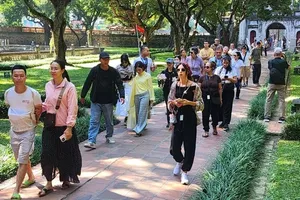
Domestic tourist arrivals were estimated at 81 million, an increase of 4.5 percent year on year, while tourism revenue reached approximately VND569 trillion (US$21.6 billion), up 9.8 percent from the same period last year.
The tourism sector is currently finalizing a national strategy to develop tourism into a key economic sector in the new era. It is also stepping up efforts to modernize tourism promotion, diversify tourism products, strengthen regional connectivity, and accelerate digital transformation across the industry.
In the first six months of the year, the Ministry of Culture, Sports, and Tourism submitted the tourism development proposal to the Politburo, developed a growth scenario for the 2026–2031 period, coordinated the organization of the National Tourism Year – Gia Lai 2026, recognized Kim Lien National Tourist Area, and issued a plan to develop the Vietnam Tourism Data Architecture Framework.
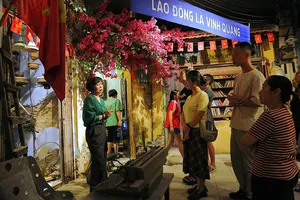
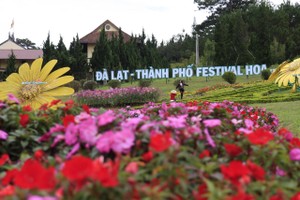
Tourism continued to record robust growth across many localities. Ho Chi Minh City welcomed an estimated more than 33.7 million visitors, generating nearly VND214 trillion (US$8.1 billion) in tourism revenue, up 63.9 percent year on year. Hanoi received approximately 18 million visitors, with tourism revenue exceeding VND74.23 trillion (US$2.8 billion). Other strong-performing destinations included An Giang, with around 16.6 million visitors; Lam Dong, with nearly 12 million; and Khanh Hoa, with nearly 11.9 million, all posting significant increases in both visitor numbers and tourism revenue.
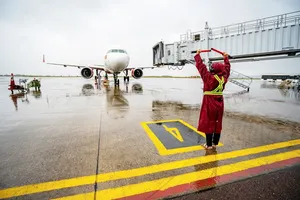
To sustain growth momentum, the Vietnam Tourism Association called for further breakthroughs in visa policies, expanded international air connectivity, and innovated promotional strategies tailored to each market. It also urged greater support for businesses in digital and green transformation, alongside the development of high-value tourism products, including MICE tourism, golf tourism, wellness tourism, cultural and culinary tourism, cruise tourism, railway tourism, and the night-time economy. The association further recommended improving service quality, enhancing the business environment, and ensuring the safety and security of tourist destinations.
Concluding the conference, Minister of Culture, Sports, and Tourism Lam Thi Phuong Thanh instructed the tourism sector to further reinforce its role as a key economic driver by shifting from a management-oriented approach to a value chain-based development model, with economic efficiency and contribution to growth serving as the primary performance indicators.
The minister said priority should be given to restructuring tourism products and markets, modernizing tourism promotion, and advancing green, smart, heritage, cultural, and community-based tourism and the nighttime economy. She also stressed the need to develop distinctive tourism products with stronger international competitiveness.
The minister called on local authorities to strengthen regional linkages, mobilize social resources, and accelerate digital transformation to achieve the sector's 2026 targets and further contribute to the country's economic growth.