According to the National Center for Hydro-Meteorological Forecasting, as of the morning of March 9, the cold air mass had moved close to Vietnam’s northern border and had begun to weakly affect several mountainous areas in the North.
From the afternoon of March 9, the cold air mass is expected to strengthen and spread to the midland areas before affecting the Red River Delta and the capital city of Hanoi. As the northeast monsoon intensifies, temperatures across the Northern region are likely to fall rapidly in the evening onward, bringing colder conditions.
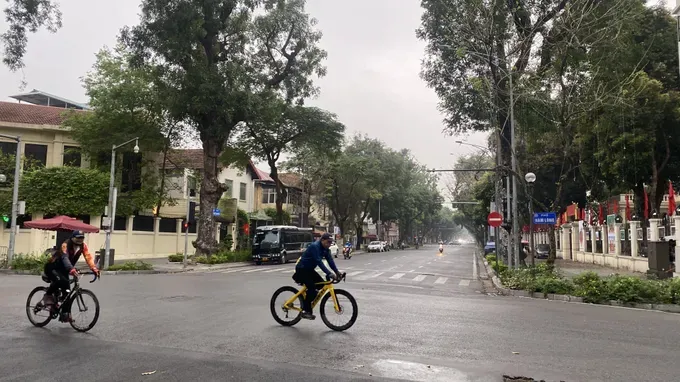
This morning, Hanoi and several areas in the Red River Delta experienced scattered rain. Meteorological experts forecast that rainfall from morning to afternoon will mainly occur in the northern part of Phu Tho Province, Lao Cai Province and parts of Thai Nguyen Province.
In Hanoi, scattered showers are possible later this afternoon and evening.
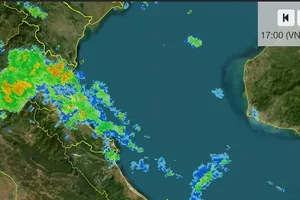
In the Central region, the sky was mostly cloudy on the morning of March 9. Coastal areas from Da Nang to Khanh Hoa Province may see some brief showers, though they are unlikely to last long.
From tonight, rainfall is expected to increase again, mainly from Ha Tinh Province to Quang Ngai Province, with some areas experiencing moderate to heavy rain.
Meanwhile, both the Central Highlands and Southern region will see relatively stable weather. The morning will be mostly cloudy with a low chance of rain. The highest temperature in Ho Chi Minh City is expected to reach about 31–32 degrees Celsius.
Meteorological authorities warned that residents in the Northern mountainous and Central regions should be cautious during this seasonal transition, as the cold air mass may trigger localized thunderstorms, with risks of whirlwinds, lightning and strong gusts.



)