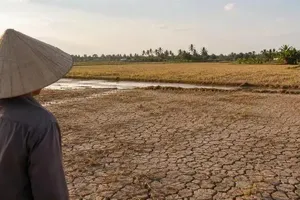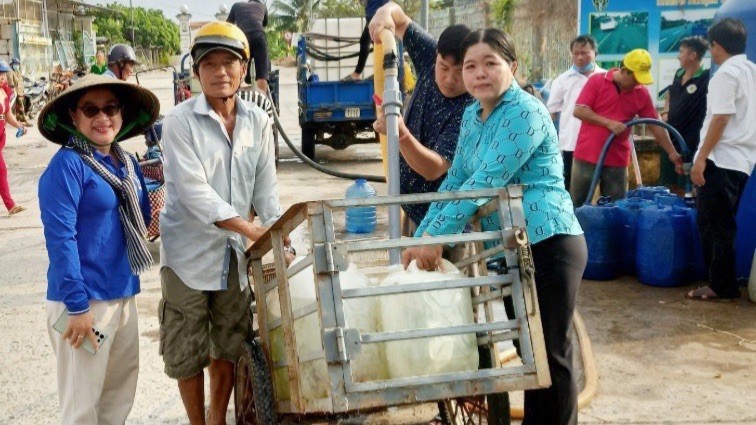
The Vinh Long Provincial Hydro-Meteorological Station on February 23 warned that saltwater intrusion in the final days of February 2026 continues to pose a significant threat, particularly the 4-parts-per-thousand salinity threshold, which could directly affect agricultural production and domestic water supplies. The situation has been forecast at Level 2 natural disaster risk due to drought and salinity.
According to projections, the 4-parts-per-thousand salinity threshold is expected to penetrate deeper inland along most major rivers running through the province.
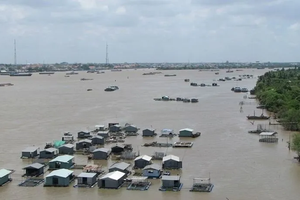
In the first half of February, the 4-parts-per-thousand salinity level appeared and persisted for several days on major waterways. On the Cua Dai River, salinity of 4 parts per thousand intruded as far as Giao Long Commune, more than 40 kilometers from the river mouth, a high level reflecting diminished upstream freshwater flows amid strong tidal surges and weakened discharge.
Similarly, on the Ham Luong River, the 4-parts-per-thousand salinity boundary extended to areas in Cho Lach and Mo Cay communes, approximately over 40 kilometers from the estuary. Notably, along the Co Chien River — a waterway of critical importance to the province’s domestic and agricultural water supply — the 4-parts-per-thousand salinity front advanced more than 50 kilometers inland, approaching densely populated areas and concentrated fruit-growing zones.
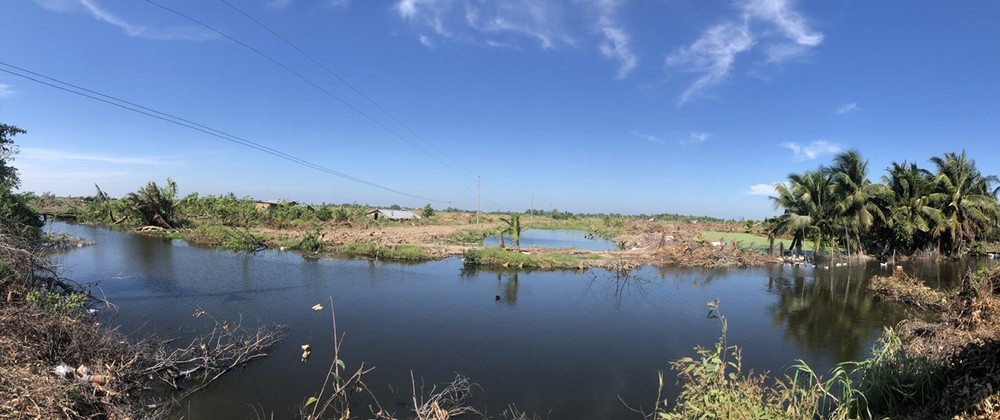
Comparable developments have been recorded on the Hau River, where the 4-parts-per-thousand salinity threshold has reached An Phu Tan Commune, over 50 kilometers from the river mouth.
From now until the end of February, the 4-parts-per-thousand salinity boundary is forecast to push even farther inland, particularly on February 27 and 28, when high tides coincide with declining freshwater flows.
At peak levels, salinity intrusion along several rivers may exceed the multi-year average, heightening the risk of localized freshwater shortages in riverside communities.
The Vinh Long Hydro-Meteorological Station cautioned that a salinity level of 4 parts per thousand represents a critical threshold for many crops and is unsuitable for domestic use without treatment. Local authorities have been urged to closely monitor salinity levels, proactively test water quality before intake, step up freshwater storage, and promote water conservation measures to mitigate the impacts of drought and saltwater intrusion.



)