The National Center for Hydro-Meteorological Forecasting reported on the morning of March 3 that the cold front had already affected Hanoi and the Northeastern provinces, before expanding to the Red River Delta and parts of the North Central Coast. Temperatures have edged down compared to March 2, accompanied by scattered showers and strengthening northeasterly winds.
In Hanoi, intermittent rain is forecast throughout the day, with cooler conditions setting in and temperatures continuing to decline from the previous day. Several Northeastern localities may experience moderate rainfall, with residents advised to brace for gusty winds and extreme weather phenomena triggered by the clash between the incoming cold air mass and the preceding heat.
Meteorologists noted that although this cold spell is of moderate intensity, it is capable of causing sharp temperature fluctuations over a short period. Significant differences between daytime and nighttime temperatures, as well as across regions, could generate localized thunderstorms and squalls.
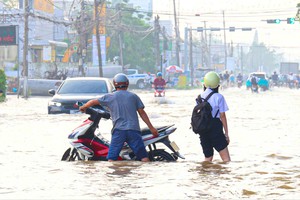
Meanwhile, Southern Vietnam continues to endure prolonged sunshine during the daytime. In HCMC, March 3 is expected to be predominantly sunny, with a low likelihood of rainfall. Some forecasting models suggest that the probability of unseasonal rain in the Southern region may rise in the coming days as the equatorial trough becomes active again.
According to the National Center for Hydro-Meteorological Forecasting, early March weather patterns indicate that the North will remain under the intermittent influence of cold air masses, while the South is entering a transitional phase marked by isolated, out-of-season thunderstorms in the late afternoon and evening.