By mobilizing resources outside the state budget, the city has successfully established practical facilities and services that significantly enhance the quality of public life.
Residents directly enjoy the practical benefits of social contributions
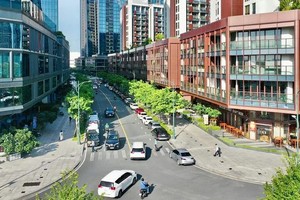
Summer days for children in Quarter 1 of An Khanh Ward, Ho Chi Minh City, have become much more vibrant. As evening falls, children head to the park to ride bicycles and play on slides, while adults exercise and chat. What was once an empty plot of land spanning over 900 square meters has now been transformed into a park combined with a community cultural house funded by social contributions, featuring a badminton court, a pickleball court, fitness equipment, a small stage, and a children's play area.
According to the An Khanh Ward People's Committee, this is one of 12 vacant plots successfully converted into parks and community gathering spaces. The local government continues to review public land funds to develop 39 additional parks and public spaces, gradually putting underutilized land into service for recreation, physical training, and community gatherings.
Beyond residential neighborhoods, the effectiveness of social contributions is also evident in larger-scale projects. Notably, Park No. 1 Ly Thai To in Vuon Lai Ward and Park No. 8 Vo Van Tan in Xuan Hoa Ward have created additional green spaces and become popular destinations for numerous residents. The value of these projects lies not only in improving the urban landscape, but also in transforming social resources into public amenities for residents to directly use and enjoy.
Social contributions in the healthcare sector have likewise opened up opportunities for citizens to access progressively better healthcare services. Ho Chi Minh City currently features 129 hospitals, including 90 non-public institutions; nearly 10,000 specialized clinics, over 350 multi-specialty clinics, and more than 15,000 pharmaceutical business establishments. This scale indicates that the private healthcare sector is increasingly integrated into the healthcare ecosystem, sharing the responsibility of public health care alongside the public system.
Associate Professor Tran Van Khanh, Director of Le Van Thinh Hospital, noted that social contributions provide hospitals with additional resources to invest in equipment, develop advanced medical techniques, and advance digital transformation. Mobilizing social resources must complement the public health system while ensuring safe, high-quality services at reasonable costs for the public.
The demand for mobilizing further social resources is highlighted even more distinctly at tertiary-level hospitals. Every day, the Ho Chi Minh City Oncology Hospital receives approximately 5,000 outpatient visits, over 1,300 outpatient chemotherapy and radiotherapy visits, and maintains 1,000 to 1,100 inpatient treatments, with roughly 75 percent of patients coming from southern provinces and cities. Facing this pressure, the hospital has mobilized non-public resources to deploy advanced medical techniques, enabling patients to receive earlier treatments, reducing waiting times and travel expenses, and alleviating institutional pressure. The hospital also collaborates with various non-public health facilities in training, technology transfer, and the updating of treatment protocols, thereby gradually standardizing cancer treatment quality and expanding patient accessibility.
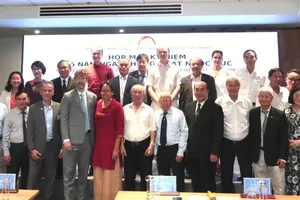
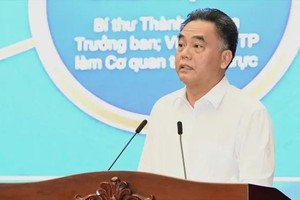
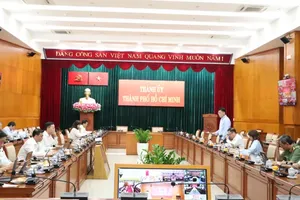
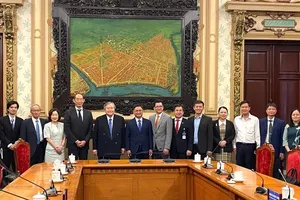
At a dialogue conference on July 28 between the Standing Committee of the Ho Chi Minh City Party Committee and participants of a training program for Party Committee members, Secretary Tran Luu Quang outlined the city’s approach to social contributions.
He emphasized that once the Law on Urban Development is enacted, Ho Chi Minh City will gain stronger decentralization mechanisms. This will empower the City People’s Council, the City People’s Committee, and the Chairman of the People’s Committee to decide on issues that previously required approval from central authorities.
Based on this framework, areas where the private sector can perform more effectively and where the State can maintain proper oversight will be opened to broader public participation. However, Secretary Tran Luu Quang stressed that social contributions must follow a clear roadmap, be implemented cautiously, and come with strict monitoring mechanisms to ensure compliance with the law.
HCMC pushes controlled social contributions in urban services
According to experts, social contributions help reduce operational costs, elevate service quality, and ease the workload of the public apparatus, allowing the State to concentrate resources on core areas. However, the requirement is not merely to expand social contributions, but to select the appropriate fields, establish fitting mechanisms, and maintain strict control.
Dr. Tran Quang Thang, Director of the Ho Chi Minh City Institute of Economics and Management, noted that the city should prioritize social contributions in sectors where the private sector can perform better, faster, and more cost-effectively with low social risks, such as urban infrastructure and technical operations; public transit and urban logistics; non-public healthcare and education; digital transformation and online public services; and public asset management and land fund exploitation.
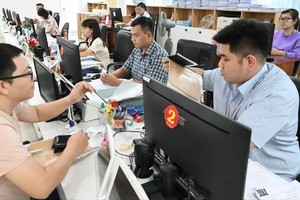
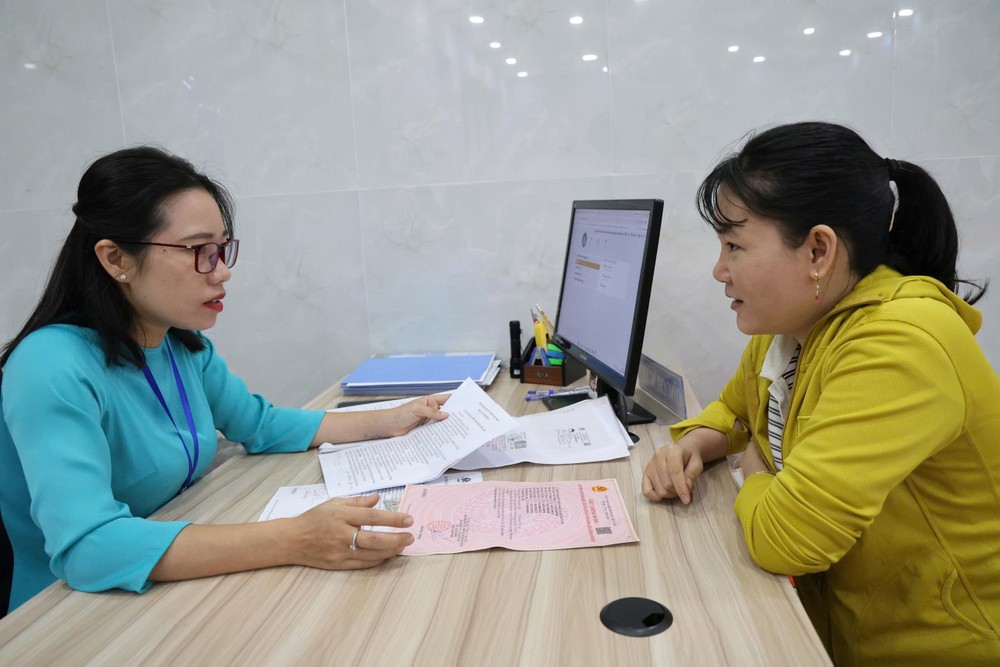
Extending beyond construction projects or health and education services, social contributions have also expanded into specialized professional activities supporting the resolution of administrative procedures. Accordingly, certain stages of processing administrative procedures can mobilize the professional resources and facilities of public service units or enterprises to operate more efficiently, such as guiding and assisting with declarations; creating electronic files; receiving, reviewing, classifying, digitizing, and processing data; tracking files; and supplying data for appraisal services. The objective is to help citizens and businesses execute administrative procedures faster and more conveniently without altering the jurisdiction and responsibilities of state agencies.
Nguyen Thi Thanh Mai, Deputy Head of the Legal Committee of the Ho Chi Minh City People's Council, stated that the Politburo's Resolution 09-NQ/TW established the policy for controlled social contributions across certain professional stages of administrative procedure resolution. This policy enables qualified consulting and public service organizations to participate, ensuring shortened timelines, heightened efficiency, and zero growth in payroll size, while keeping service costs regulated, open, and transparent to safeguard the choice rights of citizens and businesses.
The draft Law on Urban Development has institutionalized this content, granting the Ho Chi Minh City People's Council the authority to regulate controlled social contribution frameworks, pricing ranges for administrative support services, and specific preferential policies alongside guaranteed implementation resources. Once passed by the National Assembly, this will serve as a breakthrough regulation, creating conditions for the city to deploy new mechanisms, policies, and governance methods tailored to the specific characteristics of a special urban center to better serve the populace.
)