Modern governance key to turning Ho Chi Minh City into regional growth hub
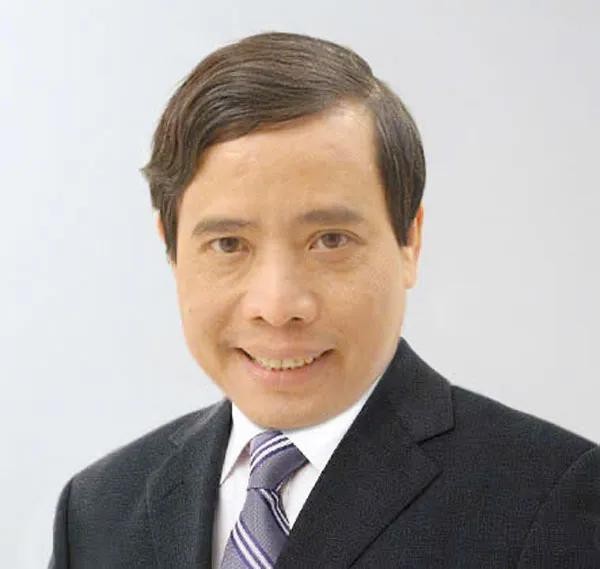
The proposed Law on Urban Development, if passed by the National Assembly, promises a new institutional framework that could unlock significant potential for Ho Chi Minh City. SGGP reporter interviewed Professor Vu Minh Khuong from the Lee Kuan Yew School of Public Policy, National University of Singapore, regarding the governance breakthroughs required for HCMC to fulfill its role as a national economic locomotive and become a premier regional growth hub.
Professor Vu Minh Khuong from the Lee Kuan Yew School of Public Policy said that the Law on Urban Development, if approved by the 16th National Assembly at its first extraordinary session, will mark a crucial milestone. It will not only create major institutional breakthroughs for cities, especially HCMC, but also open a new chapter in Vietnam's development. With the special mechanisms proposed in the draft, HCMC will not only contribute more to the nation's economic growth but also become a strategic frontline in development, helping Vietnam overcome challenges to reach prosperity rapidly.
However, he stressed, it must be emphasized that a law, no matter how favorable, is merely a necessary condition, not a sufficient one. The decisive factor is modern governance—the ability to leverage granted powers and mechanisms to create strategic and sustainable value, especially in a world undergoing intense volatility and an AI revolution occurring at an unprecedented pace.
If the strategic task of building a modern governance foundation is taken lightly, even a law with many special mechanisms will struggle to generate breakthrough capacity. It could even lead to three notable consequences. First, the city may gain more power and resources, but its actual capacity may not strengthen proportionally. Resources could be dispersed into large-scale projects with low strategic value instead of creating new growth engines. Second, the law might help the city attract excellent experts and talent, but it may not be enough to create an environment and mechanism for them and the entire system to fully leverage their capabilities to solve key challenges. Third, the law could motivate each official to work with higher effort and responsibility, but it might fail to create the collective strength of the entire system if decision-making processes remain slow, inter-agency coordination stays weak, and the apparatus fails to operate as a unified entity.
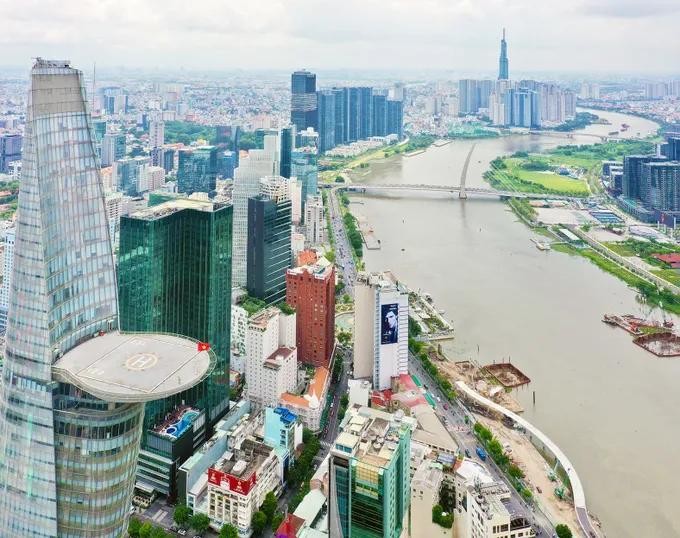
Three strategic priorities will create transformative and sustainable impact
In his view, Ho Chi Minh City should not pursue broad, superficial reforms but should focus on three breakthrough priorities capable of creating a ripple effect across the entire system.
The Professor of the Lee Kuan Yew School of Public Policy said that first, the city must boldly learn from, review, and reform legal regulations, policies, and ordinances that lag behind successful governance models, particularly those in Singapore, South Korea, and China, and proactively propose adjustments to utilize granted authorities for breakthroughs. In an era of intense global competition, success no longer comes from reinventing everything, but from the ability to learn quickly, select the best practices, and innovate creatively to suit local conditions. HCMC needs to conduct regular "gap analyses" to identify the largest institutional and governance disparities compared to leading global cities, prioritizing reforms in areas with the greatest impact on competitiveness and value creation.
Second, the city must strongly reform decision-making processes to ensure that tasks are handled faster, more effectively, and more accurately, with high levels of interconnectedness and total-system coordination. This breakthrough has a direct impact on the efficiency of the entire apparatus. The city needs to shift from a mindset focused on "following the right process" to one focused on "achieving the best results," moving away from layers of "submission for approval" toward "decentralization, accountability, and transparency," supported by data, artificial intelligence, and digital records.
Third, the city must build a culture of value creation. When this mindset becomes the foundation, the goal of each individual and organization will no longer be just to finish a job, but to continuously add value for citizens, businesses, and the city.
Learning from the world’s best models keeps the city on the right track; reforming decision-making processes keeps the machinery running fast and efficiently; and building a culture of value creation generates the internal impetus for the entire system to constantly innovate and break through. These are the three pillars for the city to build a modern urban governance model and become a "growth hub" for Vietnam in the coming decades.
The decisive factor for HCMC’s success lies in the ability to organize implementation and the quality of its governance model. If he were to propose the single most feasible and fundamental change, it would be for HCMC to initiate a strategic mission: mobilizing the intellect of top domestic and international experts, the business community, citizens, and international partners to jointly build the HCMC Development Strategy until 2045, with the ambition of turning the city into Vietnam's growth epicenter and a highly competitive Asian megacity.
In this strategy, HCMC should not just plan for itself. It needs to develop a strategy for the greater city and Southeast region, similar to how Shanghai became the nucleus driving the development of the Yangtze River Delta. When that happens, the competitive advantage will no longer belong solely to HCMC, but to an entire large-scale development ecosystem capable of competing with the leading urban regions of Asia.
Modern management today rests on five defining pillars. First, a bold vision paired with a long-term development strategy sets the direction. Second, organizations are built on structures that are scientific, practical, and forward-looking. Third, decisions are made quickly and accurately, with collaboration enhanced by data, digital tools, and artificial intelligence. Fourth, talent systems from recruitment and appointments to evaluation and pay are designed to empower individuals to reach their full potential. Finally, the strength of the workforce and the culture itself, rooted in responsibility, cooperation, and service, becomes the ultimate measure of success.








)