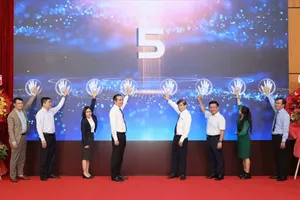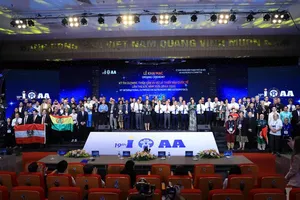
The seminar was jointly organized by Vietnam National University—Ho Chi Minh City (VNU-HCM) and Ho Chi Minh National Academy of Politics Region II under Ho Chi Minh National Academy of Politics.
The seminar was organized to concretize Resolution No. 45-NQ/TW on promoting the role of intellectuals and Resolution No. 57-NQ/TW of the Politburo on breakthroughs in the development of science, technology, innovation, and national digital transformation.
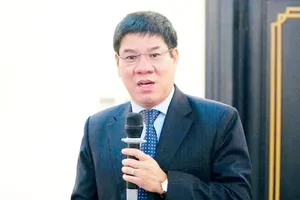
Deputy Head of the Central Propaganda and Mass Mobilization Commission, Ngo Dong Hai, attended the event and delivered a keynote address outlining the seminar’s orientations. Also in attendance were representatives of the leadership of the Ho Chi Minh National Academy of Politics and the Ho Chi Minh National Academy of Politics Region II, along with domestic and international experts and scientists.
Mr. Ngo Dong Hai called on delegates to focus their discussions on five key areas.
First, it needs to clarify the theoretical and practical foundations of talent visa policies in the new context.
Second, delegates were encouraged to conduct comprehensive and scientific studies of the experiences of pioneering countries such as Singapore (with its RIE program), China, South Korea, and India in order to draw lessons on policy design, implementation mechanisms, and the development of talent ecosystems, thereby identifying an effective, open, and institutionally suitable talent visa model for Vietnam.
Third, delegates were asked to propose policy models suited to Vietnam, shifting the mindset from merely “attracting talent” to “competing for global talent,” while designing an open and competitive talent visa mechanism and developing comprehensive policy packages covering visas, residency, income, and living conditions.
Fourth, participants were encouraged to recommend breakthrough solutions, including the development of innovation ecosystems such as “innovation clusters” and “talent cities” associated with major university centers.
Fifth, the attraction of overseas talent should go hand in hand with nurturing and strengthening domestic human resource capacity.
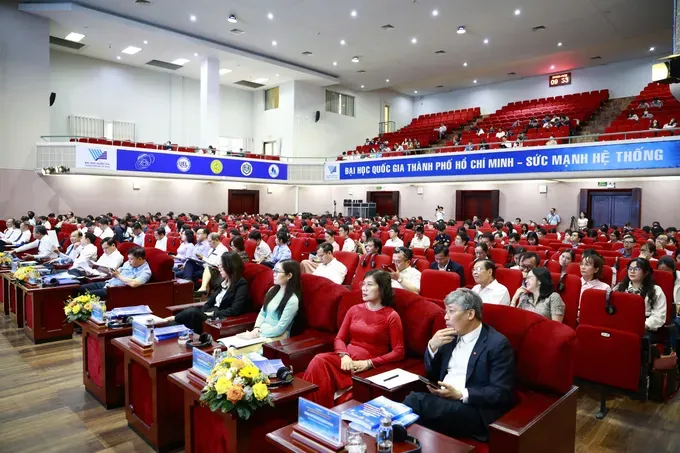
The Deputy Head of the Central Propaganda and Mass Mobilization Commission also called on delegates to conduct in-depth analyses of institutional reforms aimed at creating breakthroughs in talent training strategies, beginning at the undergraduate level.
He emphasized the need for special mechanisms to support major educational centers such as Vietnam National University- Ho Chi Minh City in fully promoting their core role in building a national talent ecosystem.
Particular attention should be paid to developing a strategy for the public-sector workforce, especially high-quality human resources aligned with modern local governance models, as well as for ethnic minority and mountainous areas, with a view toward achieving sustainable development.
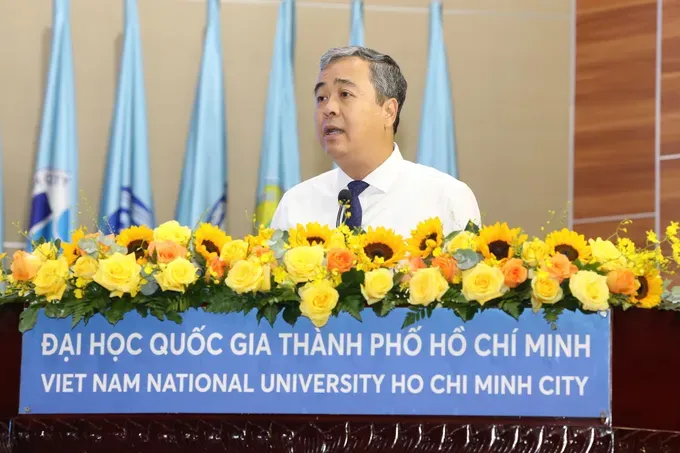
Prof. Dr. Nguyen Thi Thanh Mai, Director of Vietnam National University- Ho Chi Minh City, emphasized that talent visas should not merely be viewed as an immigration policy. Rather, they should be regarded as a strategic instrument in national talent competition as well as a ‘gateway’ enabling Vietnam to connect with the global flow of knowledge. In the context of rapid digital transformation and intensifying technological competition, the quality of human resources will determine a nation’s competitiveness and development pace. Therefore, investment in education, scientific research, and innovation must be considered a top priority.
According to the director of Vietnam National University- Ho Chi Minh City, international experience has shown that, in order to attract global experts and scientists, countries must go beyond incentive policies and build a comprehensive innovation ecosystem. Such an ecosystem includes an open academic environment, modern research facilities, opportunities for international cooperation, and suitable living conditions for workers and their families.
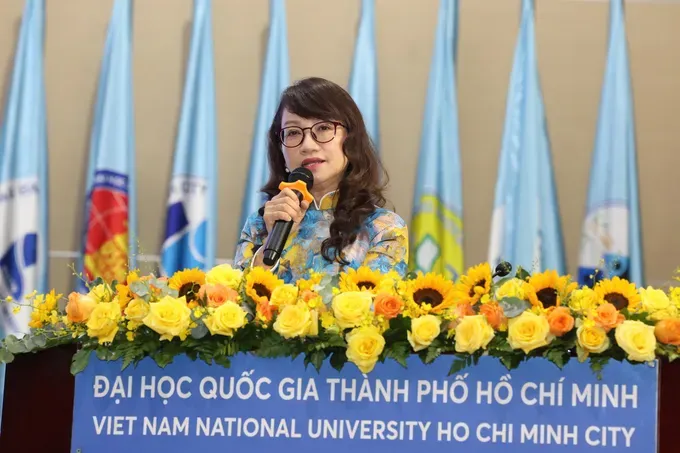
Vietnam National University - Ho Chi Minh City proposed the introduction of special mechanisms to attract and retain talent in high-tech fields such as AI, semiconductor microchips, big data, and automation.
In addition, closer coordination among the State, higher education institutions, and businesses was identified as a key factor in developing a workforce capable of meeting new development demands.
Drawing from practical experience, Dr. Cheong Wei Yang, Vice President of Singapore Management University, shared that during the 2026–2030 period, Singapore plans to invest US$37 billion in talent attraction, science and technology development, and digital transformation.
In addition to investing in startup projects, Singapore has also focused on attracting scientists back to the country and encouraging researchers working in enterprises to collaborate with institutes and universities on joint research initiatives.
Experts and scientists at the seminar presented papers discussing ways for Vietnam to open itself to global knowledge flows; create an enabling environment for both domestic and international talent to contribute; foster cooperation among the State, educational institutions, and businesses to generate new development capacity; and prepare a strong human resource foundation for a rapidly developing, sustainable, self-reliant, and prosperous Vietnam.