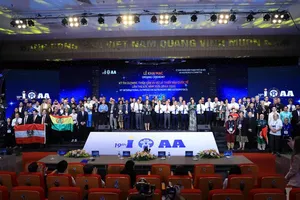
During the 120th anniversary of Vietnam National University, Hanoi, General Secretary and President To Lam delivered a strategic address on higher education development. The leader emphasized the urgent need to resolve bottlenecks in institutional frameworks, governance, finance, human resources, university autonomy, academic freedom, and investment in basic sciences and strategic technologies. He noted that this task is a collective mandate to drive a comprehensive renewal of Vietnamese higher education.
On this occasion, SGGP Newspaper gathered insights from experts and educators regarding the leader's directives.
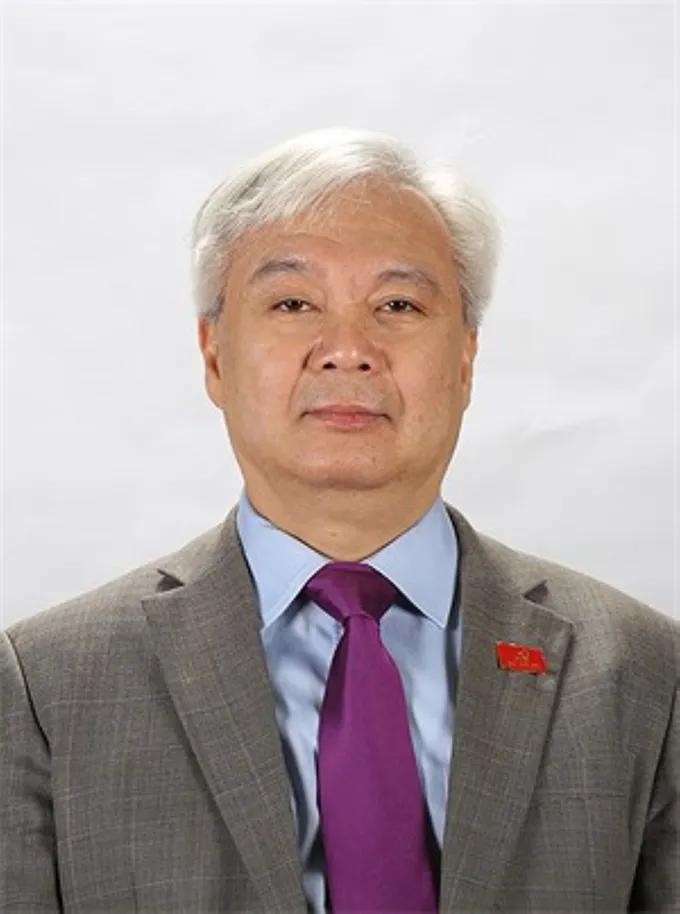
Phan Thanh Binh, former Chairman of the National Assembly Committee on Culture, Education, Youth, Adolescents, and Children, stated that a robust university ecosystem requires an environment conducive to innovation. Modern universities cannot thrive under bureaucratic management and a lack of autonomy. The key lies in establishing legal frameworks that guarantee university autonomy and modern governance models.
He emphasized creating a practical mechanism connecting the State, universities, and enterprises. This connection ensures knowledge transitions from lecture halls into technology, production capabilities, and scientific arguments for policy making.
Another bottleneck is the mechanism for discovering and attracting talent. In global human resource competition, unsuitable recruitment procedures, financial constraints, or visa processes can result in losing skilled professionals. Higher education institutions need expanded authority in recruitment, remuneration, international cooperation, and research organization.
However, he noted that institutional frameworks are merely necessary conditions. The sufficient condition rests on the internal strength of universities and intellectuals. Key universities must lead with an innovative spirit and accountability. Elite institutions cannot be built on risk-averse mindsets or research driven solely by quantitative quotas. Scientists must align knowledge with national development needs, and schools must train individuals with creative capacities and a desire to contribute.

Nguyen Minh Thuyet, former Vice Chairman of the National Assembly Committee on Culture, Education, Youth, Adolescents, and Children, acknowledged that current economic conditions limit high-level funding for elite training compared to developed nations. However, small, scattered investments yield low efficiency. If the Government develops three to five elite universities, it should initially concentrate resources on a few spearhead science and technology sectors.
Alongside the state budget, institutions can attract enterprise investment and increase capital through research and innovation. He called for revisions to the Law on Higher Education, tax laws, and corporate laws to specify tax exemptions for enterprises investing in education.
Elite training centers should receive high autonomy to internationalize curricula and import training technologies. Furthermore, institutions require the flexibility to recruit, appoint, and offer high salaries to outstanding domestic individuals, as well as send exceptional young staff abroad for training.
The Ministry of Education and Training should advise the Government and National Assembly on enacting special recruitment and remuneration policies for high-quality human resources after graduation, similar to models utilized internationally for returning graduates from prestigious institutions. This approach will consolidate high-quality human resources to serve the country.

Meanwhile Hoang Ngoc Vinh, former Director General of the Department of Professional Education under the Ministry of Education and Training, stated that the leader's directives accurately identified core bottlenecks: institutions, governance, finance, human resources, and academic freedom. Without resolving these issues, targets regarding research universities or international rankings remain difficult to achieve.
To elevate the system, the State must assign major tasks, grant genuine authority, invest sufficiently, and evaluate based on tangible results. These results include strong research groups, standardized laboratories, transferable technology, and valuable policy consultation. While the directives offer a pathway forward, transformation requires ministries, agencies, and the Government to work alongside universities rather than leaving institutions to manage alone.
Professor Nguyen Dinh Duc from Vietnam National University, Hanoi, emphasized that the State should prioritize resources for strategic technology fields. Addressing challenges in human resource quality, labor productivity, and international integration requires the university to expand talented training programs.
Concurrently, the institution must maintain a strong foundation in basic sciences, invest breakthroughs into doctoral training, attract talent, and develop strong research groups to boost international publications and patents. He also noted the importance of enhancing practical training and internships to optimize employment opportunities for students.
According to Le Thanh Son, Principal of the University of Science, creating a breakthrough in talent cultivation in the knowledge era requires granting strong autonomy to member universities, particularly in training. Both the State and universities need funding mechanisms to enable doctoral candidates to become full-time, tenured staff during their studies. This policy serves as the key to developing the next generation for strong research groups and key laboratories. Investing in basic sciences is an investment in the future, providing a solid foundation for national technological and economic strength.

Ngo Thi Phuong Lan, Principal of the University of Social Sciences and Humanities, argued that innovation must be understood in a broader sense, encompassing not only technological updates but also social innovation, institutional reform, and human development. In this process, social sciences and humanities should be recognized as the core of social innovation, where academic knowledge is transformed into solutions to improve life quality, strengthen governance capacity, and promote sustainable human and social development.
A major current bottleneck is the pressure to quantify achievements and the mechanical trend of internationalizing scientific publications. The modern university governance system must shift dynamically from focusing on production output based on the number of articles to assessing social impact, emphasizing the actual contribution of knowledge to the community. This impact serves as a comprehensive measure of the value of an innovative university that effectively serves policy orientation and national development.