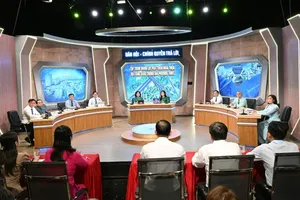
Veterans, eyewitnesses, military officers, scientists, and forensic experts are painstakingly examining every layer of soil, cross-referencing historical records with personal recollections, and employing advanced technology in an effort to return the fallen to their families and homeland.
First breakthroughs
Visitors continue to quietly light incense at the park in tribute to the fallen. Just a short distance away, search teams carefully expand excavation trenches, methodically inspecting every layer of earth.
Among those returning to the site is Phan Van Mua, one of the key eyewitnesses whose memories have played a vital role in the search. For decades, he preserved vivid recollections of the burial area, memories that—combined with testimonies from other witnesses—helped authorities identify locations believed to contain mass graves.
After offering incense, Mua stood silently before the excavation site. He recalled being overwhelmed with emotion when the first remains were recovered from the ground after decades of uncertainty.
Months of interviews, research, and verification have begun to produce tangible results, validating the efforts of witnesses and investigators alike.
Major General Tran Chi Tam, Deputy Political Commissar of Military Region 7 and Head of its Steering Committee for the Search, Recovery, and Identification of Martyrs' Remains, said the excavation was launched only after an extensive verification process.
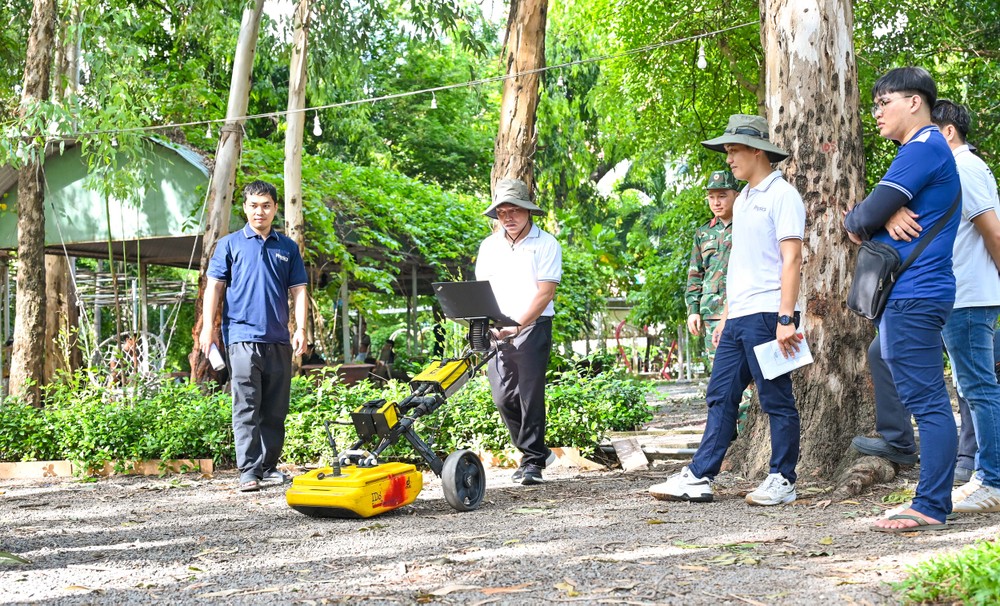
Between June 14 and June 30, specialists conducted ground-penetrating radar surveys and geological analyses in areas suspected to contain burial trenches. Based on those findings, excavation officially began on June 23.
Major General Tran Chi Tam vividly remembers receiving word from the field.
"On the first day, we were anxious because nothing had been found. On the second day, while chairing a meeting, I received a call from the search team. I immediately suspended the meeting and went straight to the site," he said.
What awaited him confirmed months of painstaking work. Human remains gradually emerged from beneath multiple layers of soil, alongside military equipment, weapon components, and personal belongings.
"The discoveries proved that the information collected over the years was highly accurate," he said.
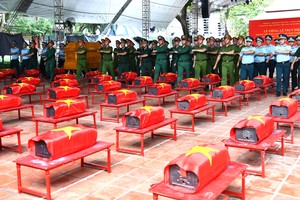
So far, authorities have recovered the remains of 11 martyrs, marking one of the most significant breakthroughs in the city's ongoing effort to locate soldiers who disappeared during the war. However, officials stress that much work remains as excavation areas continue to expand with the utmost care and precision.
Valuable wartime artifacts recovered
The excavation has also yielded numerous artifacts that could help identify the fallen.
Among the discoveries are weapons, military equipment, heavily corroded ammunition magazines, carrying pouches, fragments of dark fabric believed to be remnants of military uniforms, personal combs, and an engraved acrylic identification plate that may provide crucial clues to a soldier's identity.
Technology meets history
Behind the recent discoveries lies years of patient research that combined eyewitness testimony, historical documents, old maps, topographical analysis, and modern geophysical technology.
Architect Nguyen Xuan Thang has spent nearly two decades collecting information to support searches for missing martyrs. Working with fellow researchers, he analyzed numerous archival sources and compared them with witness accounts and changing landscapes to identify likely burial sites within the park.
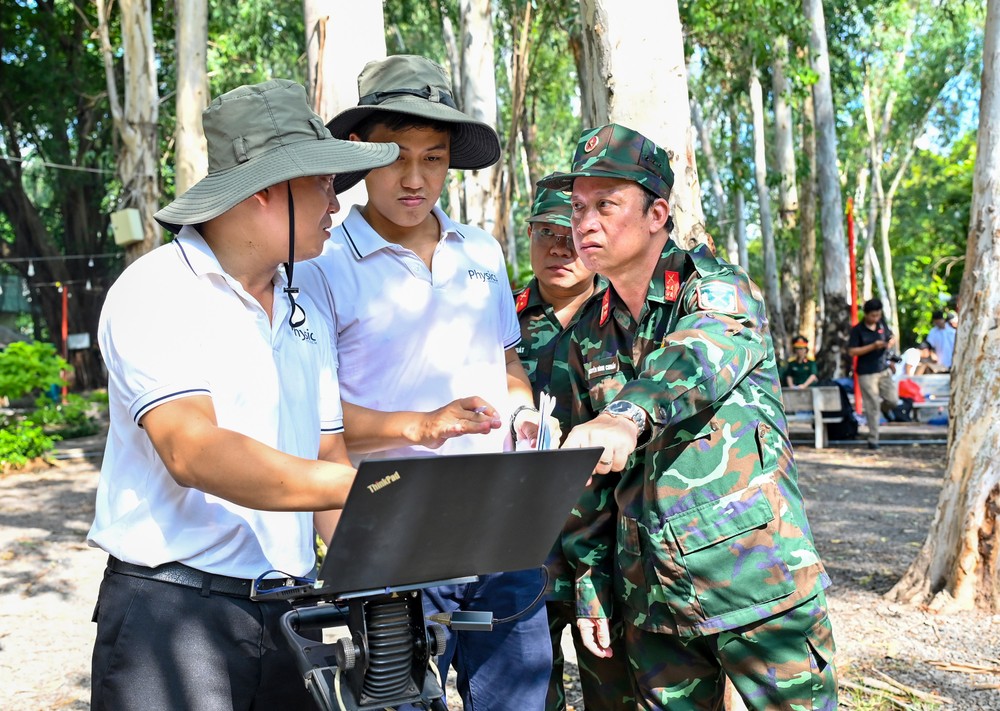
One of the team's most important achievements was pinpointing the precise location of what researchers call Burial Trench No.3. That breakthrough has created a clearer roadmap for locating three additional suspected burial trenches.
The scientific framework established during years of research has become the foundation for the current excavation strategy, significantly improving the efficiency of field operations.
Associate Professor – Dr. Le Van Anh Cuong, Head of the Department of Geophysics at the University of Science under Vietnam National University HCMC, described each discovery as deeply moving.
"We feel proud to contribute even a small part in helping these martyrs return to their families after decades of waiting," he said.
Having just returned from another search mission in Quang Ngai Province, Associate Professor – Dr. Le Van Anh Cuong immediately joined the operation at Le Thi Rieng Park.
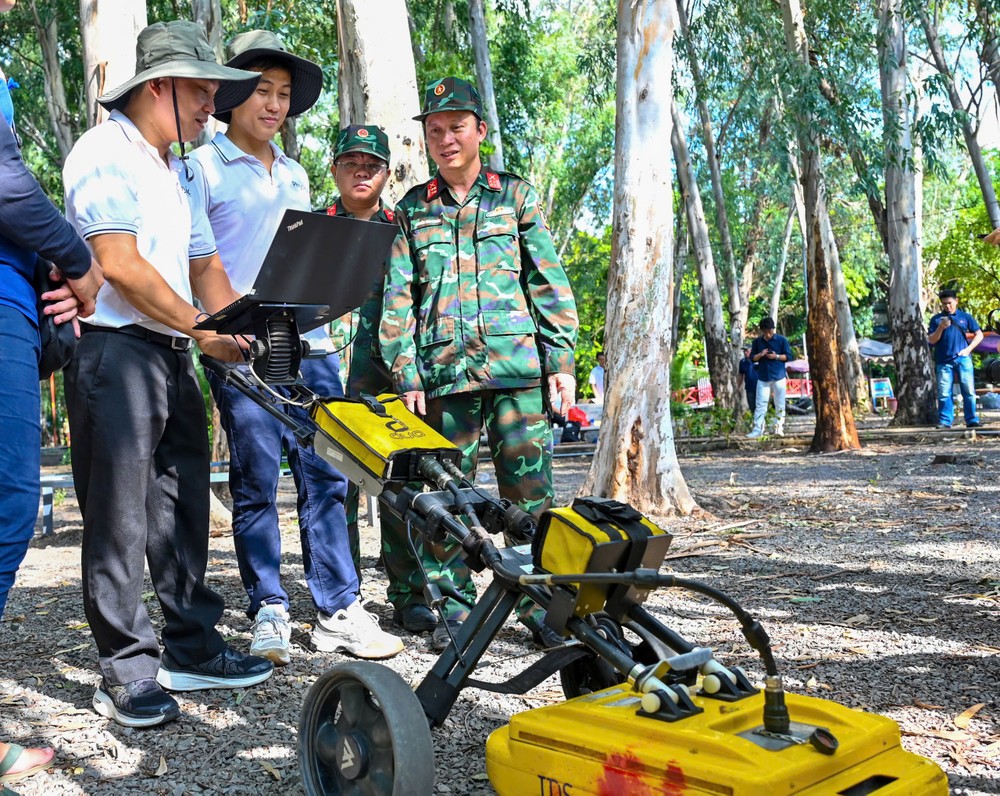
His 12-member team, consisting primarily of lecturers, students, and alumni, employs two non-invasive geophysical methods: ground-penetrating radar and electrical resistivity surveys.
Ground-penetrating radar detects reflections from underground layers to identify disturbed soil structures, while electrical resistivity measures differences in the physical properties of the soil. Combining the two techniques significantly reduces errors and enables researchers to narrow down potential burial locations with greater accuracy.
Experts say technology alone cannot solve the mystery. Rather, it becomes a powerful tool when integrated with historical archives, eyewitness accounts, battlefield records, and the practical experience of military personnel.
Together, these elements help reveal traces hidden underground for more than five decades.
Scientific identification
Recovery is only the first stage of the process.
After excavation, each set of remains is transferred to a temporary DNA sampling laboratory established within Le Thi Rieng Park, where specialists conduct sample collection under a closed technical protocol.
The remains undergo preliminary cleaning and documentation before experts carefully select bone samples suitable for DNA analysis.
Every step follows strict procedures designed to eliminate contamination and ensure complete traceability. Specialists photograph the remains, document their condition, assign identification codes, seal the samples, and preserve them under controlled conditions.
Once completed, the DNA samples are officially sealed, documented, and transferred to the military-designated forensic laboratory responsible for genetic identification.