Its goal is to strengthen cooperation in urban governance, environmental protection, green transportation and technological innovation during an official working visit to China.
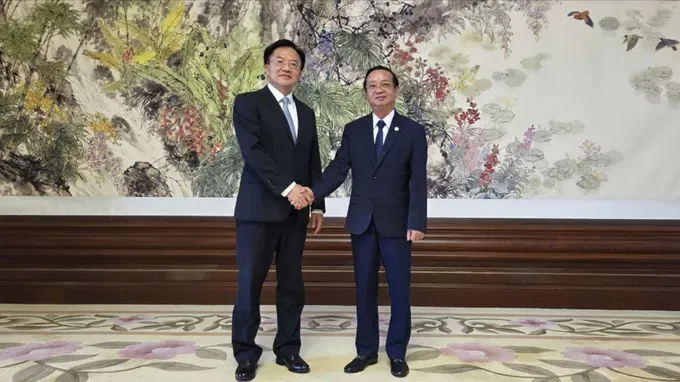
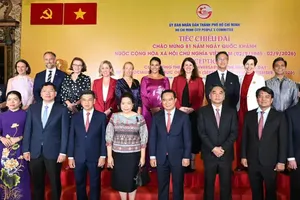
During the reception, Vice Chairman Bui Minh Thanh expressed his pleasure at his visit to Beijing and thanked the city's leaders for their warm and thoughtful hospitality. He said cooperation between Ho Chi Minh City and Chinese provinces and municipalities, including Beijing, has continued to expand in line with the growing Vietnam–China relationship.
Introducing Ho Chi Minh City's recent development, Mr. Bui Minh Thanh noted that one year after its merger with the former Binh Duong and Ba Ria–Vung Tau provinces, the city now covers more than 6,770 square kilometers and has a population exceeding 14 million. It accounts for around 25 percent of Vietnam's GDP and contributes approximately one-third of the country's total state budget revenue, while serving as Vietnam's leading economic, commercial, financial, cultural, scientific, technological and innovation hub.
He acknowledged that, as one of Vietnam's largest and fastest-growing metropolitan areas, Ho Chi Minh City faces major environmental challenges, particularly in household waste management and air pollution control.
Highlighting the similarities between the two cities, the Vice Chairman of the municipal People's Committee said Ho Chi Minh City hopes to learn from Beijing's experience and expand cooperation in environmental protection, municipal solid waste management, green transportation, the transition to clean-energy vehicles, and the application of digital technologies and artificial intelligence (AI) in urban governance.
He proposed that both sides maintain exchanges of senior leaders, strengthen cooperation among government agencies and professional departments, and expand collaboration in areas of shared interest. He also welcomed Beijing-based businesses to explore investment opportunities in Ho Chi Minh City in sectors where they have expertise and where the city has growing demand.
On the occasion, the Vice Chairman of the Ho Chi Minh City People's Committee invited Beijing's leaders to attend two major international events hosted by Ho Chi Minh City in 2026, including the third Ho Chi Minh City Friendship Dialogue and the second Ho Chi Minh City Autumn Economic Forum.
For his part, Beijing Vice Mayor Wen Xian warmly welcomed the Ho Chi Minh City delegation, saying the visit would help implement the shared understanding reached by the top leaders of Vietnam and China on deepening the Comprehensive Strategic Cooperative Partnership and the Vietnam–China Community with a Shared Future of Strategic Significance, including stronger exchanges and cooperation between local governments.
Congratulating Ho Chi Minh City on its socio-economic achievements and sustained growth following the administrative merger, the Beijing Vice Mayor praised the city's role as Vietnam's economic powerhouse.
He noted that both Ho Chi Minh City and Beijing are major metropolitan centers with large populations and rapid urbanization, facing similar challenges in modern urban governance, environmental protection, emissions reduction and green transport development. These common characteristics provide a solid foundation for practical cooperation and the exchange of experience.
Beijing Vice Mayor Wen Xian agreed with the proposals put forward by Vice Chairman of the municipal People's Committee Bui Minh Thanh and called for continued exchanges between government agencies and businesses, as well as closer cooperation in science and technology, innovation, urban management, environmental protection and green transition. He affirmed that the Beijing municipal government would work closely with Ho Chi Minh City to effectively implement agreed areas of cooperation.
The two sides also agreed to support direct communication channels between relevant departments and agencies to promote specialized cooperation, further strengthening ties between the two cities and contributing to the broader Vietnam–China relationship.
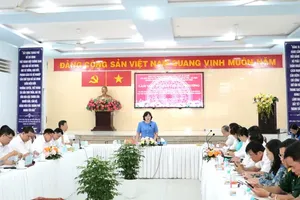
Later the same day, the Ho Chi Minh City delegation met with leaders of Beijing's Dongcheng government and attended a seminar with the management board of the Dongcheng Zhongguancun Science Park and Chinese enterprises operating in innovation, environmental protection and energy transition.
 "A Ho Chi Minh City delegation holds a seminar with the management board of the Dongcheng Zhongguancun Science Park and Chinese enterprises to discuss cooperation in innovation, environmental protection and energy transition.")
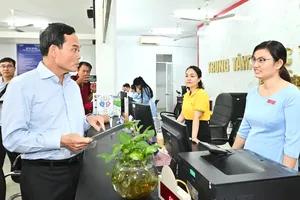
On July 6, shortly after arriving in Beijing, the delegation visited the Beijing Municipal Urban Management Committee to study the city's application of digital technology, big data and AI in urban governance. The delegation also toured the Urban Management Command Center and the Beijing Ecological and Environmental Monitoring Station.
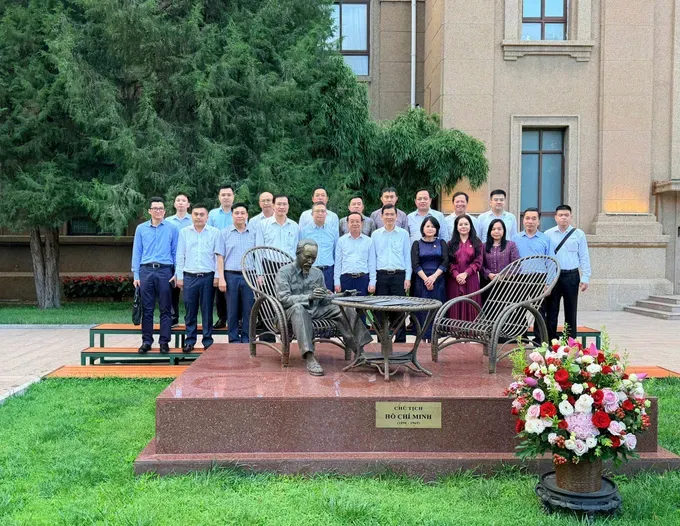
During the visit, the delegation also paid a courtesy call to the Embassy of Vietnam in China.