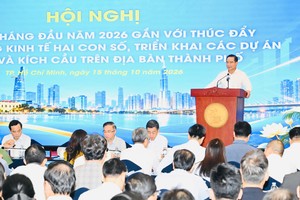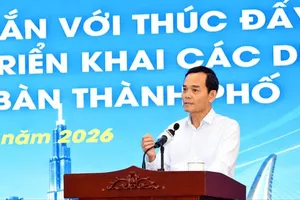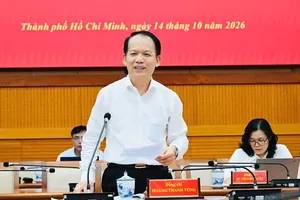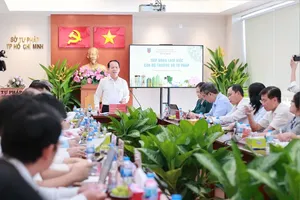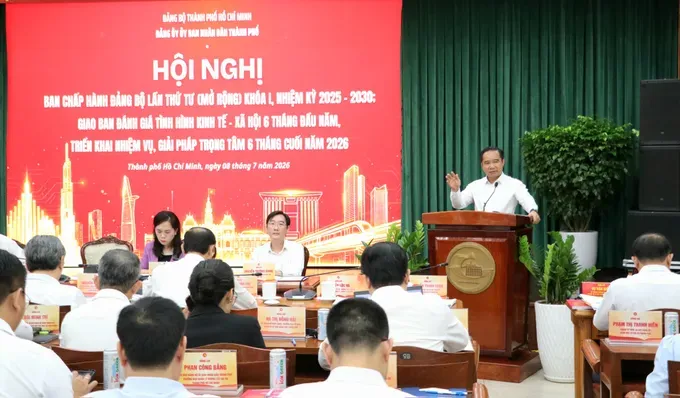
Chairman of the Ho Chi Minh City People’s Committee Nguyen Van Duoc made a statement at the 4th Conference of the Executive Committee of the municipal Party Committee held on July 8.
The conference organized by the Party Committee of the Ho Chi Minh City People's Committee also review the city's socio-economic performance in the first six months of the year, to reach consensus on key measures for the remaining six months of 2026.
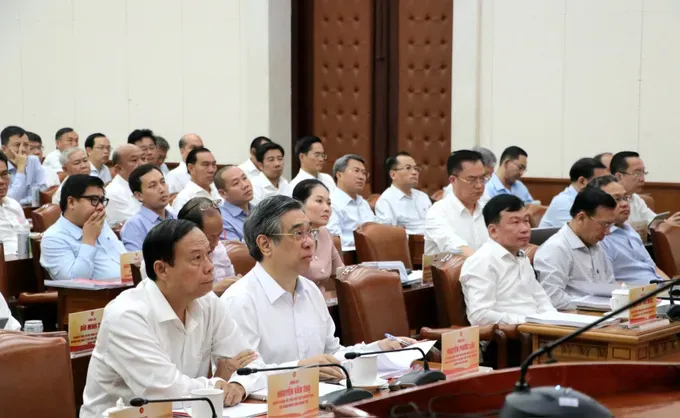
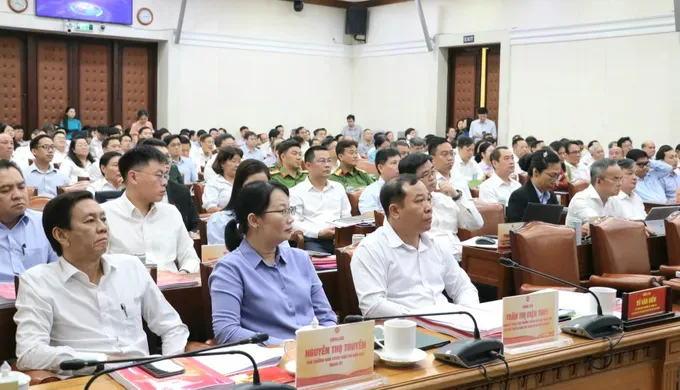
The conference was chaired by Chairman of the Ho Chi Minh City People's Committee Nguyen Van Duoc, and attended by Vice Secretary of the HCMC Party Committee and Chairman of the Vietnam Fatherland Front Committee of the city Nguyen Phuoc Loc, Standing Vice Chairman of the municipal People's Council Nguyen Van Tho, Commander of the HCMC High Command Vu Van Dien, Deputy Head of the Delegation of National Assembly Deputies of HCMC Tran Thi Dieu Thuy, along with other officials.
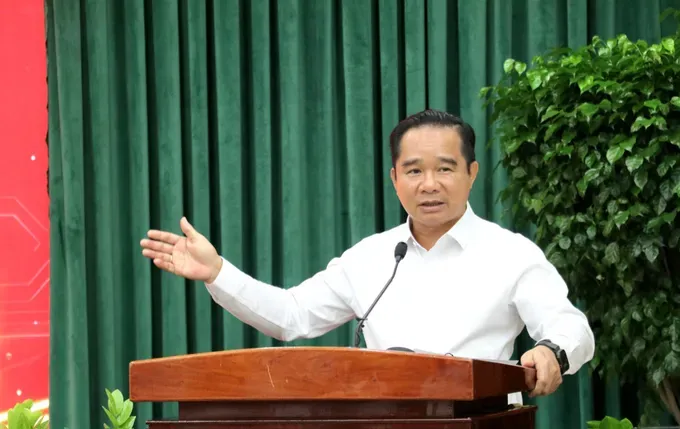
In his opening remarks, Chairman of the Ho Chi Minh City People’s Committee Nguyen Van Duoc emphasized that despite persistent economic challenges, the city recorded an 8.55 percent growth rate in the first half of 2026, the highest six-month growth in the past decade. However, the figure remains 1.45 percentage points short of the city's minimum growth target of 10 percent. With an economy valued at more than VND3 quadrillion (US$114 billion), every additional percentage point of growth generated by Ho Chi Minh City carries significant weight and contributes meaningfully to Vietnam's overall economic expansion.
Chairman of the Ho Chi Minh City People’s Committee Nguyen Van Duoc stressed that the tasks for the remaining six months of the year will be particularly demanding, requiring the entire political system to act with greater determination and stronger coordination to fulfill the city's development targets. Among the top priorities are achieving a minimum economic growth rate of 10 percent and generating approximately VND1 quadrillion (US$38.3 billion) in state budget revenue—two key objectives that are critical to reinforcing the city's role as Vietnam's economic powerhouse.
Another major priority is accelerating the disbursement of public investment capital. To date, Ho Chi Minh City has disbursed about 35 percent of its allocated public investment funds, roughly in line with the national average but still below the city's target. The city aims to raise the disbursement rate to 40 percent by the end of the second quarter, 70 percent by the end of the third quarter, and 100 percent by year-end. To achieve these goals, departments, agencies, and local authorities were urged to implement concrete measures to remove bottlenecks and expedite the implementation of individual projects and infrastructure works.
Alongside public investment, the city must continue streamlining administrative procedures and improving the investment climate by rigorously implementing measures to reduce administrative requirements, processing times, and compliance costs for residents and businesses.
Chairman of the Ho Chi Minh City People’s Committee Nguyen Van Duoc also noted that the city has implemented a wide range of measures in line with the directives of the Party Central Committee, including the restructuring and streamlining of its civil service workforce. The review and reassignment of officials will continue down to the division level to ensure that personnel are placed in the right positions according to their qualifications, thereby enhancing the effectiveness and efficiency of public administration.
Mr. Nguyen Van Duoc also called on all departments and local authorities to prioritize the implementation of key projects, particularly those involving transport infrastructure, expressways, administrative centers, the international financial center, and public-private partnership (PPP) initiatives. These strategic projects, he said, will serve as key growth drivers and make a significant contribution to HCMC's goal of achieving double-digit economic growth.
He stressed that while public investment plays a leading role in stimulating growth, the city must also unlock and mobilize private-sector resources more effectively. HCMC's total investment demand in 2026 is substantial, while the state budget can cover only part of the required funding. The city therefore welcomes businesses to engage in dialogue, commit to project timelines, work with authorities to remove bottlenecks, and partner in the implementation of major development projects.
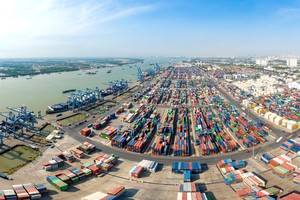
In addition to infrastructure development, HCMC will focus on fostering new growth engines, including the development of an international financial center, logistics, a free trade zone, digital transformation, innovation, and high technology.
According to the Chairman of the Ho Chi Minh City People’s Committee, the city should capitalize on its strategic location, seaport system, network of universities and research institutes, and highly skilled workforce to develop new economic sectors and strengthen its long-term competitiveness.
Another major task, he said, is to tackle long-standing challenges such as environmental pollution, urban flooding, and traffic congestion, while working toward the goal of building a drug-free Ho Chi Minh City.
He instructed heads of departments, agencies, and local authorities to put forward concrete and practical solutions, avoiding vague proposals or an evasion of responsibility.
The HCMC Chairman also urged delegates to engage in substantive discussions and propose feasible solutions to foster a high level of consensus, enabling each agency, unit, and its leadership to promptly implement assigned tasks following the conference. He emphasized that implementation must follow the principles of clearly defined tasks, clearly assigned responsibilities, clearly established timelines, and clearly measurable outcomes, with the highest determination to fulfill the city's 2026 objectives—particularly the targets of achieving double-digit economic growth and increasing state budget revenue.