The GDP growth rate reached 8.18 percent (7.94 percent in the first quarter and 8.39 percent in the second quarter). This result demonstrates that the macroeconomic growth momentum has been steadily strengthened quarter by quarter.
Other macroeconomic indicators also recorded positive developments. Specifically, the Industrial Production Index (IIP) increased by 10.8 percent, the highest level in seven years; meanwhile, the processing and manufacturing sector expanded by 11.4 percent, continuing to affirm its role as the main growth driver of the economy. Foreign direct investment (FDI) inflows remained stable, with registered capital rising sharply and disbursed capital increasing by 11.2 percent, reflecting international investors’ sustained confidence in the Vietnamese market. The domestic labor market and consumer sector also showed signs of recovery, making important contributions to the overall economic growth momentum.
However, behind the positive picture, the economy still faces pressures that require close monitoring. Notably, the trade balance has shown signs of reversal, shifting from a trade surplus in the same period last year to a trade deficit, creating significant pressure on the exchange rate and macroeconomic stability.
From the perspective of domestic capacity, the “health” of the business sector, particularly small and medium-sized enterprises (SMEs), has yet to fully recover, as the number of businesses withdrawing from the market has increased. Public investment has not yet delivered the expected breakthrough, with the growth rate of state budget-funded investment reaching only 12.7 percent, significantly lower than the 22.6 percent recorded in the same period last year.
In addition, actual domestic purchasing power (excluding price factors) remains relatively cautious, indicating that consumption has not yet made a strong breakthrough. Inflationary pressures persist, with the average Consumer Price Index (CPI) in the first six months rising by 4.38 percent, approaching the full-year ceiling target of 4.5 percent, amid a 5.4 percent increase in input material and fuel prices.
The impact of the above macroeconomic pressures is clearly reflected in the situation of Ho Chi Minh City. Although the city’s GRDP growth rate was relatively high, estimated at 8.55 percent in the first six months of the year, this result remains lower than the set scenario. To achieve the target of double-digit growth for the whole year, the pressure on the remaining period is significant, requiring growth of more than 11 percent in the third quarter and around 11.8 percent in the fourth quarter.
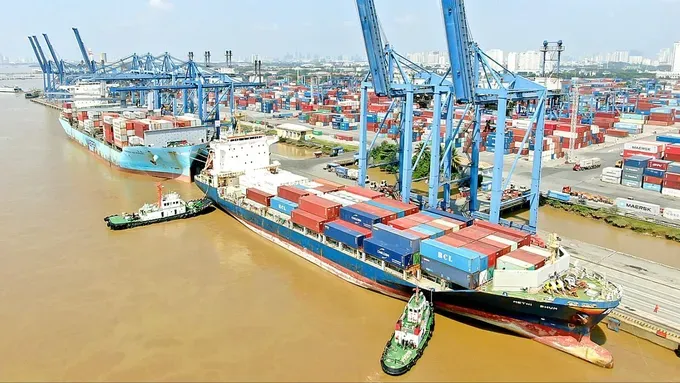
Therefore, in the second half of the year, the city’s key task is to accelerate the mobilization and disbursement of total social investment capital in four priority areas, including public investment (which has so far reached only about 35 percent, remaining at the national average level); private investment during its peak period; foreign direct investment (FDI) inflows; and new growth drivers, including seaport infrastructure, logistics, an international financial center, science and technology, innovation, and digital transformation.
A notable bright spot is that Ho Chi Minh City’s state budget revenue in the first six months of the year showed strong performance, reaching approximately VND477.173 trillion (US$18.2 billion). This result reflects the initial effectiveness of efforts to remove obstacles facing projects and unlock land resources. However, the key task ahead is to maintain this momentum to successfully achieve the year-end targets. As directed by the Standing Committee of the Ho Chi Minh City Party Committee, the city must not rely solely on revenue from land resources but continue to diversify sustainable revenue sources from manufacturing, services, logistics, and high-tech sectors.
Maintaining a growth rate of over 8 percent is already challenging, while achieving double-digit growth represents an even greater challenge. More importantly, transforming this growth rate into higher-quality growth — helping domestic enterprises become more resilient, reducing dependence on external drivers, and strengthening the macroeconomic foundation — will be the decisive task for Ho Chi Minh City in the final six months of the year.