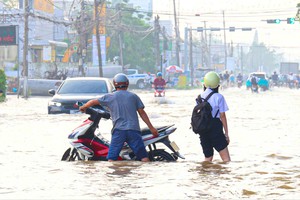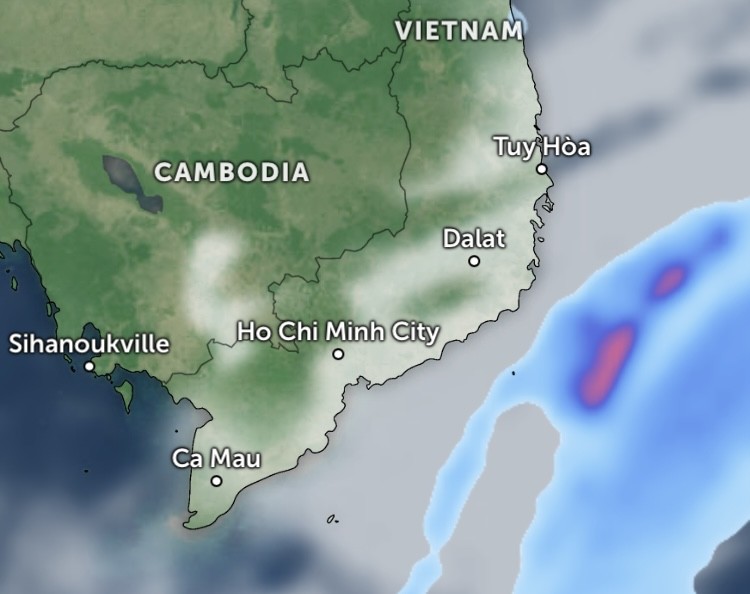
The National Center for Hydro-Meteorological Forecasting said that on February 11 and 12, several provinces and cities in Southern Vietnam and the South Central Coastal region may see unseasonal showers accompanied by isolated thunderstorms.
Meteorological authorities attributed the outlook to changes in atmospheric circulation combined with rising humidity levels, creating favorable conditions for the development of convective clouds. Forecast models indicate that a low-pressure trough and moist cloud bands are active over the region, while strengthened moisture transport from the East Sea is the main driver of localized thunderstorms during this period.
Specifically, the interaction between the low-pressure trough and high humidity allows air masses to rise more easily, triggering showers and isolated thunderstorms—an atmospheric pattern commonly observed during seasonal transition periods. In addition, although the northeast monsoon has weakened, it continues to persist over Southern and Central Vietnam, helping funnel moist marine air inland and increasing the likelihood of thunderstorms. The interaction between warm, humid air in the lower layers and more stable air aloft is also heightening atmospheric instability, further promoting thunderstorm development in the South.
Meanwhile, international weather forecast models for February 11 and 12 suggest that HCMC and neighboring areas are likely to experience scattered showers, mainly in the late afternoon and at night, with temperatures ranging from around 24 to 30 degrees Celsius.
Data from several international forecasting systems and models, including AccuWeather, indicate a high probability of light to moderate rainfall during this period, consistent with the typical pattern of early dry-season thunderstorms in Southern Vietnam. However, these models have not identified any hazardous weather phenomena.
According to Vietnamese meteorological and hydrological experts, the unseasonal rainfall event in Southern Vietnam is expected to last about three to four days, beginning on the night of February 11. Ahead of the rainfall, hot air masses are forecast to intensify again, pushing daytime temperatures higher across the South, particularly in the Southeast. Rising temperatures allow heat and moisture to accumulate in the atmosphere, creating favorable conditions for strong convective activity once atmospheric disturbances approach.