The National Center for Hydro-Meteorological Forecasting reported on the afternoon of February 6 that a powerful cold air mass is continuing to move southward across the Asian continent. From around midday to the afternoon of February 7, the cold air is expected to begin affecting the northeastern mountainous areas. By the evening and night of February 7, it will intensify and spread across the entire Northern region before extending to the North Central Coast and Central Coastal regions. Northeasterly winds inland are forecast at level 3, strengthening to levels 3–4 along coastal areas.
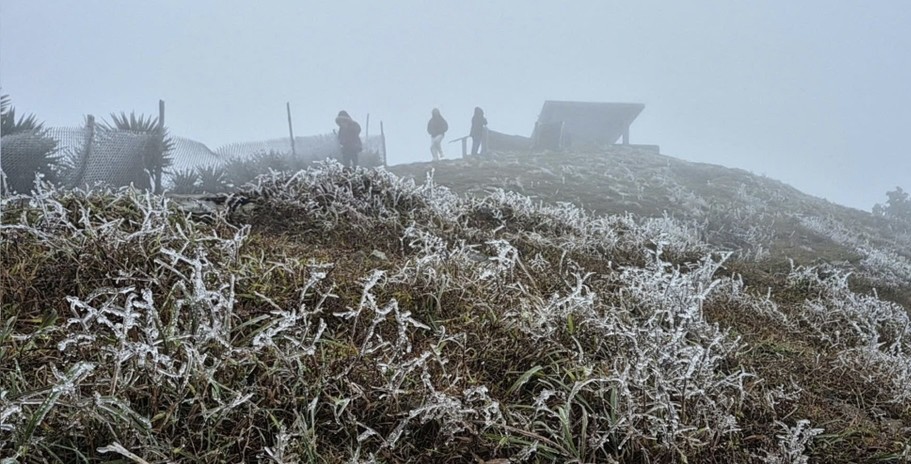
Meteorological experts said the cold spell is expected to peak on February 8 and 9. Northern Vietnam will experience severe cold, with mountainous areas likely to see extreme cold, where temperatures may drop below 3 degrees Celsius, posing risks of frost and even sleet or snowfall. From February 8, the North Central Coast will also turn cold, with some areas facing severe cold. Minimum temperatures in the North Central Coast are forecast at 12–15 degrees Celsius, while Hanoi is expected to see severe cold on February 8 and 9, with lows of 10–12 degrees Celsius.
In the Central Highlands, from February 8 to 10, northeasterly winds are expected to strengthen as cold air diffuses southward. Southern Vietnam may also see lower nighttime temperatures on the nights of February 8 and 9, although daytime conditions will remain characterized by intermittent sunshine. The National Center for Hydro-Meteorological Forecasting warned that from the night of February 7 through February 9, areas from Ha Tinh to Da Nang and the eastern parts of provinces from Quang Ngai to Gia Lai could experience moderate rainfall, with localized heavy downpours.
In response to the strong cold air, on February 6, Deputy Minister of Agriculture and Environment Nguyen Hoang Hiep, a member of the National Civil Defense Steering Committee, signed an official dispatch to the People’s Committees of 16 provinces and cities in northern Vietnam and Thanh Hoa, urging the implementation of measures to cope with severe and extreme cold.
The National Civil Defense Steering Committee requested local authorities to closely monitor weather developments and promptly disseminate information so that residents can take preventive action. Localities were also urged to review and update response plans for severe cold, with particular attention to safeguarding the health of residents and students.
According to the Ministry of Agriculture and Environment, as the Lunar New Year approaches, localities should guide livestock farmers to reinforce shelters, stockpile feed, and implement disease prevention measures to ensure that livestock and poultry do not suffer losses from starvation or cold-related deaths.