On behalf of the Politburo, Politburo Member, Standing Member of the Party Central Committee’s Secretariat, and Secretary of the Party Committee of Central Party Agencies, Tran Cam Tu has signed Conclusion No. 112-KL/TW, dated October 28, 2026, on the Master Plan for Ho Chi Minh City for the 2025–2050 period, with a 100-year vision.
The conclusion states that, at its meeting on October 16, 2026, after reviewing the submissions and explanations provided by the Ho Chi Minh City Party Committee regarding the master plan, as well as opinions from relevant agencies, the Politburo reached broad agreement on the plan’s key viewpoints, objectives, vision, and strategic orientations, as presented and proposed by the municipal Party Committee.
The Politburo tasked the Ho Chi Minh City Party Committee with leading the incorporation of its opinions and central agencies' recommendations while refining the master plan.
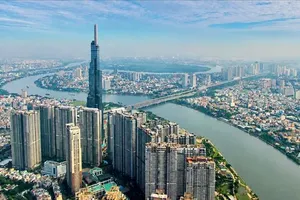
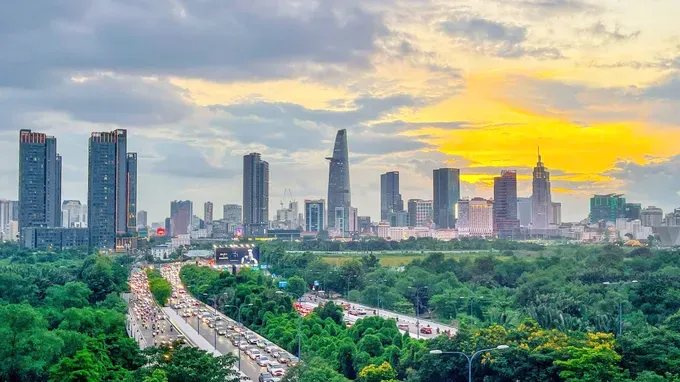
In particular, the municipal Party Committee must thoroughly grasp and fully translate into concrete measures the policies and strategic orientations set by the central authorities and the Politburo, especially Politburo Resolution No. 09-NQ/TW dated May 19, 2026, on building and developing Ho Chi Minh City in the new era. The plan must ensure continuity while fostering development, embrace breakthrough thinking and a long-term strategic vision, and aim to transform the city into a global metropolis with international competitiveness, serving as a leading growth engine that drives and spreads development across the region and the country.
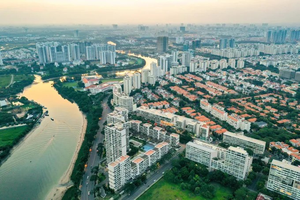
The Ho Chi Minh City Party Committee is also tasked with further refining the city’s development model to fully leverage its geographical position, role, potential, and combined advantages following the merger. This includes organizing a multi-tiered, multi-polar development structure and clearly defining the functions and interrelationships among development poles, growth hubs, functional zones, and infrastructure networks.
Strategic priorities and key areas of focus must be clearly identified to ensure concentrated resource allocation and avoid fragmented investment. Economic development must be closely integrated with cultural and human development, environmental protection, climate change adaptation, national defense and security, and social welfare, with the ultimate goal of improving residents’ quality of life.
The Politburo further tasked the municipal Party Committee with reviewing and refining the plan’s objectives, targets, forecasts, and growth scenarios, while clearly establishing priorities, implementation timelines, resource requirements, and plans for mobilizing and allocating resources, as well as the necessary institutional conditions, governance capacity, and implementation mechanisms.
The master plan must serve as an effective instrument for shaping development, organizing urban space efficiently, and generating new growth drivers, while meeting the city’s immediate and long-term development requirements.
The Ho Chi Minh City Party Committee must also formulate programs and action plans for implementation, clearly identifying key tasks, priority infrastructure works and projects, implementation timelines, resources, and the responsibilities of relevant agencies and units. Inspection and supervision must be strengthened to ensure coordinated and effective implementation, with absolutely no room for corruption, wastefulness, or other misconduct.
Information on the master plan must be made publicly available to enable residents to contribute their opinions and help refine the plan, thereby building broad public consensus for its implementation.
During implementation, any emerging issues beyond the municipal Party Committee’s authority must be proactively consolidated and reported to the competent authorities for consideration and direction in accordance with regulations.