
The event was attended by Vice Chairman of the Ho Chi Minh City People's Council, Nguyen Van Dung.
A key issue raised by voters centered on the new features of the Ho Chi Minh City Master Plan for the 2025–2050 period, with a 100-year vision, as well as solutions to address long-stalled projects and safeguard the legitimate rights and interests of residents.
Addressing voters' concerns, Mr. Pham Binh An, Deputy Director of the Ho Chi Minh City Institute for Development Studies, said the key distinction of the latest master plan lies in its integrated approach, which combines socio-economic development planning with spatial development and urban infrastructure planning.
This approach helps shorten the approval process, eliminate overlaps among different planning schemes, and create favorable conditions for investors to promptly implement projects and translate the master plan into reality.

Responding to voters' concerns over stalled planning projects, Mr. Pham Binh An said the current Land Law and Planning Law contain specific provisions to protect the rights of land users throughout the planning implementation process.
According to the Deputy Director of the Ho Chi Minh City Institute for Development Studies, following the approval of the Ho Chi Minh City Master Plan, the immediate priority is to complete high-quality zoning plans covering the entire city. These plans will clearly define land-use functions, provide a legal basis for implementing priority projects, and ensure transparent management of areas where investment is not yet required.
Specifically, if a land parcel is included in the master plan but has not yet been incorporated into the annual land-use plan, people may continue using the land and fully exercise their lawful rights in accordance with regulations. If the land has been included in the land-use plan but the project has not yet commenced, land users will be subject to certain restrictions on their rights as prescribed by law. Importantly, if the State fails to implement the project within the statutory two-year period, the competent authority must review, adjust, or revoke the land-use plan to prevent stalled planning situations.
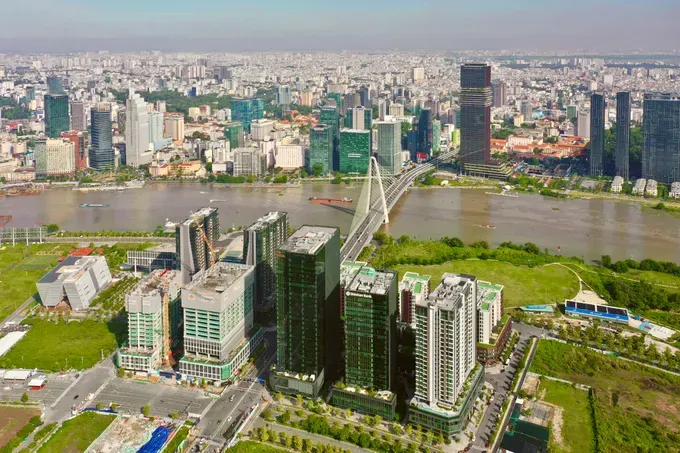
Regarding land allocated for social housing, Mr. Pham Binh An said the master plan will reserve land for social housing, rental housing, and rent-to-own housing in new urban growth poles, industrial parks, logistics hubs, innovation districts, and areas surrounding metro stations. The city will also introduce preferential policies on administrative procedures, land access, and financing to attract investment. In addition, targets for social housing, schools, healthcare facilities, and public open spaces will be incorporated into zoning plans and housing development programs to ensure that land designated for social welfare purposes is managed and utilized as intended.
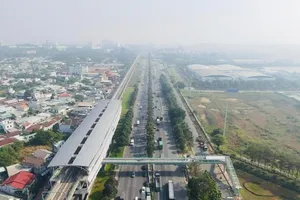
According to Deputy Director of the Ho Chi Minh City Department of Planning and Architecture, Phan Van Tuan, the master plan is designed not only with a long-term vision but also to restructure the city's urban space. To address traffic congestion, the urban railway network will serve as the backbone of the city's transport system, supporting transit-oriented development (TOD). Residential, commercial, and service developments will be concentrated around metro stations, helping reduce dependence on private vehicles. The city will also prioritize urban development models that mitigate flooding while implementing measures to regulate groundwater extraction, curb land subsidence, and protect the Can Gio mangrove forest, thereby enhancing resilience to climate change.






)