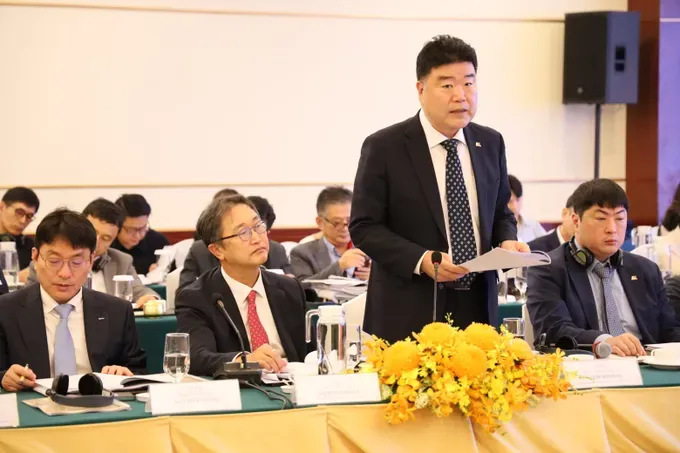
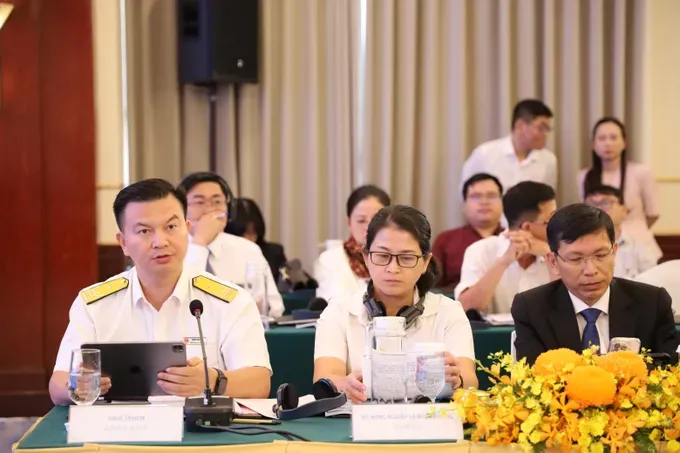
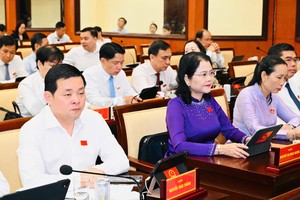
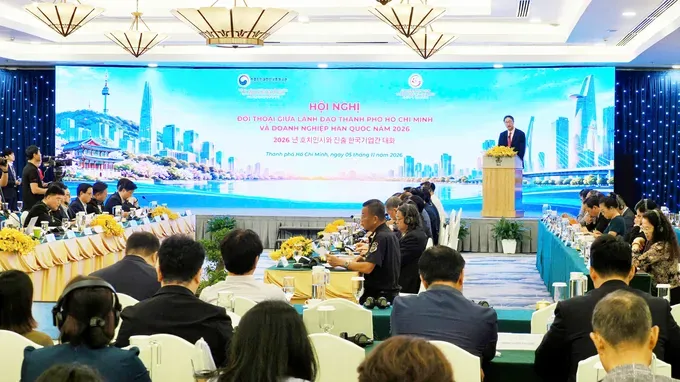
Municipal authorities engaged directly with South Korean business leaders on November 5 at a dialogue to address pressing hurdles in land use, taxation, construction, and administrative procedures, aiming to help existing investors stabilize and expand their operations.
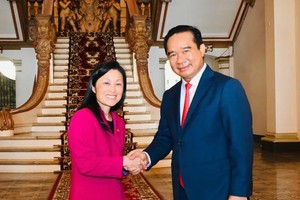
The 2026 Ho Chi Minh City Korean Business Dialogue was co-organized by the Ho Chi Minh City Investment and Trade Promotion Center (ITPC) and the Consulate General of the Republic of Korea in Ho Chi Minh City, under the chairmanship of Nguyen Cong Vinh, Vice Chairman of the Ho Chi Minh City People’s Committee.
Creating favorable conditions for sustainable corporate growth
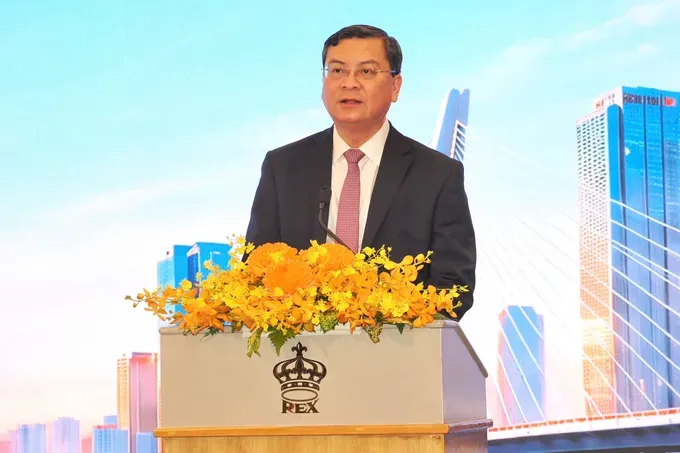
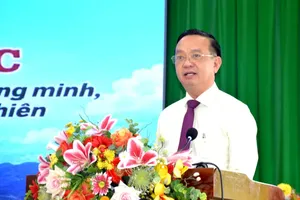
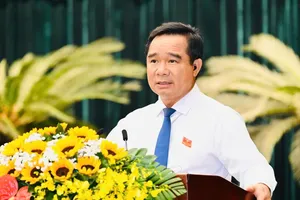
Speaking at the conference, Vice Chairman of the Ho Chi Minh City People’s Committee Nguyen Cong Vinh emphasized that to achieve double-digit economic growth, Ho Chi Minh City must not only attract new foreign capital but also foster favorable conditions for existing enterprises to achieve long-term growth. He instructed relevant departments and agencies to directly address corporate grievances, assigning clear accountability and strict resolution deadlines for each case.
South Korea currently ranks first in the number of foreign direct investment (FDI) projects in Ho Chi Minh City, with more than 3,400 active projects totaling approximately US$15.8 billion in registered capital, making it the city’s second-largest foreign investor by capital volume.
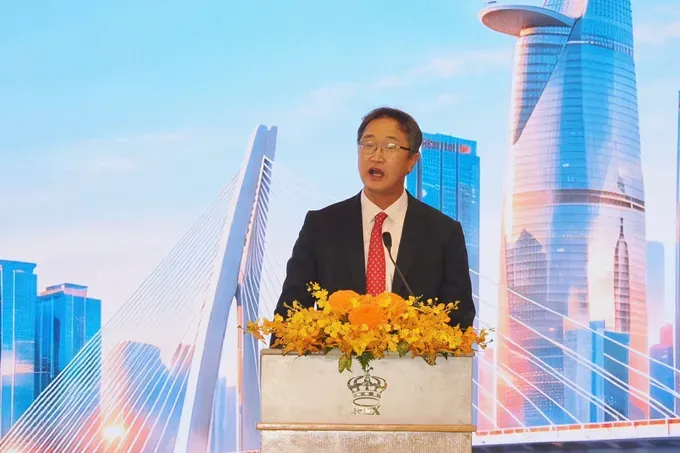
The Consul General of South Korea in Ho Chi Minh City, Jung Jung Tae, noted that effective support for operating businesses serves as a key foundation for building trust among prospective investors. The success of current foreign enterprises, he added, remains the most persuasive evidence of the city's investment climate.
During the dialogue, the South Korean business community raised 14 specific recommendations spanning land, tax, and administrative hurdles. Concerns regarding construction permitting, infrastructure development, and real estate drew significant focus, with businesses pointing to delays in file processing and inconsistent enforcement of regulations.
Representatives urged municipal authorities to streamline administrative workflows and establish a mechanism to track the implementation of post-dialogue resolutions.
Pham Quang Nhat, Director of the ITPC, stated that Ho Chi Minh City is widening investment opportunities in high-tech industries, semiconductors, supporting industries, and infrastructure development, while also resolving current operational bottlenecks.
The city is currently soliciting investment for over 200 projects across nine key sectors, prioritizing areas aligned with the strategic strengths of South Korean firms, including research and development (R&D), microchip training, next-generation industrial parks, urban transit, and seaport development.
Notably, industrial park developments, such as Lai Hung, Binh Duong Riverside, and Pham Van Hai I and II, alongside urban railway networks and transit-oriented development (TOD) projects, are unlocking substantial scope for bilateral cooperation. Ho Chi Minh City is also steering capital inflows into logistics, free trade zones, and green infrastructure.
To translate these potential opportunities into concrete projects, a representative from the Ho Chi Minh City Department of Finance stated that the city will continue refining its business climate, enhancing administrative decentralization, and assisting investors in accessing prospective projects. The Department of Finance will act as the primary liaison, coordinating with relevant regulatory bodies to resolve ongoing challenges and support foreign investors throughout project execution.
Expected support for factory relocation starting in 2027
Woo Gong, Deputy General Director of Young Woo Company, raised concerns about operational challenges with an order to relocate the firm's factory in former Hoc Mon District within six months. According to the company, this timeframe is insufficient to secure a new location, complete administrative procedures, construct facilities, stabilize its workforce, and satisfy production standards set by international partners. The company requested that the transition period be extended to five years, or that it be permitted to continue operations at its current site until planned development projects are formally implemented.
In response, a representative from the Ho Chi Minh City Department of Finance stated that the current plant location no longer aligns with approved industrial zonation, leaving no legal grounds for an extension. However, the department committed to working further with the company to explore appropriate support measures.
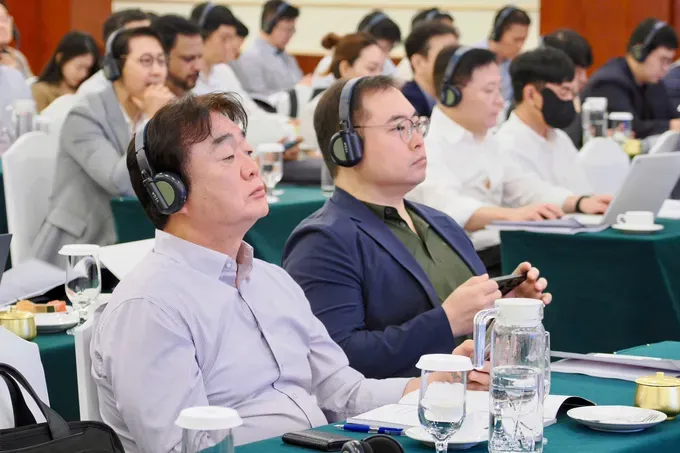
According to Ha Van Ut, Deputy Director of the Ho Chi Minh City Department of Industry and Trade, the city is drafting a support policy for relocating enterprises, which is scheduled for submission to the Ho Chi Minh City People’s Council in December 2026 and expected to take effect in 2027. The proposed policy focuses on land rent subsidies, access to preferential credit, vocational training, and employment assistance for workers affected by the relocation process.
Reduced tax audits planned for compliant businesses
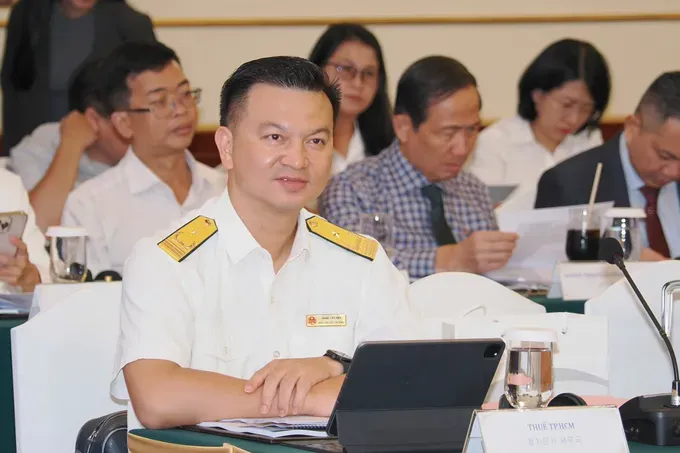
Kim Nyoun Ho, Chairman of the Korean Chamber of Commerce and Industry in Vietnam (KOCHAM), recommended standardizing tax audit activities across administrative levels to eliminate overlaps. He also requested advance notification regarding tax obligations for corporate representatives before travel exit bans are imposed.
In response, Giang Van Hien, Deputy Head of the Ho Chi Minh City Tax Department, stated that tax authorities will review audit plans and apply risk-assessment methodologies to reduce audit frequency for compliant taxpayers. Instances of duplicate audits will be reviewed and adjusted upon receipt of specific details. Regarding challenges in value-added tax (VAT) refunds for on-spot export activities and tax settlements during corporate liquidations, the tax authority will continue coordinating with relevant entities to provide guidance and resolve issues in accordance with regulations.
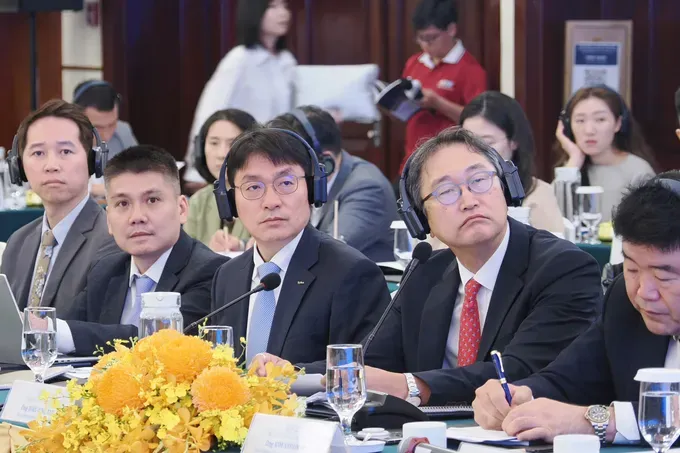
In the green investment sector, Sim Yongsub, General Director of Nanoom Energy, proposed that Ho Chi Minh City pilot smart electric vehicle (EV) charging stations integrated with rooftop solar power and energy storage systems. The company urged the city to consider a regulatory sandbox mechanism to enable the utilization of suitable sites for charging infrastructure, thereby mitigating pressure on the urban power grid.
Addressing the recommendations raised by South Korean businesses, Nguyen Cong Vinh, Vice Chairman of the Ho Chi Minh City People’s Committee, directed municipal departments and agencies to update progress within 15 days and work directly with individual enterprises to address their difficulties. Following this deadline, the People’s Committee will convene targeted sessions for each recommendation to evaluate resolution outcomes.
City leadership emphasized that resolving corporate challenges must be demonstrated through concrete actions, adding that the effectiveness of handling business grievances will serve as a key metric of accountability for state management agencies.