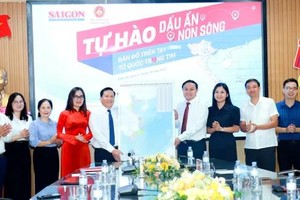
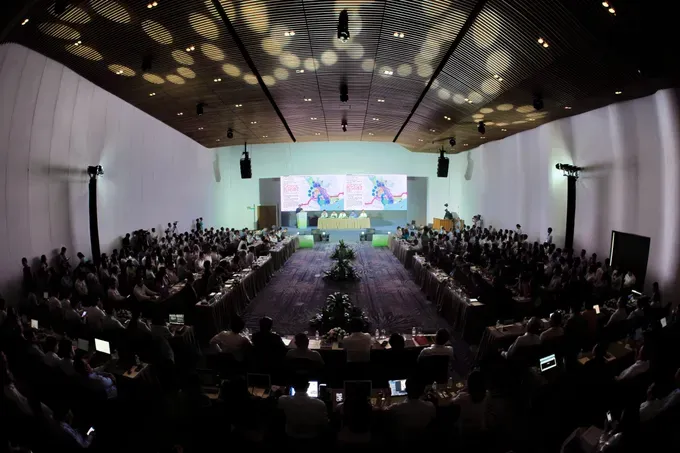
The event brings together policymakers, urban planners, researchers and business representatives to discuss the city's long-term development strategy.
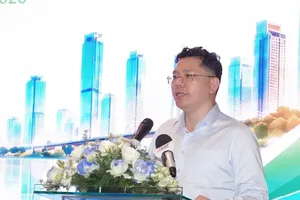
Speaking at the conference, Mr. Vo Van Minh, Chairman of the Ho Chi Minh City People's Council, emphasized the importance of formulating and implementing a comprehensive master plan to guide the city's future development.
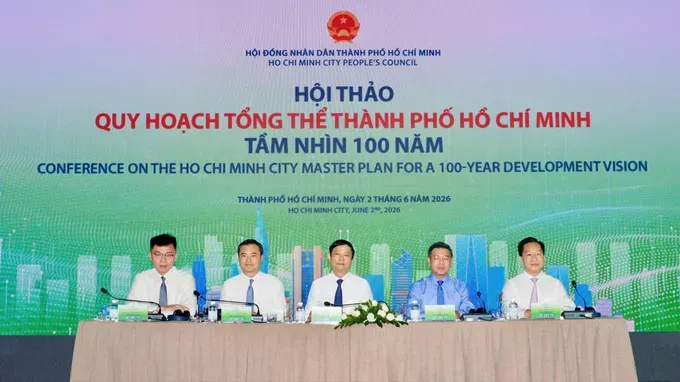
According to him, the plan is expected to identify breakthrough development strategies, restructure the city's spatial organization, optimize the allocation of socio-economic functions, ensure national defense and security, and improve investment efficiency and quality of life.
The master plan will serve as a foundation for enhancing Ho Chi Minh City's position within the Southeast Region, Vietnam and the broader region, he said.
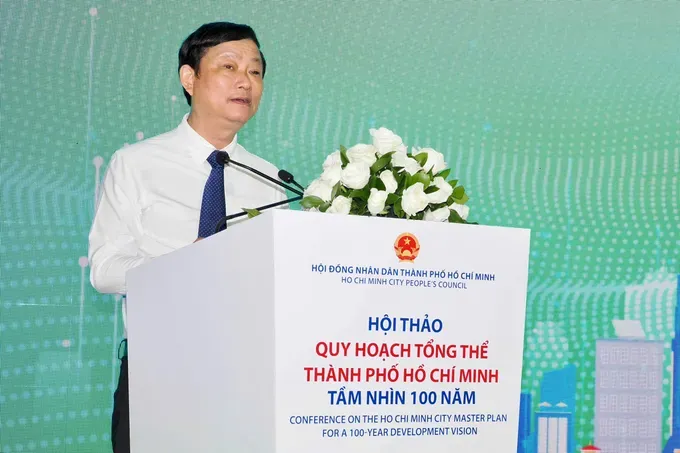
The Chairman of the Ho Chi Minh City People's Council noted that Resolution No. 09-NQ/TW of the Politburo on the development of Ho Chi Minh City in a new era calls for the formulation of a master plan with a 100-year vision. The objective is to maximize the city's potential and competitive advantages while creating new development space and long-term growth drivers. The plan is also expected to strengthen climate resilience for both the city and its surrounding metropolitan region.
He stressed that future urban development should be based on a multi-polar, integrated and highly connected model, supported by a multi-center governance framework. Such an approach would balance economic, cultural and social development while preserving the city's historical and cultural heritage.
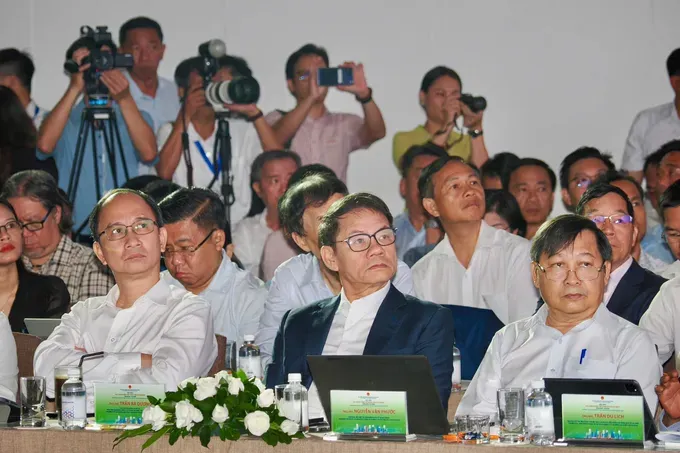
Conference participants were encouraged to discuss major strategic orientations that could provide both scientific and practical foundations for the long-term planning process.
Among the key priorities is defining Ho Chi Minh City's strategic role within global value chains and developing five breakthrough economic pillars: high-tech industry; logistics linked to seaports, airports and free trade zones; the international financial center; tourism and cultural industries; and education, healthcare, science and technology.
Delegates also examined options for restructuring urban space following administrative consolidation, maximizing the strengths of different areas under the two-tier local government model, and preserving architectural identity and ecological diversity.
Other priorities include expanding regional transport infrastructure, strengthening north-south connectivity, improving links to seaports, and developing science-based plans for energy systems, water supply and drainage, and telecommunications infrastructure.
The city also aims to promote sustainable infrastructure development by prioritizing recycling, renewable energy, disaster-risk zoning and proactive climate adaptation measures.
He said the recommendations and proposals presented at the conference would provide an important basis for the People's Council to perform its oversight role and ensure that the city's master plan is practical, feasible and aligned with long-term development goals.
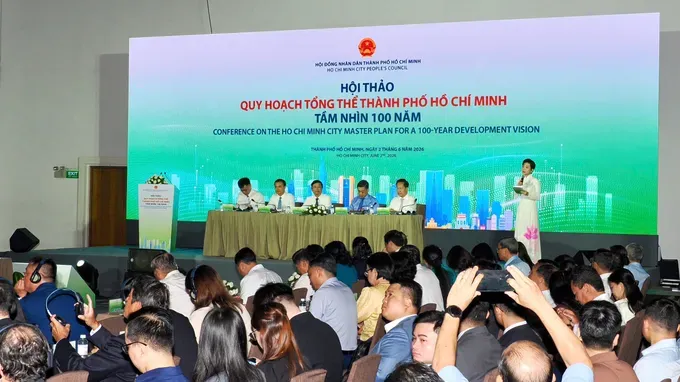
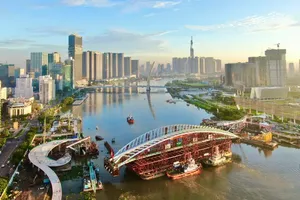
With an area of more than 6,700 square kilometers and a population exceeding 14 million, Ho Chi Minh City is Vietnam's largest urban center and a major economic hub in Southeast Asia. The city contributes more than 23 percent of the country's GDP, over 30 percent of state budget revenue and 20.7 percent of Vietnam's total import-export turnover, while serving as the nation's leading center for finance, commerce and innovation.



)