Behind this beauty lies the simple yet inspiring story of Ms. Ta Thi Kim Phon, who has transformed ocean waste into a unique ecological space that draws tourists.
Turning waste into beauty
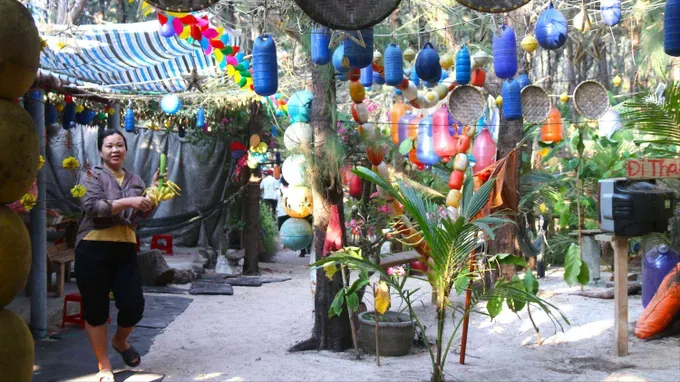
From the main island of Phu Quy, visitors take a speedboat to the smaller Hon Tranh Island, part of Phu Quy Special Zone, to reach the ecological garden named “Chi Bay,” (Mrs. Bay) created by Ms. Ta Thi Kim Phon. Following a narrow trail through the casuarina forest, the destination gradually comes into view, revealing a surprising scene. The entire space is covered with vibrant strips of color, evoking the image of a “rainbow” suspended between sea and sky. Hundreds, even thousands, of brightly colored plastic buoys sway in the wind. Interspersed among them are plastic bottles, old ropes, decayed wood, and tree branches—all arranged seemingly at random, yet forming a harmonious and captivating whole.
The creator of this space recounts that it all began with her walks along the beach, where she would see plastic buoys, bottles, and damaged fishing gear washed ashore every day. She started collecting them, initially just to clean up the beach. But it was the vivid colors of the buoys that eventually inspired her to create this vibrant space.
According to local fishermen, most of these buoys drifted in from distant seas, and some even came from abroad. What was once discarded, through Ms. Phon’s careful arrangement, gained a “second life”—becoming lively and useful. At its peak, she estimates her garden contained thousands of buoys of various sizes. Not only buoys, but everything washed up from the sea was repurposed. Old anchor ropes became stairways, decayed wood was transformed into tables and chairs, and bamboo was shaped into decorative frames…
Few people know that this area was once overwhelmed with waste. When scrap prices fell, collecting bottles no longer provided an income, and many people either abandoned the trash or gathered it to burn. This, in turn, further polluted the air and the environment. “Instead of burning it, I decided to keep it and turn it into something useful,” Ms. Phon said simply. For her, each recycled item is not only a decoration but also a way to help keep the sea cleaner.
A highlight for green tourism
Visitors to Ms. Phon’s garden are invariably amazed. They take photos and explore the space and the story behind it. Some even ask to buy the buoys as souvenirs, but for Ms. Phon, the greater joy is giving them to those who truly appreciate them.
Unable to hide her excitement, Ms. Minh Anh, a visitor from Ho Chi Minh City, said that it’s the first time she has seen ocean waste transformed into such a beautiful space. Every corner here is photo-worthy, but what impressed me most is the environmental message behind it.
Accompanying his wife and two young children on a trip to Phu Quy, Mr. Le Huu Phong from Phu Tho province said his family has traveled to many places, but it’s rare to find a spot that is both unique and carries such a meaningful story. "It doesn’t feel like just a visit—my children are also reminded of the importance of protecting the environment," he said.
The emergence of the “from waste” garden has brought a fresh dimension to tourism on Phu Quy Island. Without large investments or expensive materials, it is creativity and environmental awareness that have created a distinctive appeal.
Mr. Le Hong Loi, Chairman of the Phu Quy Special Zone People’s Committee, noted that Ms. Phon’s model and ideas carry many practical benefits. They help reduce the pressure of waste management, create a unique highlight for local tourism, and serve as a “visual communication channel” on environmental protection for both visitors and residents. In the context of Phu Quy’s pursuit of green and sustainable tourism, such initiatives are not only photo-worthy destinations but also vivid messages about how humans can interact responsibly with nature. Moving forward, local authorities plan to continue promoting this approach among residents and businesses across the island.
Phu Quy Special Zone has set a goal to develop tourism in a green, friendly, and sustainable direction. Concrete, relatable initiatives—such as repurposing ocean waste as decorations, encouraging visitors not to bring plastic waste to the island, and promoting the use of biodegradable bags and packaging among residents and tourists—serve as vivid examples of this approach.