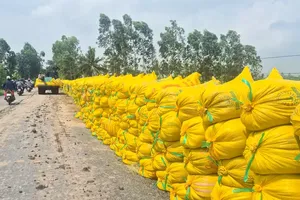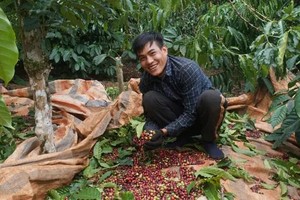
During the 2026 dry season, saltwater intrusion is forecast to intensify in Dong Thap Province. To mitigate the impacts of drought and salinity, the provincial Department of Agriculture and Environment has encouraged farmers in communes within the Go Cong freshwater zone to boldly replace rice with corn in water-scarce fields.
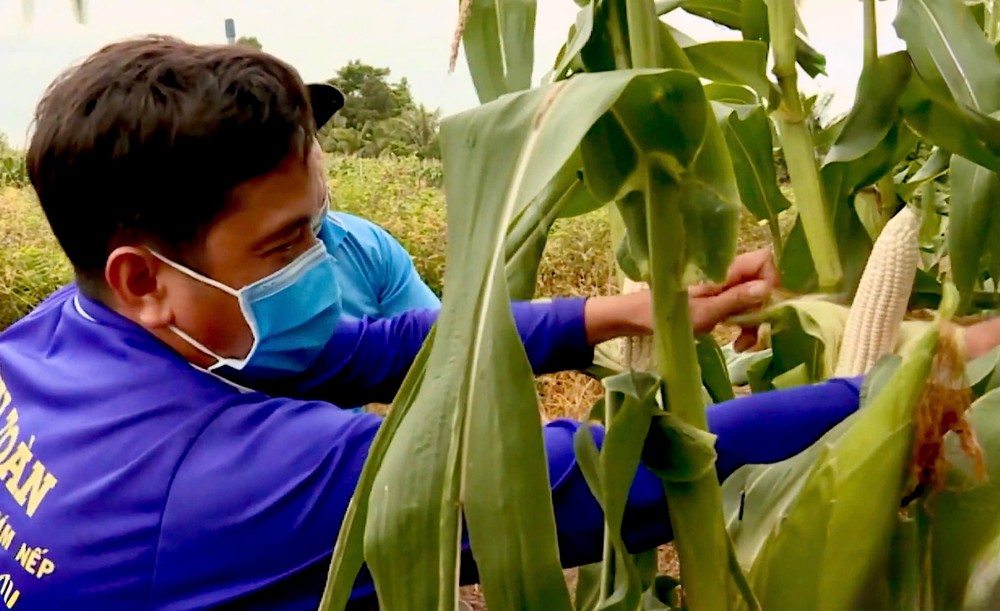
Le Hoai, a farmer in Dong Son Commune, said that in previous years, saline intrusion during the dry season had repeatedly disrupted agricultural production, leaving many fields abandoned. However, this year local farmers have proactively shifted to corn and other crops that are more tolerant to drought and salinity. Among them, corn has become the most widely planted thanks to its short growing cycle, higher yields, and significantly lower water demand compared with rice.
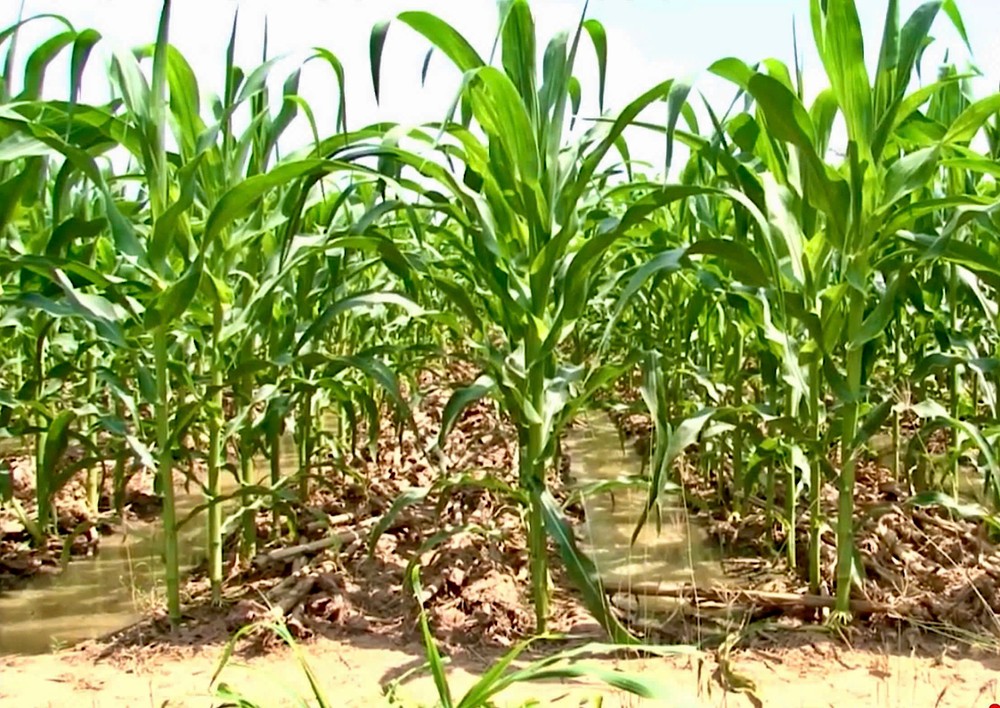
A typical example is the household of Tran Thi Be in Dong Son Commune. For two consecutive years, her family has cultivated corn instead of rice on 1.5 hectares of farmland, resulting in higher income and improved living conditions.
Tran Thi Be said the area is considered a salinity “hotspot,” where farmers used to abandon their fields whenever drought and saltwater intrusion struck. Since receiving encouragement from local authorities, her family decided to switch from rice to corn.
“To our surprise, corn tolerates drought very well and produces high yields,” she said. “On average, one hectare yields about 7.2 tons per crop. After deducting costs, farmers earn a profit of more than VND80 million per hectare—around four times higher than rice. As a result, many households have switched entirely to corn cultivation year-round, with up to five crops annually.”
According to Be, about 1,500 hectares of rice fields in the commune have now been converted to corn production. Corn currently sells for VND3,000–3,500 per ear, an increase of VND1,500 compared with last month, bringing considerable optimism among farmers.
Field observations show that although local sluice gates designed to block saline water have been closed, corn growers are still able to maintain normal cultivation due to the crop’s relatively low water requirements.
The agricultural sector in Dong Thap Province has also organized training sessions to guide farmers in applying organic production methods, using biological pesticides, and reducing chemical fertilizers to produce cleaner corn.
At present, the provincial Department of Agriculture and Environment is promoting partnerships with processing enterprises to expand raw material corn-growing areas, particularly in regions facing water shortages. Efforts to secure stable market outlets and product offtake agreements are expected to give farmers greater confidence in production, prevent the common “bumper crop, price collapse” scenario, and accelerate the restructuring of the local agricultural sector toward a more modern and climate-resilient model.