Heartache over abandoned cocoa trees
Few would imagine that the petite 48-year-old woman working tirelessly in the orchards once spent more than 12 years in corporate life, holding positions at several Japanese corporations in downtown HCMC with an attractive monthly salary exceeding US$3,000.
Yet the fast-paced corporate environment left her feeling constrained. Nguyen Thi Thu eventually chose to return to her hometown in Tam Thang Ward, hoping to find work that could make better use of her knowledge and passion.
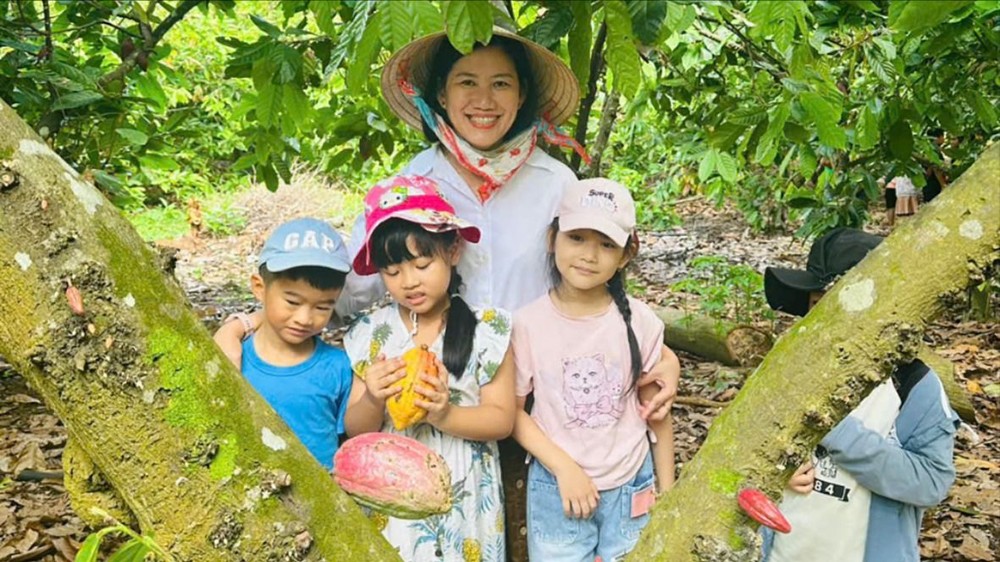
In 2019, during a business trip, Thu happened to visit a cocoa farm in the red-soil district of Chau Duc. There she heard farmers lament their situation: ripe pods hanging in abundance, yet no buyers in sight.
“The fruit ripens right under the trees, but no one buys it. Prices are too low—how can we survive?” farmers told her.
In their helpless expressions, Thu saw more than a struggling crop. She saw an entire livelihood at risk of disappearing. Cocoa had once been expected to become a high-value crop in Ba Ria–Vung Tau Province, but after an initial boom, prices collapsed sharply.
From about 1,200 hectares in 2004, cocoa acreage had dwindled to only around 300 hectares by 2019 as farmers cut down their orchards. When Thu first arrived, many gardens were left unharvested.
“Farmers were very discouraged,” she recalled. “They told me there was no point in encouraging people to grow cocoa because no one wanted to eat it. At that moment, I thought: maybe I should try doing something with cocoa.”
That moment of reflection changed the course of her life.
Leaving her office career behind, Thu started from scratch with a crop on the verge of being forgotten. She founded the brand OCA—Organic Cacao—and became director of OCA Company, developing a circular, sustainable agricultural model.
Within this model, every part of the cocoa fruit is utilized. The beans are processed into chocolate, powder, tea, and cocoa wine. The pulp is pressed into beverages, while the shells are turned into organic fertilizer that is returned to the soil.
According to the Department of Agriculture and Environment of HCMC, the Eastern area of the city currently has nearly 650 hectares of cocoa plantations, concentrated in Nghia Thanh, Ngai Giao, Kim Long, Chau Duc, and Binh Gia communes.
Cocoa produced in the area has received strong evaluations from demanding international markets for its distinctive aroma and flavor. It has even been ranked among the world’s top 100 cocoa varieties. Despite this recognition, supply still falls short of market demand, particularly for exports.
Determined to preserve the region’s raw-material base, Thu personally visited farms and patiently persuaded households to switch to organic cultivation. She also committed to purchasing their cocoa at prices three to four times higher than the prevailing market rate.
Under her leadership, the price of fresh cocoa pods surged from about VND4,000 per kilogram to roughly VND15,000 per kilogram. The increase has revived hope among nearly 300 farming households now linked to the OCA network.
Cocoa offers farmers a relatively stable crop. Trees bear fruit year-round, are easy to grow, and require limited care. At peak harvest periods, some households can earn as much as US$2,700–US$3,100 per month from selling fresh pods.
Le Thi Xuan, a farmer in Binh Gia Commune who supplies cocoa to OCA, said fresh cocoa prices are now far higher than before.
“Thanks to OCA, farmers here have not only preserved their orchards but also rediscovered the true value of cocoa,” she said. “It has helped stabilize our livelihoods.”
Conquering demanding markets
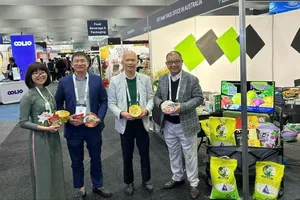
Today, OCA exports organic cocoa to demanding markets including Japan, the Netherlands, and Singapore. Notably, its cocoa wine has become the first product of its kind from Vietnam to be exported to Japan.
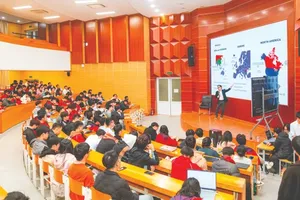
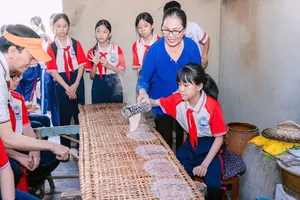
Beyond production, OCA has also expanded into educational tourism. Groups of school and university students regularly visit cocoa gardens and processing facilities to learn firsthand about the journey from cocoa pod to chocolate bar.
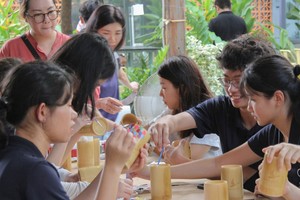
Participants can experience harvesting cocoa, fermenting and processing beans, and even making chocolate themselves. For many students, it is the first time they truly understand what “organic” agriculture means—and they get to taste chocolate made with their own hands.
OCA has also opened its doors to children with autism, offering experiential activities that help them develop practical skills and integrate into the community.
As a result, the chocolate workshop has become more than just a production facility. It is also a place where compassion is cultivated and where younger generations learn to appreciate the value of local agricultural products.
According to Mr. Tran Van Mang, Vice Chairman of the Farmers’ Association of HCMC, the OCA model demonstrates both creativity and effectiveness in developing sustainable agriculture.
The initiative not only generates economic value for farmers but also establishes a complete value chain—from cocoa cultivation and organic farming to deep processing and product diversification.
By supporting farmers with cultivation techniques and guaranteeing product purchases at prices higher than the market rate, OCA has helped hundreds of households stabilize their incomes and continue growing cocoa.
Beyond its economic benefits, the model advances circular agriculture that protects the environment while enhancing product quality. It has also helped revive and expand the cocoa sector in the Eastern areas of HCMC, diversifying the city’s agricultural products.