The city’s most anticipated infrastructure projects
The three key projects set to launch are Can Gio Bridge, Phu My 2 Bridge and Metro Line 2 (Ben Thanh – Tham Luong). These strategic works are expected to have far-reaching impacts on the city’s traffic network, urban landscape, and the socio-economic development of both Ho Chi Minh City and the Southern Key Economic Region.
Metro Line 2 (Ben Thanh – Tham Luong) serves as the backbone of Ho Chi Minh City’s northwest-to-central public transit corridor. Spanning more than 11 kilometers, it includes ten underground stations, one elevated station, and a depot, providing a direct connection between the city center and the densely populated northwest gateway, which has long faced limited transport infrastructure.
According to Mr. Phan Cong Bang, Head of the Ho Chi Minh City Urban Railway Management Board, once completed in 2030, Metro Line 2 will not only relieve pressure on the road network but also foster public transport habits, supporting sustainable and environmentally friendly urban development.
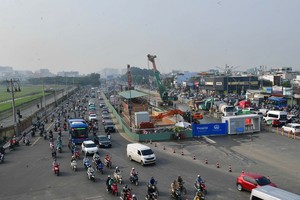
Alongside Metro Line 2, the Phu My 2 Bridge project has a total investment of over VND25,000 billion (US$950 million) and is implemented under a public-private partnership (PPP) model. The bridge spans approximately 6.3 kilometers, including 4.6 kilometers in Ho Chi Minh City and 1.7 kilometers in Dong Nai Province. It is designed with eight lanes, including elevated two-level sections, starting from Nguyen Huu Tho Street in Ho Chi Minh City and ending at Lien Cang (interport) Road in Dai Phuoc Commune, Dong Nai Province.
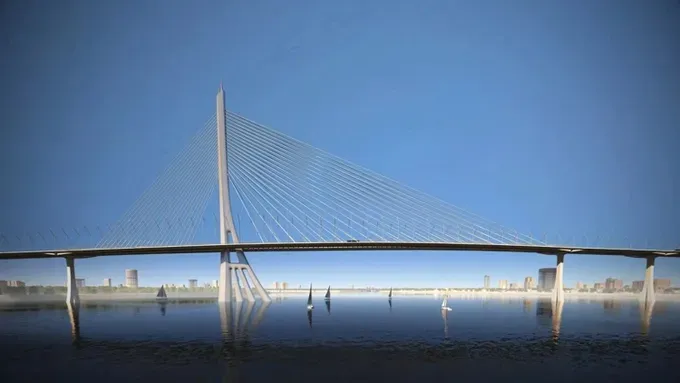
Phu My 2 Bridge will not only ease traffic pressure on the existing Phu My Bridge but also form a strategic route connecting Ho Chi Minh City withDong Nai, Ba Ria- Vung Tau, and especially Long Thanh International Airport. Once operational, it will ease congestion on National Highway 51 and the Ho Chi Minh City – Long Thanh – Dau Giay Expressway, while reducing time and costs for goods transport and logistics.
Meanwhile, Can Gio Bridge, spanning the Soai Rap River, is particularly significant for the only part of Ho Chi Minh City bordering the sea. Replacing the Binh Khanh ferry with a six-lane bridge designed for speeds of 80 kilometers per hour, the bridge will eliminate the decades-long dependence on ferries.
When completed, Can Gio Bridge will not only improve mobility for residents but also open new development space, strongly boosting ecotourism, logistics, coastal urban development, and other green economic sectors. Importantly, it will tightly integrate Can Gio with the city center, gradually forming a new growth hub in the Southern region.
Promoting growth
A statement of urban planning expert Ngo Viet Nam Son said that Ho Chi Minh City’s simultaneous implementation of major transportation infrastructure projects represented a foundational step promoting coordinated regional development, in contrast to the fragmented and scattered approach of the past.
According to urban planning expert Ngo Viet Nam Son, the biggest bottleneck for Ho Chi Minh City and surrounding provinces has long been weak connectivity and a lack of integration, which has concentrated economic, labor, and investment flows into the central area.
As these projects are completed, the transportation network will be organized along multi-polar and multi-axial lines, allowing for more balanced spatial development and reducing pressure on the city center.
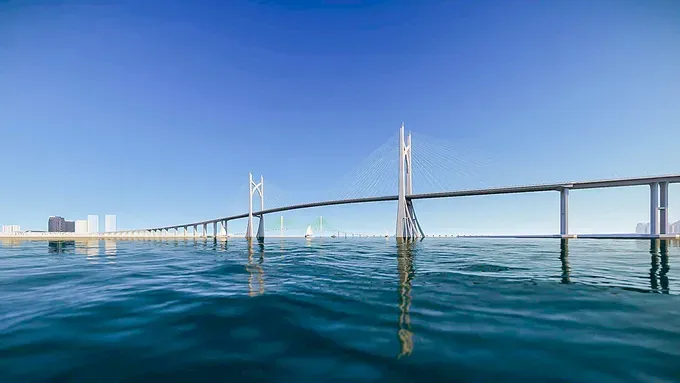
Regarding regional connectivity, Director of the Transportation Investment Consulting Center under the Ministry of Construction Pham Minh Hai noted that Phu My 2 and Can Gio Bridge will not only address inner-city traffic, but they shall also expand development space for the entire Southern Key Economic Region, enhancing competitiveness in the context of international integration.
On the importance of these projects, Deputy Chairman of the Ho Chi Minh City People’s Committee Bui Xuan Cuong emphasized that once the metro system and bridges from the east, south, and northwest are put into operation, Ho Chi Minh City will be smoothly connected with Binh Duong, Ba Ria – Vung Tau areas and Dong Nai Province.
Overall, the simultaneous implementation of these major transportation projects represents not only technical and investment progress but also a critical foundation for Ho Chi Minh City to develop strongly and sustainably, reinforcing its role as the nation’s economic hub in the new era.
Groundbreaking of Cat Lai Bridge connecting Ho Chi Minh City and Dong Nai Province
The Party Committee of the Provincial People’s Committee of Dong Nai has recently sent an official letter to the Standing Committee of the Provincial Party Committee of Dong Nai regarding the groundbreaking, foundation-laying, and technical opening of projects celebrating the 14th National Party Congress and the anniversary of the founding of the Communist Party of Vietnam.
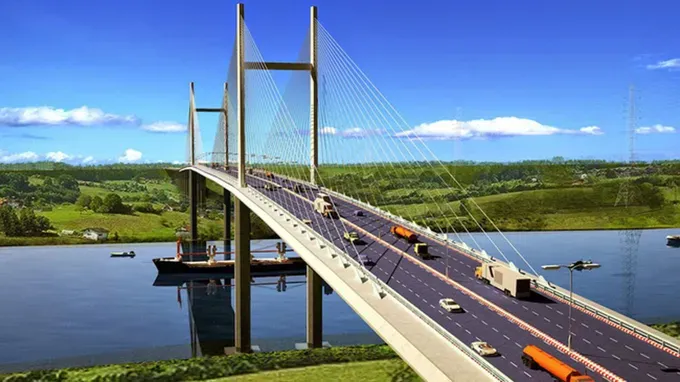
Accordingly, on January 15, the province will hold ceremonies to kick off seven major projects, notably the key project of Cat Lai Bridge connecting Ho Chi Minh City and Dong Nai Province.
The project has a total length of more than 11.6 kilometers, of which the bridge itself is about 3.7 kilometers long; its starting point is in Cat Lai Ward, Ho Chi Minh City, and the endpoint connects to the Ben Luc – Long Thanh Expressway.
The total investment is estimated at approximately VND18,300 billion (US$695 million).
By Phu Ngan- Translated by Huyen Huong