Agricultural officials are urging farmers to align production with market demand and strengthen supply chain partnerships to avoid market volatility ahead of the 2027 Lunar New Year holiday. Pork and poultry prices have remained subdued in recent months despite rising production costs and expanding domestic supply, prompting agricultural officials to urge livestock farmers to closely monitor market signals and strengthen supply chain linkages ahead of the 2027 Lunar New Year (Tet) holiday.

Ahead of the peak consumption period for the 2027 Lunar New Year, Pham Kim Dang, Deputy Director of the Department of Livestock and Veterinary Services under the Ministry of Agriculture and Environment, advised livestock producers in an interview with Sai Gon Giai Phong (SGGP) to closely monitor market signals and strengthen supply chain linkages to mitigate risks.
While price dips for pork and poultry follow a recurring seasonal pattern, Deputy Director Pham Kim Dang expects prices to rebound as food consumption surges toward the year-end. He added that while pork and poultry imports have declined year-on-year, imports of beef and buffalo meat have risen due to limited domestic supply.
According to the department, Vietnam’s total livestock and poultry populations continue to expand. Barring severe disease outbreaks or natural disasters, domestic supply is projected to fully meet consumer demand through the holiday peak. As of late October 2026, the national pig herd grew by 5.1 percent and the poultry flock increased by 3.5 percent compared to the same period last year.
To mitigate market risks, the Deputy Director of the Department of Animal Husbandry and Veterinary Medicine advised producers to align their output with market forecasts rather than rapidly expanding herds in response to temporary price hikes. Such reactive expansion frequently triggers mass sell-offs when prices inevitably dip, further depressing the market. He also cautioned against hoarding goods in anticipation of price increases.
"It is crucial to strike a balance among the interests of livestock farmers, businesses, and consumers," Mr. Dang said, noting that prices must allow farmers to earn a reasonable profit while remaining affordable for consumers. If prices drop too low, farmers may suffer losses and scale back restocking, potentially causing supply shortages in the months following Tet.
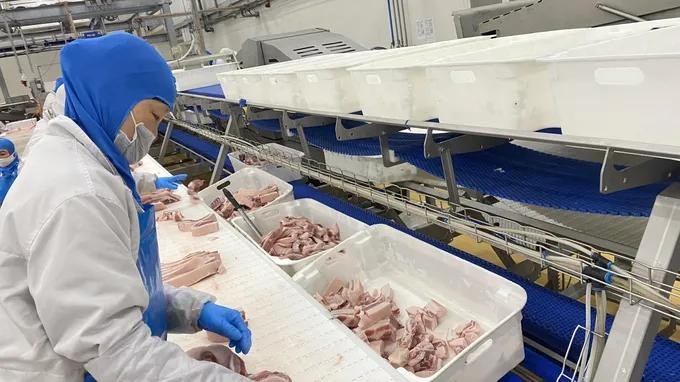
To ensure sustainable growth, Deputy Director Pham Kim Dang emphasized that small and medium-sized farms must partner with major enterprises to build integrated, closed-loop production chains. Independent farmers remain highly vulnerable to price volatility and are typically the hardest hit when input costs rise or market prices fall. Integrating with large corporations offers smaller farms access to planned production, secure inputs, and established distribution networks.
Deputy Director Pham Kim Dang also called on industry associations to play a more active role in market forecasting and production guidance. Because state regulators cannot mandate that private businesses alter their herd sizes, industry associations must leverage their influence to coordinate members and align production with real-time market demand.
Data from the Animal Husbandry Association of Vietnam shows that by late November, live hog prices across the Northern, Central, and Southern regions averaged VND52,000 to VND54,000 (US$2.05 to US$2.13) per kilogram, down roughly VND5,000 from early September.
During the same period, colored-feather broiler chicken prices in the Northern region fell sharply by VND14,800 per kilogram to VND50,000, while prices in the Central and Southern regions rose by VND5,600 and VND3,800 per kilogram, respectively.
To stabilize the market ahead of the peak holiday season, the Ministry of Industry and Trade issued a directive on October 30, 2026 with the aim of balancing supply and demand for essential goods through the end of the year and the 2027 Lunar New Year.