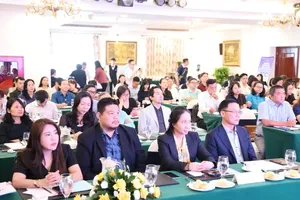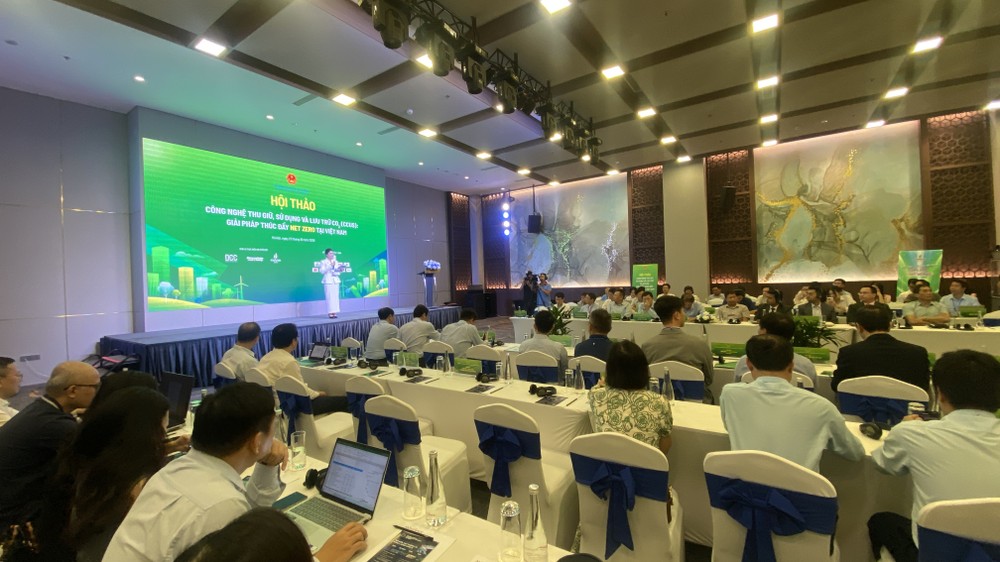
The Department of Climate Change under the Ministry of Agriculture and Environment and the Agriculture and Environment Newspaper jointly held a seminar titled “Carbon Capture, Utilization and Storage Technology: A Solution to Advance Net Zero in Vietnam” to discuss the technology’s prospects and implementation challenges.
Many experts said Vietnam has significant potential to develop carbon capture, utilization and storage (CCUS) technology, particularly in the oil and gas sector. However, financial, technological, infrastructure, and policy barriers must be addressed before it can be deployed effectively.
Mr. Luong Quang Huy, Head of the Greenhouse Gas Emissions Management Division at the department, said Vietnam was revising its Law on Environmental Protection and related regulations, gradually moving toward mandatory emissions controls through an allocation system for emissions allowances.
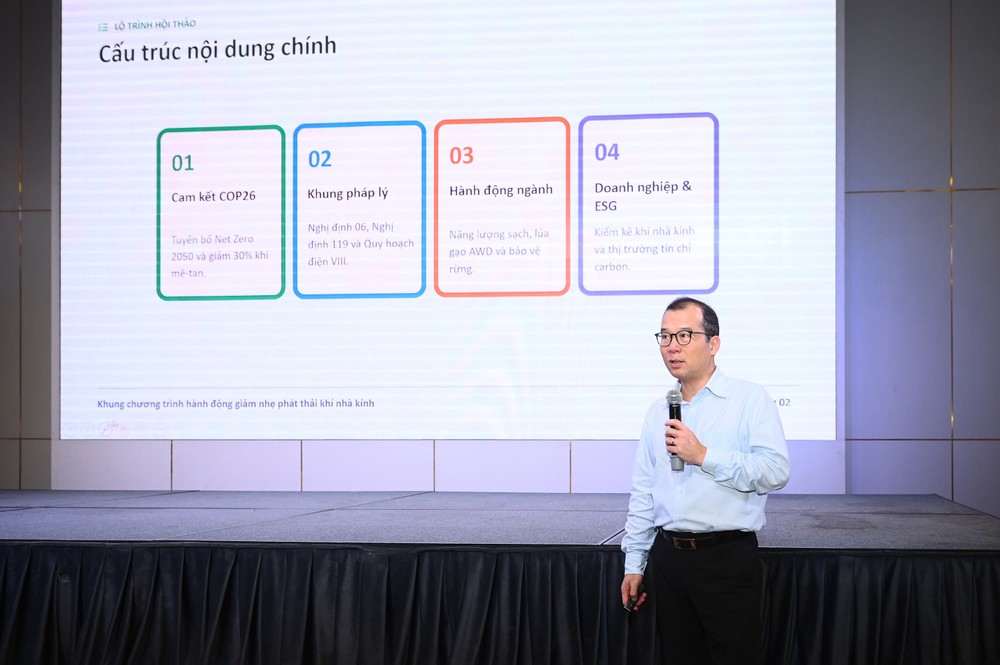
Power generation, iron and steel, and cement facilities are currently participating in pilot emissions allowance schemes. These three sectors are also among those with the greatest potential to apply CCUS technology in Vietnam.
Mr. Nguyen Huu Luong, a senior expert at the Vietnam Petroleum Institute, estimated that Vietnam could have geological storage capacity for approximately 71 billion tons of carbon dioxide (CO2), concentrated in three sedimentary basins. More than one billion tons could potentially be stored in depleted oil and gas fields.
He said Vietnam could capitalize on existing geological data and oil and gas infrastructure to develop CCUS projects, reducing the need to build entirely new systems.

In the initial phase, Vietnam should prioritize small-scale projects to assess their economic viability, technical feasibility and environmental impacts, providing a basis for refining the legal framework and expanding deployment after 2030, Mr. Nguyen Huu Luong said.
Addressing the seminar, Deputy Minister of Agriculture and Environment Le Trong Yen said achieving net-zero emissions by 2050 would require Vietnam to transform its growth model, production methods and resource use toward greater efficiency and lower emissions while safeguarding energy security and business competitiveness.
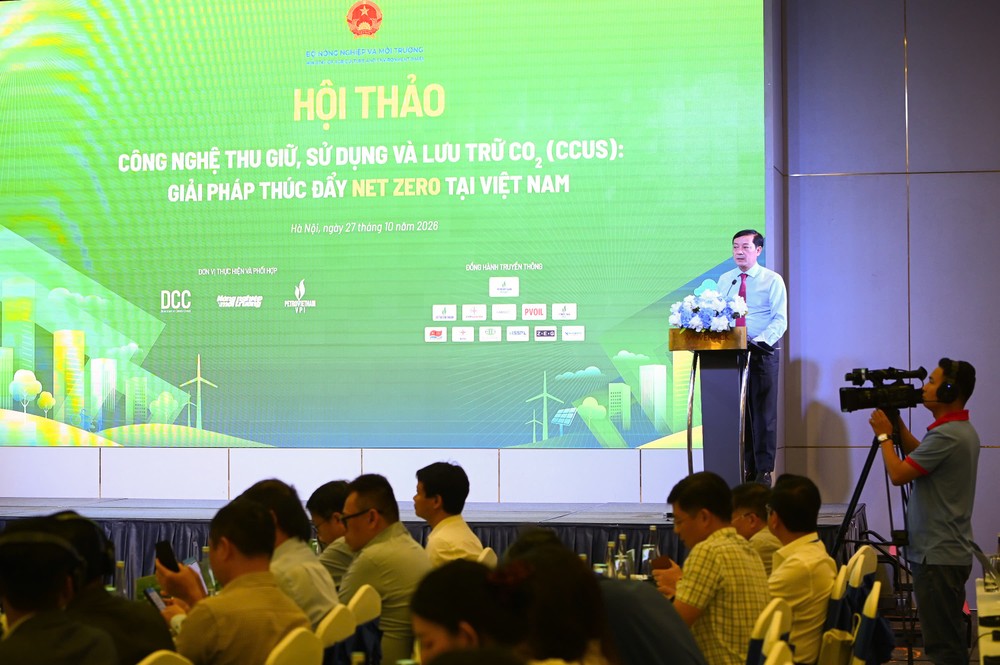
Mr. Le Trong Yen called for a comprehensive assessment of industries, production facilities and emission sources best suited to CCUS applications. He also stressed the need to evaluate the scientific basis, technological requirements and safety standards across the entire CCUS value chain.
Relevant agencies should review and improve policy mechanisms, clearly define responsibilities among ministries, sectors and participating stakeholders, and propose measures to mobilize resources and strengthen implementation capacity, he said.