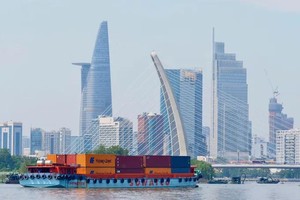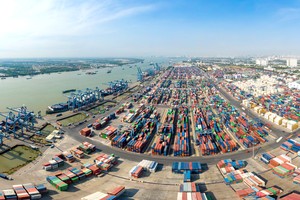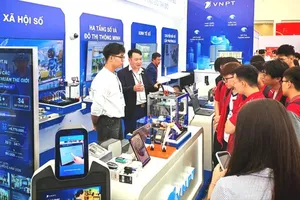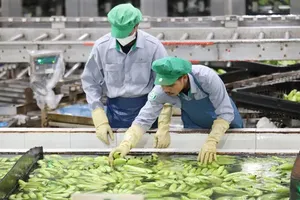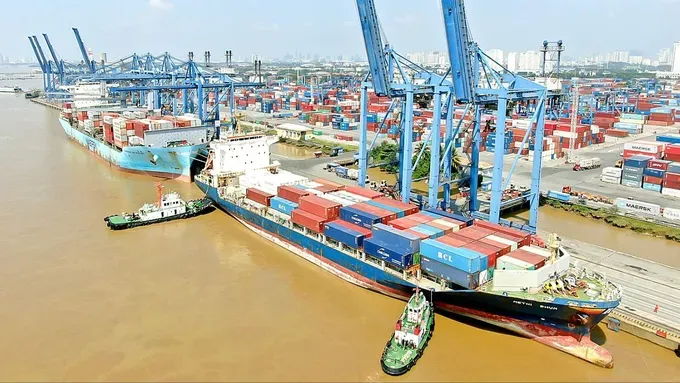
Ho Chi Minh City is stepping up its role as a regional supply chain hub, connecting local strengths in raw materials, manufacturing, industry and services to build integrated value chains and create broader economic development opportunities across the southern region.
Mutually beneficial connections
For years, supply-demand connection programs between Ho Chi Minh City and southern provinces and cities have served as an important bridge between producers and distribution networks.
According to the Saigon Trading Group (SATRA), after 15 years of participating in the program, the firm has diversified and stabilised its retail supply sources while gaining greater access to businesses and cooperatives in different localities and bringing regional products into its distribution system.
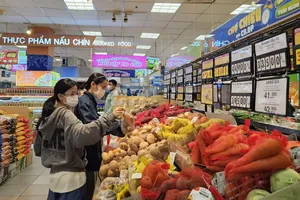
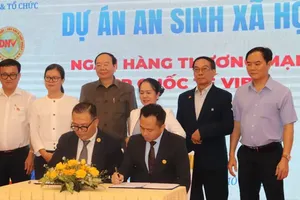
Recently, at an event in Dong Nai city, Central Retail Vietnam, which operates the GO! supermarket chain, connected with 42 businesses and cooperatives, providing opportunities for direct exchanges on fast-moving consumer goods and fresh food.
Nguyen Thi Bich Van, Communications Director of Central Retail Vietnam, said Vietnamese products account for more than 90 percent of items on its shelves. Such connections help retailers diversify quality supplies while enabling local producers to access modern distribution channels, laying the groundwork for regional value chains.
However, developing long-term supply relationships requires coordinated efforts. Recent cooperation between Ho Chi Minh City's industry and trade sector and those of other localities shows a shift from administrative-boundary-based links towards value-chain integration, driven by market demand and business efficiency.
According to the municipal Department of Industry and Trade, the city's industrial production index is estimated to have increased 10.9 percent year on year in the first nine months of 2026. Total retail sales and consumer service revenue reached around VND1.4 quadrillion (US$54.73 billion), up 13.8 percent, with goods retail sales alone accounting for nearly VND700 trillion, a rise of 17.2 percent. These figures reflect the city's production capacity, purchasing power, and trade potential, including its ability to access international markets.
Despite strong production potential, connections between raw material areas and markets remain weak. Producers and businesses lack shared information on output, seasonal supply, quality, traceability, and supply stability, while producers are not always clear about businesses’ product requirements, order volumes, and delivery schedules.
In some localities, production remains disconnected from market demand, with raw materials grown before outlets are secured, posing risks to processing and export businesses in terms of supply, quality and delivery.
Nguyen Nguyen Phuong, Deputy Director of the municipal Department of Industry and Trade, called for value-chain cooperation tailored to local strengths and market demand, with priority given to promising commodities such as rice, seafood and fruit that have clear advantages, business participation and market expansion potential.
Value chains aligned with market demand
Highlighting the importance of supply chain development, Pham Huu Du, Deputy Director of the Department of Industry and Trade of Vinh Long province, said processing industries accounted for 86.98 percent of the locality's export turnover, but domestic businesses contributed only 25.4 percent, with the remainder coming from foreign-invested enterprises.
To address this, distribution and supply chains need to be reorganised to enable businesses, cooperatives and farming households to participate more deeply in value creation. Du proposed positioning Ho Chi Minh City as the main connection hub, given its role as both a major consumer market and a logistics and export gateway.
Localities should translate their 2026-2030 cooperation agreements into programs for individual commodity groups, strengthen market information sharing, connect raw material areas, avoid competing against one another in the same product segments, pool output to meet large orders and coordinate interregional logistics, he said.
Nguyen Duy Linh Thao, Deputy Director of the Department of Industry and Trade of An Giang province, said the locality aims to better connect its raw material areas with processing businesses, modern distribution systems, logistics and export companies, shopping centres and e-commerce platforms in Ho Chi Minh City and other southern localities.
Meanwhile, Nguyen Loc Ha, Standing Vice Chairman of the Ho Chi Minh City People's Committee, affirmed that the city's development was closely linked to that of the region and the country as a whole. Its leading role is reflected not only in economic scale but also in its responsibility to connect localities, share opportunities and facilitate their development.
With the southeastern region targeting average GRDP growth of 10 percent annually in 2026-2030 and the Mekong Delta aiming for 9-9.5 percent, regional connectivity becomes an objective necessity and a strategic requirement, he said.
Ho Chi Minh City is expected to continue driving regional connectivity and sharing development opportunities with neighbouring localities, helping southern provinces and cities enhance supply chain competitiveness, increase local value and contribute to regional growth.