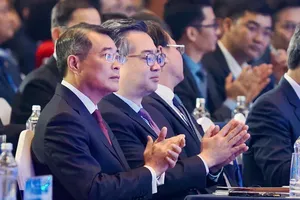
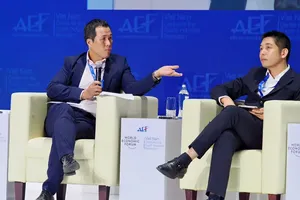
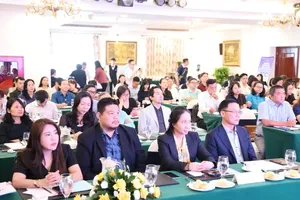
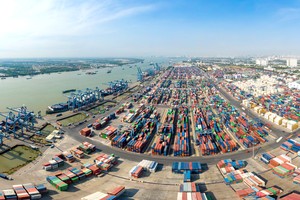
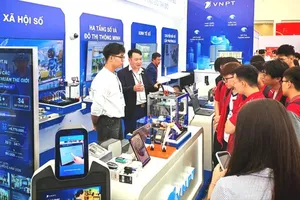
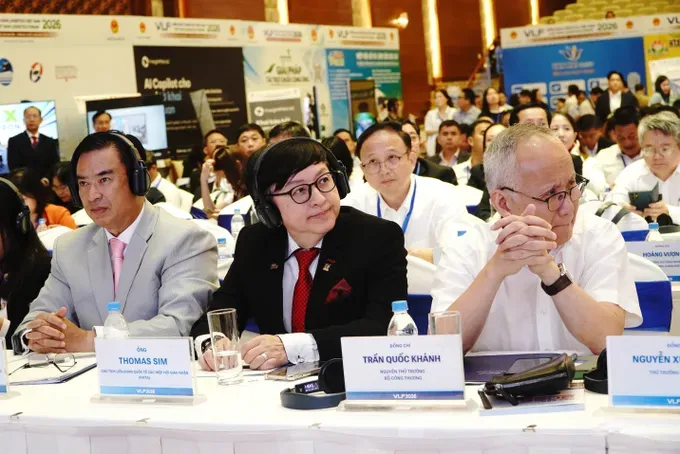
The Permanent Deputy Prime Minister made the statement at the forum co-organized by the Ministry of Industry and Trade and the Gia Lai Province People's Committee on November 7.
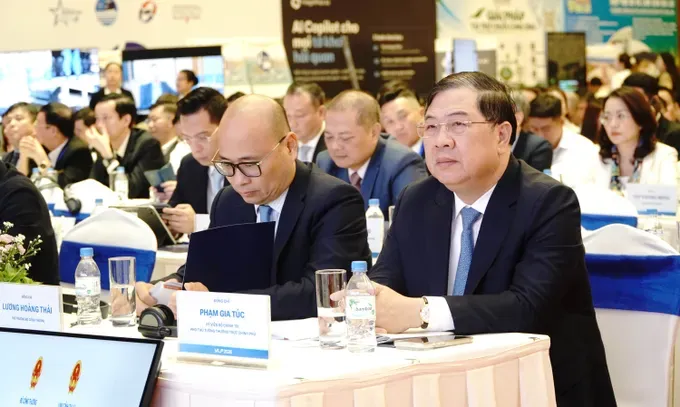
Speaking at the forum, Permanent Deputy Prime Minister Pham Gia Tuc emphasized that logistics serves as a critical sector securing goods circulation, supply chain connectivity, and the integration of domestic and international markets. Efficient logistics helps cut costs, boost production, expand foreign trade, and enhance the economy's competitiveness and resilience. Investing in logistics is an investment in the nation's foundational development, delivering practical benefits to businesses and citizens.
According to the Permanent Deputy Prime Minister, Vietnam targets a phased development of the sector, institutionalized through the Strategy for Logistics Service Development for 2025–2035 with a vision to 2050, as well as national, regional, and local master plans. The sector is projected to grow by 14 percent to 16.5 percent in 2026, contributing 4.5 percent to 5 percent of GDP.
In the first 10 months of 2026, import-export turnover reached US$1,010.5 billion surpassing US$1,000 billion for the first time with October alone registering a trade surplus of US$7.3 billion. Total retail sales of goods and consumer service revenue rose by roughly 14 percent, passenger transport grew by 16.7 percent, and freight transport increased by 15.5 percent, he said.
However, logistics capacity has yet to meet economic development demands. Logistics costs still account for 16 percent to 17 percent of GDP, exceeding the global average of 10 percent to 12 percent. Infrastructure and service connectivity remain uncoordinated, and international linkages remain limited. Vietnamese logistics enterprises hold a disproportionately low market share, with weak capacity in providing end-to-end services and engaging in high-value-added segments. Additionally, the domestic shipping fleet has not yet dominated the home market.
Permanent Deputy Prime Minister Pham Gia Tuc urged the Ministry of Industry and Trade and delegates to clarify structural weaknesses and underlying causes. Key issues include fragmented coordination, uncoordinated infrastructure connectivity, overlapping administrative procedures and specialized inspections, and a lack of interconnected data. He also asked for a clear assessment of corporate limitations regarding capital, technology, human resources, partner networks, and connection capabilities with production and foreign trade enterprises.
Permanent Deputy Prime Minister Pham Gia Tuc reported that during a meeting on November 2, 2026, with the Government Party Committee and relevant agencies regarding the development orientation for national logistics and logistics infrastructure, General Secretary and President To Lam emphasized that logistics must be defined as a strategic "soft infrastructure." It should serve to enhance productivity, competitiveness, and the autonomy of the national economy. Furthermore, the development of logistics must be integrated into the overall national and regional planning frameworks, with the flow of goods and the broader national interest serving as the guiding basis.
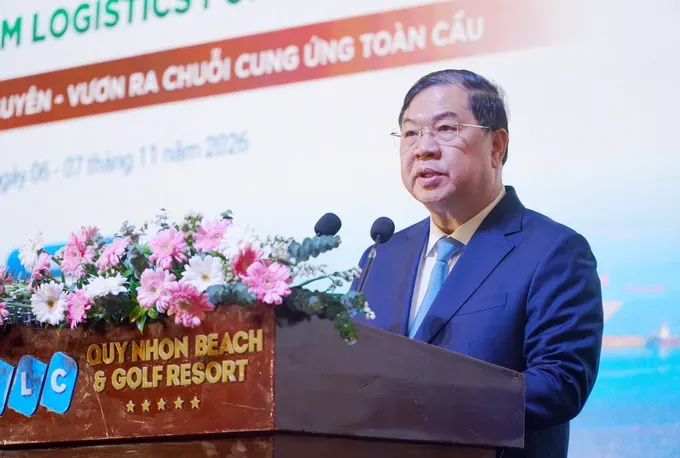
The Permanent Deputy Prime Minister urged delegates to center their discussions on six critical operational priorities, beginning with updating logistics mechanisms and policies in alignment with Decree 163. Key deliverables include presenting a national logistics coordination model to the Prime Minister in December 2026 and assessing regional infrastructure connectivity to identify key bottlenecks by Q1 2027.
Furthermore, delegates were tasked with modernizing border-gate management by expanding post-clearance audits, reducing redundant procedures, and broadening electronic customs documentation on the National Single Window and ASEAN Single Window systems.
He instructed the Ministry of Industry and Trade to link the utilization of free trade agreements (FTAs) with logistics development and cross-border e-commerce; accelerate digital and green transitions, piloting the operation of the national logistics database in 2027; enhance corporate capacity, focusing on workforce training and capital access support; and review and refine the Strategy for Logistics Service Development of Vietnam for 2025–2035 with a vision to 2050.
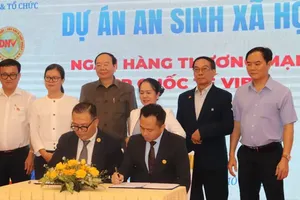
On this occasion, the Ministry of Industry and Trade presented certificates of merit to organizations and individuals for their contributions to logistics development in 2026. It also witnessed the handover of investment certificates and the signing of cooperation memoranda, as well as the launch of logistics associations in Dak Lak, Quang Ninh, and Bac Ninh.