As global capital increasingly shifts towards the digital economy, the token economy could offer Ho Chi Minh City a promising approach to connecting new sources of funding with its infrastructure development needs, building on its existing data and digitalization foundations.
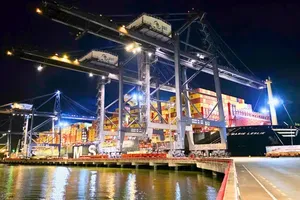
At the 2026 Autumn Economic Forum held in the city in late October, several experts used two illustrative concepts: “tokens” and “concrete.” “Tokens” represent the digital and AI ecosystems that are attracting substantial capital worldwide, while “concrete” refers to roads, seaports, electricity infrastructure, and factories—the physical foundations that keep an economy running.
The key message was that global capital is not in short supply but is increasingly flowing towards “tokens,” while developing economies such as Vietnam still have substantial demand for “concrete.” For Ho Chi Minh City, this need is particularly pressing.
Under its 2026-2030 development plan, the city requires approximately VND4.4 quadrillion (US$171 billion) in investment, of which the budget can cover around VND1.1 quadrillion. The remaining amount must be mobilized from social resources, making it increasingly necessary to develop new channels for long-term financing.
Tokenization of real-world assets is one such option. Put simply, it involves recording ownership rights or beneficial interests in an asset—such as a bond, a revenue stream from toll collection, or a property—in the form of digital tokens on a digital platform. This allows assets to be divided into smaller units, traded more conveniently, and supported by greater cash-flow transparency, while opening up access to a wider pool of domestic and international investors.
The global trend is becoming increasingly evident. Hong Kong (China) has issued more than HKD6.8 billion worth of tokenized government bonds, while Dubai introduced tokenized property title deeds for secondary-market transactions in early 2026. In Vietnam, Da Nang City has also floated the idea of tokenizing infrastructure projects.
Ho Chi Minh City could consider several practical approaches. A portion of the city's municipal bonds for metro development could be issued in different formats. Operating and commercial rights to completed facilities—such as commercial spaces at metro stations or parking facilities—could be divided into smaller investment units and offered to long-term investors. The proceeds could then be used to recover capital and reinvest in subsequent projects, following a model similar to Australia's asset recycling program.
Legally transparent transit-oriented development (TOD) projects around metro stations could also be suitable candidates. Corporate export invoices and carbon credits generated by industrial parks could likewise be transformed into digital assets.
Of course, a project without a revenue stream is unlikely to attract buyers for its tokens. What tokenization offers is lower transaction costs, greater transparency, and access to a broader investor base. Therefore, implementation should begin with assets that have stable cash flows and clearly established legal ownership or rights. More importantly, a token can only be trusted if the underlying data is reliable.
This is where Ho Chi Minh City has an advantage in developing its own approach to the token economy. The city has adopted a Digital Data Development Strategy for 2026-2030, which envisages the establishment of a data exchange platform.
Data on nearly 2.5 million land parcels is being standardized, with the goal of bringing all land-related administrative procedures online. The VNeID electronic identification system can help verify investors more quickly and reliably. The city also has more than 15 operational data centers and is developing an international financial center with a focus on blockchain applications.
Building on these foundations, the first step should be to standardize and disclose data on infrastructure projects—including metro passenger volumes, revenue, and operating costs—in a format that investors can independently verify.
The next step would be to gradually connect the city's asset registries with tokenization infrastructure to ensure that each token accurately represents the corresponding legal rights. In the longer term, urban data itself could become a regulated tradable asset, supporting AI applications built on the city's data infrastructure.
Viewed from this perspective, the token economy is a new way of organizing capital flows to support development. Ho Chi Minh City has substantial infrastructure investment needs, an increasingly developed data foundation, and a new international financial center. By taking small, cautious, and transparent steps, the city could turn its “concrete” infrastructure assets into investment opportunities capable of attracting capital from the token economy.