According to an assessment by PG Economics - as specialist provider of advisory & consultancy services to agriculture and other natural resource-based industries, the adoption of genetically modified (GM) corn between 2015 and 2024 boosted yields by approximately 15.2 percent and generated an additional US$323.5 million in income for Vietnamese farmers. These results are attributed to improved pest and disease control, which reduced crop losses and production costs.
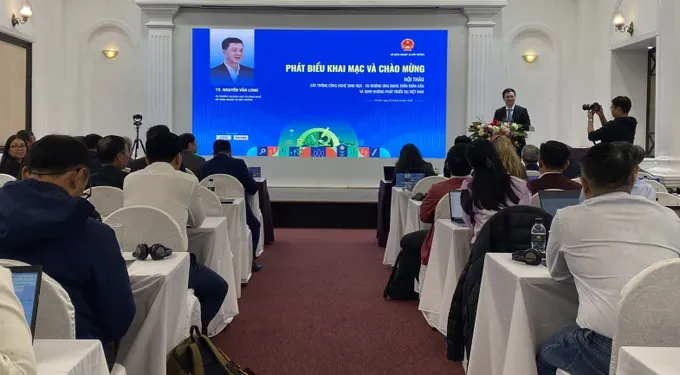
The Department of Science and Technology under the Ministry of Agriculture and Environment coordinated with the Agriculture and Environment Newspaper to organize a seminar titled "Biotech crops - Global application trends and development orientation in Vietnam" on November 10 afternoon in Hanoi.
According to Dr. Rhodora Romero-Aldemita, Executive Director of the International Service for the Acquisition of Agri-biotech Applications (ISAAA), through the end of 2024, 73 countries had permitted the cultivation or usage of over 20 types of genetically modified (GM) crops. Among them, 44 countries directly cultivated GM crops, while 29 countries allowed imports for use as food and animal feed.
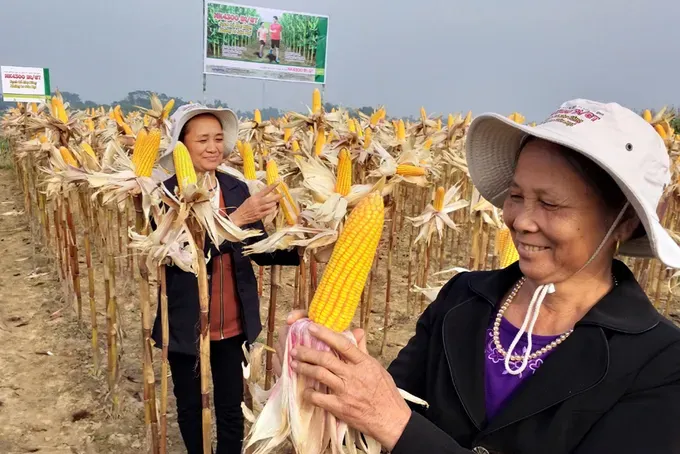
In Vietnam, GM crops entered commercial production in 2015, starting with corn. The cumulative area of GM corn from 2015 to 2024 exceeded 1.3 million hectares. In 2024, GM corn area accounted for nearly 50 percent of the nation's total corn area.
At the seminar, Phung Danh Huan from the Department of Crop Production and Plant Protection stated that Vietnam currently has 31 recognized GM corn varieties in circulation. Annual import demand reaches approximately 10 to 12 million tons of corn and 2 million tons of soybeans for livestock breeding and feed processing. As of September 2026, 64 genetic modification events received certificates of eligibility for use as food and animal feed, including 22 events for corn and 17 events for soybeans. Six events received biosafety certificates, all of which were corn.

Regarding policy refinement for biotechnology, Master Ta Thi Kieu Anh from the Department of Nature Conservation and Biodiversity noted that starting from 2026, Vietnam applies a separate management mechanism for gene-edited crops, distinguishing them from GM crops. For gene-edited crops without foreign DNA insertion or new genetic material, organizations and individuals implement a self-determination mechanism, notify the Ministry of Agriculture and Environment, and are subject to post-inspection.
Meanwhile, GM crops must continue to undergo evaluation and licensing procedures for biosafety, food safety, and animal feed safety as prescribed by regulations.
Delegates proposed continuing to refine the legal framework, enhancing research capacity and technology mastery, and strengthening cooperation between the state, scientists, and enterprises. Recommendations included state financial support of 30 percent for research costs with matching funds of 70 percent from enterprises to accelerate the commercialization of biotech crop varieties in Vietnam.
According to Dr. Nguyen Van Long, Director of the Department of Science and Technology under the Ministry of Agriculture and Environment, the seminar's outcomes will be synthesized to comprehensively evaluate biotechnology development from research and application to commercialization, clarifying Vietnam's position in global biotechnology trends.
According to Director Nguyen Van Long, the seminar results will also serve as a foundation to prepare a report for the Prime Minister, proposing solutions to refine policies, remove barriers, and promote the application of biotechnology achievements in production.