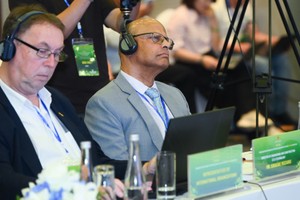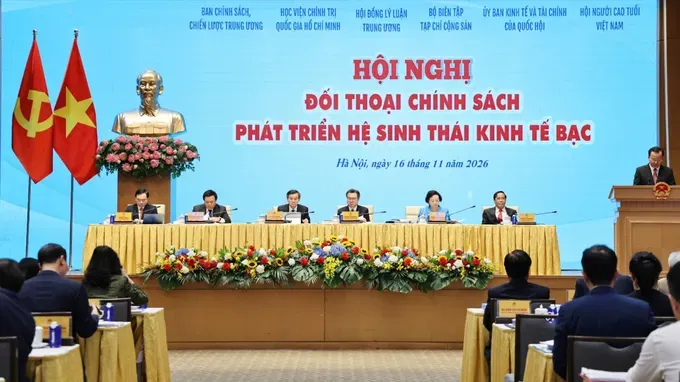
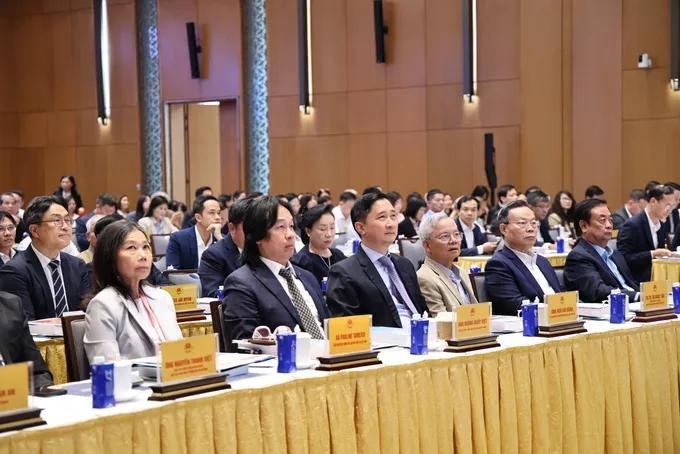
On the morning of November 16, at the Government Headquarters, the Party Central Committee's Commission for Policies and Strategies, the Ho Chi Minh National Academy of Politics, the Government Office, the Central Theoretical Council, the Communist Review, the National Assembly's Committee for Economic and Financial Affairs, and the Vietnam Association of the Elderly jointly held a policy dialogue conference on developing the silver economy ecosystem.
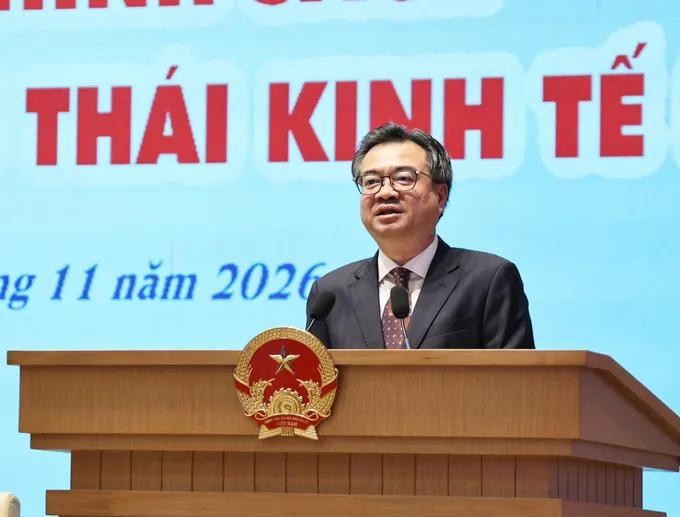
Attending the conference were Nguyen Thanh Nghi, Secretary of the Party Central Committee and Head of the Party Central Committee's Commission for Policies and Strategies; Doan Minh Huan, Politburo member and Director of the Ho Chi Minh National Academy of Politics; Nguyen Xuan Thang, former Politburo member and Chairman of the Central Theoretical Council; and Pham Thi Thanh Tra, Secretary of the Party Central Committee and Deputy Prime Minister.
Aging population presents new economic opportunity for Vietnam
In his remarks at the conference, Mr. Nguyen Thanh Nghi outlined three current strategic requirements. First, the silver economy must be integrated into the broader transformation of the nation’s development model. The pace of population aging necessitates early action and a long-term vision.
Vietnam currently has nearly 16.5 million people aged 60 and older, with over 9 million of these older adults still actively engaged in labor, production, or business activities. It is projected that by 2034, the number of people aged 60 or older could reach nearly 21 million.
The golden population period is expected to conclude around 2036. While the average life expectancy in Vietnam is 74 years, the number of years lived in good health is only about 65. This highlights the urgent need to improve the quality of life, health, self-reliance, and social participation of older adults.
In his view, the development of the silver economy should aim to both generate economic value and ensure social progress and equity. He emphasized the need for a comprehensive, interdisciplinary, and integrated approach, rather than relying on fragmented, disconnected policies. Older adults must be recognized not merely as passive recipients of public policy, but as vital contributors, active participants, and key drivers of socioeconomic growth. Consequently, accurately defining the scope, role, and structural components of the silver economy is essential to integrating it effectively into the evolving development model.
He further proposed focusing on research into financial models for long-term care such as long-term care insurance and public-private partnerships as well as policies to encourage investment in essential infrastructure and services. Additionally, he highlighted the importance of establishing support mechanisms for low-income older adults, persons with disabilities, those living alone, and other vulnerable groups.
It is also vital to draw a clear distinction between the State’s responsibility for social welfare and the space for service development guided by market mechanisms. This requires combining targeted support with the mobilization of social resources, while avoiding both indiscriminate subsidies and the over-commercialization of essential services that would place them beyond the means of vulnerable older adults.
At the same time, the private sector should be encouraged to invest in and develop viable, scalable business models.
According to him, the goal goes far beyond simply creating economic value from the needs of older people. More importantly, it is about building a society in which older adults can live healthy, safe and independent lives, continue contributing to and benefiting from national development, and in which their wisdom, experience and life insights are treated as a valuable national resource.
“The development of the silver economy must strike a balance among three goals of generating new drivers of growth, fully unlocking the potential contributions of older adults, and ensuring social welfare, progress and equity so that no one is left behind,” said Mr. Nguyen Thanh Nghi.
HCMC calls for faster development of silver economy
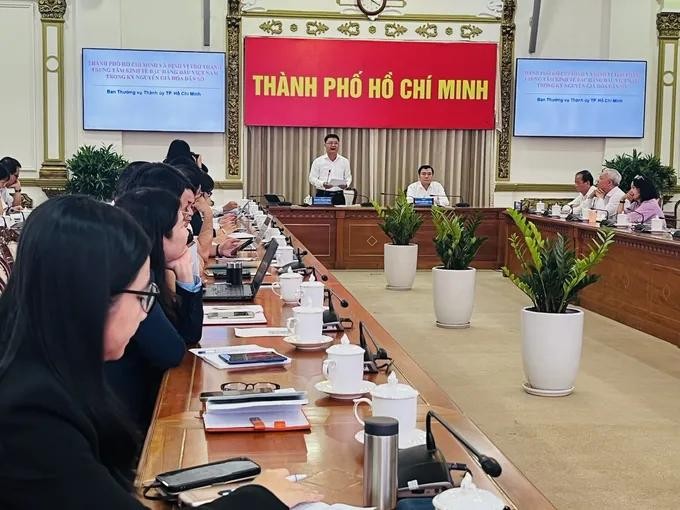
Speaking from the Ho Chi Minh City (HCMC) conference site, Vice Chairman of the HCMC People’s Committee Nguyen Manh Cuong stated that with over 1.57 million people aged 60 and older, the aging population presents an urgent need for the city to shift its development mindset—integrating social welfare with new drivers of economic growth. The city has expanded its social welfare policies, providing retirement subsidies to nearly 187,000 individuals, offering free access to public buses and the metro, and allocating VND150 billion annually for health screenings.
Notably, more than 13,530 business and production establishments owned by older adults currently provide employment for over 55,000 workers, underscoring the significant economic contributions of this demographic.
However, resources for elderly care remain fragmented. Home-based care and rehabilitation services fall short of meeting the needs of the 124,000 individuals who require daily living assistance. Furthermore, private elderly care services are costly while only about 14 percent of older adults receive a pension and there is a shortage of professional caregivers and age-friendly digital infrastructure.
The city has proposed the prompt finalization of a silver economy strategy, the development of home- and community-based care models, the repurposing of surplus public assets, and the specialized training of care personnel. Additionally, the city has requested that the central government refine the legal framework, explore long-term care insurance, expand health insurance coverage to include home-based medical services, and authorize pilot public-private partnerships for the delivery of social welfare services.