The plan must align with urban development and tourism for the 2012–2025 period.
Leading destination
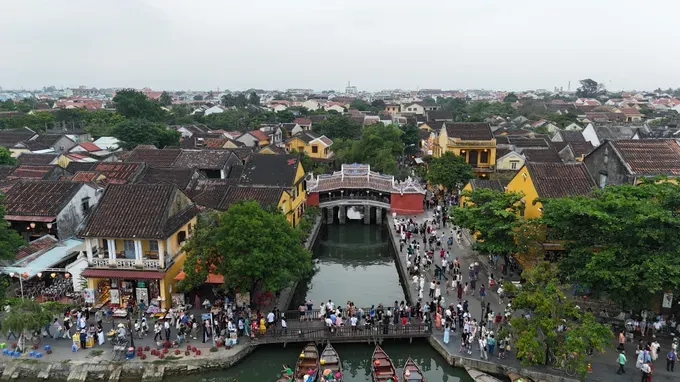
According to the Da Nang Department of Culture, Sports, and Tourism, on January 12, 2012, the Prime Minister issued Decision No. 78/QD-TTg approving the Master Plan for Investment in the Conservation, Restoration, and Promotion of the World Cultural Heritage Site of Hoi An Ancient Town, in connection with urban and tourism development for the 2012–2025 period.
The scope of the master plan includes investment planning for heritage conservation, planning investment associated with tourism development, and the completion of a legal framework for heritage management.
The estimated total investment for the master plan during this period amounted to VND1.324 trillion (US$50.3 million). The funding was sourced from a combination of capital streams, including the National Target Program, the Government’s Program for Targeted Support, Government bonds, Official Development Assistance (ODA), revenue from heritage and tourism activities, as well as contributions from local residents.
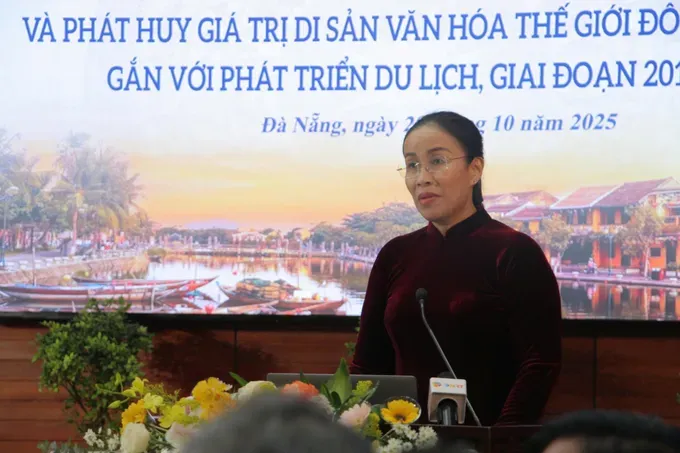
Speaking at the conference, Ms. Nguyen Thi Anh Thi, Vice Chairwoman of the Da Nang People’s Committee, noted that after more than 13 years of implementation, the master plan has brought about comprehensive progress in the preservation, restoration, and promotion of Hoi An Ancient Town. The local community has become more aware of and actively engaged in heritage conservation efforts. Hoi An has remained one of Vietnam’s and the world’s leading destinations, while also serving as a successful model of heritage preservation linked with sustainable development.
According to assessments, the planning tasks have been concretized into specific programs and project plans, and projects that closely adhere to the approved directions for conservation and development.
Across key areas, such as cultural heritage preservation, heritage management, restoration of historical sites, and museum development, numerous practical initiatives have been implemented, yielding tangible results.
Notably, conservation efforts only take place within the heritage core zone alone but have also expanded into buffer zones and surrounding areas, ensuring a holistic, cohesive, and integrated approach to the ancient town’s urban landscape.
At the same time, the tourism sector has experienced robust growth in terms of infrastructure, technical facilities, human resources, and scope of activities, with a diversification of tourism products.
Hoi An has undergone a notable transformation toward a “Green Tourism” model, aligned with the goals of sustainable development and environmental friendliness.
Conservation efforts face difficulties
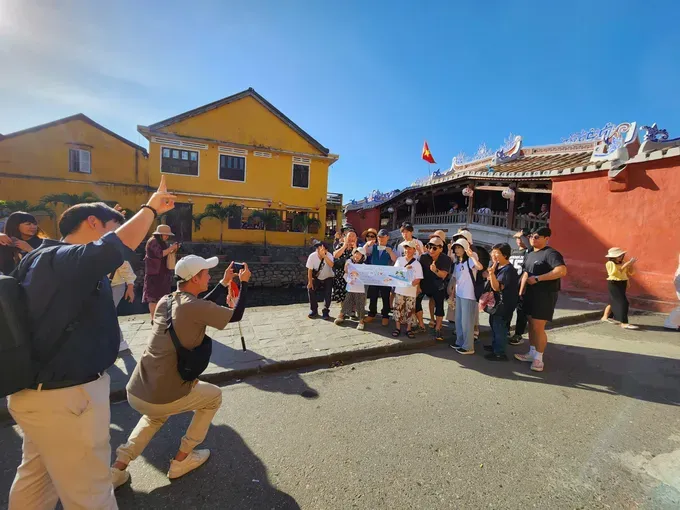
According to statistics, from 2012 to June 2025, Hoi An has received 81 tourism awards conferred by prestigious domestic and international organizations.
During this period, the number of visitors buying tickets to visit the heritage site is 17.38 million, including 3.3 million domestic visitors and 14 million international tourists. Revenue from heritage site ticket sales totaled over VND1.9 trillion (US$72 million).
Mr. Hoang Dao Cuong, Deputy Minister of Culture, Sports and Tourism, emphasized that the master plan for the 2012–2025 period serves as a crucial and necessary legal foundation for the ongoing conservation and promotion of the values of Hoi An Ancient Town.
After nearly 13 years of implementation, despite encountering difficulties, obstacles, and limitations, the results achieved have been substantial and comprehensive, demonstrating a coordinated approach in both heritage preservation and its sustainable integration with tourism development.
The master plan has established a solid foundation for the development of Hoi An City with a focus on ecological, cultural, and tourism characteristics. Hoi An has emerged as a model not only for Vietnam but also at the regional and global levels in achieving a harmonious balance between the “conservation” and “development” of cultural heritage in contemporary life.
The Deputy Minister of Culture, Sports, and Tourism acknowledged that an urgent priority is the development of a new comprehensive master plan for the heritage site in the upcoming phase.
He emphasized that conserving Hoi An Ancient Town remains an exceptionally challenging task due to its nature as a living heritage city, requiring persistence, carefulness, and a scientific approach to identify and address the related issues.