Over the past few years, Ba Ria Ward, Ho Chi Minh City has focused on upgrading infrastructure, expanding housing and revitalizing the urban environment. Efforts continue to raise urban standards, moving toward a modern, civilized and sustainable cityscape.
Improved infrastructure
Located along the scenic Dinh River, Ba Ria’s night street stretches along Le Thanh Duy and Hoang Viet streets, adorned with colorful lights that create a vibrant nighttime atmosphere. Covering an area of 2,115 square meters and featuring 175 stalls, the street showcases local specialties, the “One Commune, One Product” (OCOP) products, and various culinary offerings.
In recent years, numerous projects have been implemented to enhance urban quality and improve residents’ quality of life. Notable examples include Ba Ria Park, the Phuoc Hung Ward resettlement area, the Thu Luu Canal environmental treatment project, the Thanh Giong monument and the restoration of the historic Nha Tron (Roundhouse) site.
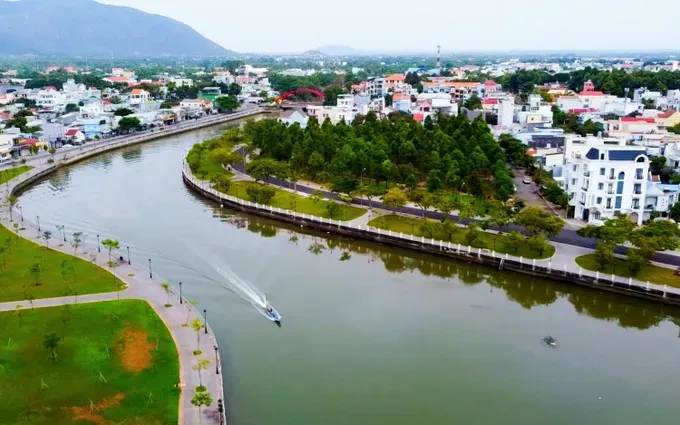
Additionally, several landmark projects have been implemented to further elevate the cityscape. The 542-meter-long embankment along both banks of the Dinh River, stretching from Long Huong Bridge to Dien Bien Phu Bridge, with a total investment of over VND179 billion (US$6.8 million), has been completed, transforming the urban landscape.
Meanwhile, the West Bank Park has been developed as a comprehensive recreational space, including 16 main components such as multifunctional play and entertainment areas for adults and children, decorative landscapes, artistic lighting systems, a stage, diverse greenery, pedestrian pathways and parking facilities.
According to the People’s Committee of Ba Ria Ward, the West Bank Park serves as a strategic starting point for planned developments, including the Dinh River spillway, a pedestrian bridge spanning the river and a riverfront musical fountain. These projects are designed to form an integrated recreational and entertainment complex, enhancing the area’s appeal to tourists.
Ms. Nguyen Thi Kim Lien, Chairwoman of the Ba Ria Ward People’s Committee, said that the ward was established by merging the entire areas and populations of Phuoc Trung, Phuoc Nguyen, Long Toan and Phuoc Hung wards. Following the merger, Ba Ria Ward serves as a connectivity between urban and rural areas in eastern Ho Chi Minh City and as an important commercial hub within the city, thanks to its proximity to National Highway 51 and interregional transport routes.
The merger has provided the ward with additional resources to develop infrastructure, advance urban development, and improve residents’ quality of life, Ms. Nguyen Thi Kim Lien affirmed.
Comprehensive coverage of zoning plans
According to Le Minh Quang, Head of the Economic, Infrastructure and Urban Division of Ba Ria Ward, the ward sets a target of achieving full coverage of 1:2,000 zoning plans by 2030 as well as continuing to improve urban quality. Public land will be reviewed and managed more effectively, with appropriate uses such as auctions, short-term leasing, or allocation to residents in line with regulations.
Ba Ria Ward will pursue integrated and sustainable urban development, focusing on urban renewal, improved wastewater and drainage systems, upgraded resettlement infrastructure and stronger connectivity with surrounding areas.
Planning will align with Ho Chi Minh City’s overall orientation, incorporating smart city goals, green growth, and climate adaptation, while tightly managing population growth, housing development, and urban infrastructure expansion.




)