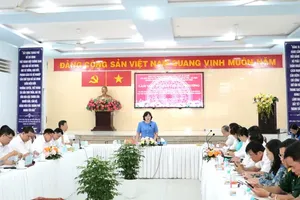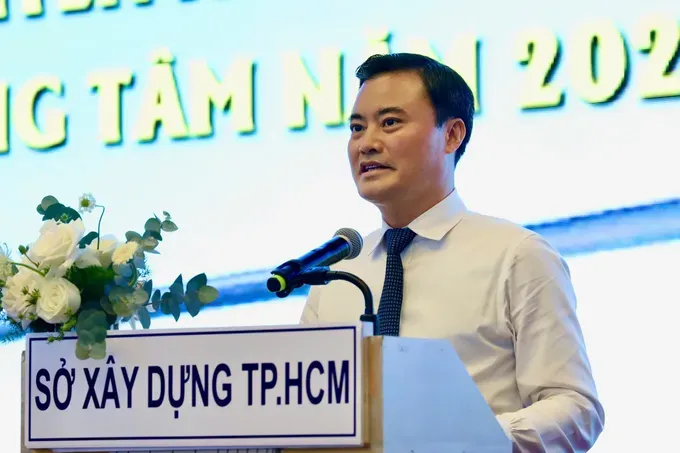
On January 16, the Ho Chi Minh City Department of Construction held a conference to review Party-building work, assess the performance of government tasks in 2025, and outline key tasks and solutions for 2026.
The conference was attended by Vice Chairman of the Ho Chi Minh City People’s Committee, Bui Xuan Cuong, along with leaders of relevant departments and agencies, experts, and representatives of the business community.
At the conference, Director of the Ho Chi Minh City Department of Construction, Tran Quang Lam, said that 2025 had been a particularly challenging year for the construction sector, marked by major changes in organizational structures, management models, and the city’s urban development framework.
He noted that the Department of Construction was among the hardest hit, undergoing multiple rounds of restructuring, mergers, and adjustments to its functions and responsibilities within a short period, in line with the rollout of a two-tier government model and the expansion of urban space following administrative mergers. Despite these challenges, the sector has worked to overcome difficulties and swiftly adapt to the city’s increasingly demanding development requirements.
Entering 2026, the Department of Construction has identified accelerating investment in transport and urban infrastructure, along with strengthening regional connectivity, as key priorities to drive socio-economic development.
Ho Chi Minh City aims to break ground on around 15 major projects, including Ring Road 4, the Ho Chi Minh City–Moc Bai Expressway, the Can Gio–Ba Ria–Vung Tau sea-crossing bridge, Thu Thiem 4 Bridge and several BOT projects. In addition, the city plans to complete and put into operation 12 large-scale projects, notably Ring Road 3, the An Phu and My Thuy interchanges, and the rehabilitation of the Tham Luong–Ben Cat–Nuoc Len Canal.
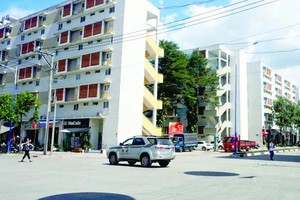
In the housing sector, the city built approximately 14.4 million square meters of floor space, reaching nearly 97 percent of its target. Public passenger transport continued to expand, serving nearly 578 million passengers, up 13.7 percent from the previous year. Notably, Metro Line 1 (Ben Thanh–Suoi Tien) carried more than 18.3 million passengers, exceeding its target by 28.8 percent.
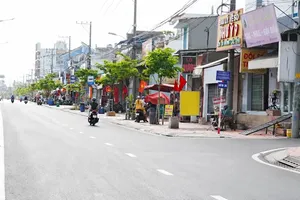
In terms of infrastructure investment, Ho Chi Minh City broke ground on 63 key projects and contract packages in 2025 while completing and putting into operation 68 projects, many of which play an important role in enhancing regional connectivity.

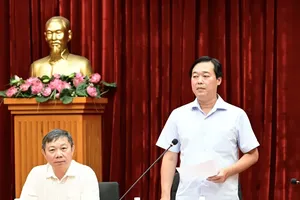
Vice Chairman of the Ho Chi Minh City People’s Committee, Bui Xuan Cuong, stressed that the guiding spirit of the construction sector is “servicing” the people, businesses, and the city’s overall development.
He called on the Department of Construction to continue refining institutional frameworks and accelerating decentralization and delegation of authority while exercising strict oversight of targets related to social housing, infrastructure, traffic safety, and urban renewal. He also urged the department to take the lead in applying science and technology, digital transformation, and artificial intelligence to urban management.
Responding to the directives, Director of the Ho Chi Minh City Department of Construction, Tran Quang Lam, affirmed that the sector would implement its tasks in a coordinated manner, enhance transparency, streamline administrative procedures, improve investment efficiency, and remain committed to meeting the city’s infrastructure and urban development targets in 2026 and the years ahead.