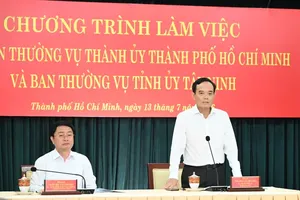
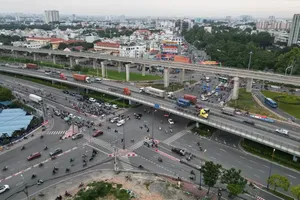
On the afternoon of April 2, the Standing Committee of the Ho Chi Minh City People’s Council conducted a survey on the implementation, investment preparation and additional funding needs for transportation projects, aiming at resolving bottlenecks in the city center and key entry and exit routes.
The session was co-chaired by Mr. Vo Van Minh, Member of the Party Central Committee, Deputy Secretary of the Ho Chi Minh City Party Committee, Chairman of the Ho Chi Minh City People’s Council, and Mr. Bui Xuan Cuong, Ho Chi Minh City Party Committee Member and Vice Chairman of the Ho Chi Minh City People’s Committee.
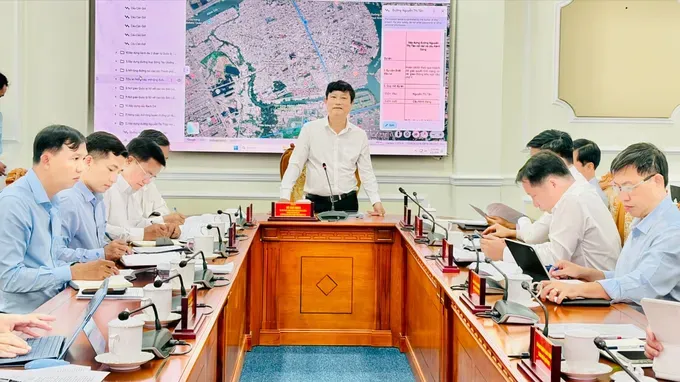
At the session, Chairman of the Ho Chi Minh City People’s Council Vo Van Minh has called for a clear prioritization of transportation investment projects based on urgency, efficiency, and broader impact, while also exploring new infrastructure solutions such as elevated roads and riverside routes.
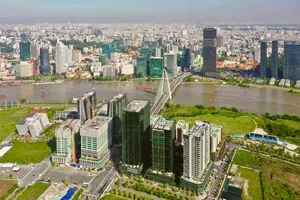
Speaking at the session, Mr. Tran Quang Lam, Director of the Ho Chi Minh City Department of Construction, stated that the city covers approximately 6,773 square kilometers with a population of around 14 million. The development of a modern, well-coordinated transportation system is urgently needed.
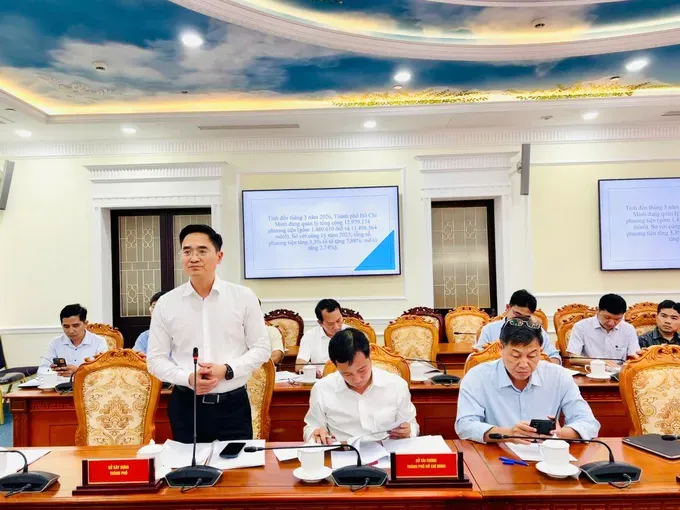
By the end of 2025, the city’s road density reached only 2.83 kilometers per square kilometer, and the proportion of land allocated for transportation in urban areas stood at 12.8 percent, below the requirements for a special-class city.
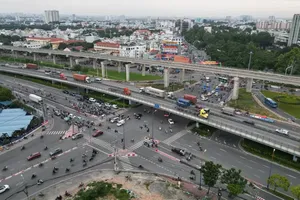
As of March 2026, Ho Chi Minh City manages nearly 13 million vehicles, including more than 1.48 million cars and nearly 11.5 million motorcycles. Traffic pressure remains high, particularly in central areas, the eastern and northwestern gateways, Tan Son Nhat Airport, Cat Lai Port and major highways including National Highway routes 13, 22, 50 and 51.
The municipal Department of Construction has identified 45 urgent key projects currently under construction to tackle existing congestion points, and a further 52 strategic projects prioritized for 2026–2030 to address bottlenecks and establish a synchronized network.
These projects reflect the city’s clear strategy to invest in initiatives with wide-reaching impact, including ring roads, interregional connection axes, key traffic nodes, and projects linking ports, airports and the city center.
Vice Chairman Bui Xuan Cuong urged the City Department of Construction to review and finalize a feasible list of projects to resolve congestion and include them in the medium-term public investment plan for 2026–2031.
Concluding the survey, Chairman Vo Van Minh praised the HCMC Department of Construction for actively coordinating with the Economic and Budget Committee and related units to compile a comprehensive and practical list of congestion relief projects.
He requested the city government to clarify total capital requirements, funding feasibility, and implementation schedules for each project group, giving priority to projects that can immediately alleviate the most pressing congestion points.
Strategic priorities and new infrastructure
The city’s strategy emphasizes prioritizing investments based on urgency, efficiency, and broader impact. Initial focus will be on frequently congested areas, particularly the central core along Le Thanh Ton and adjacent streets, Tan Son Nhat Airport, and major city gateways. New infrastructure solutions, including elevated roads and riverside routes in Cu Chi and Hoc Mon, will be explored. Traffic hotspots such as the Dinh Bo Linh- Xo Viet Nghe Tinh corridor, Binh Trieu Bridge area, key national highways, and Phu Cuong Bridge will also be addressed.
Each project must have its funding approach carefully evaluated, whether via public investment or public-private partnerships, to ensure the most suitable investment model is selected. Priority should be given to urgent projects, implemented according to a well-structured, phased plan.
A comprehensive traffic congestion prevention plan linked to the project list will be developed and submitted to the Ho Chi Minh City Party Committee and People’s Committee for approval, forming the basis for unified and synchronized implementation across the city.