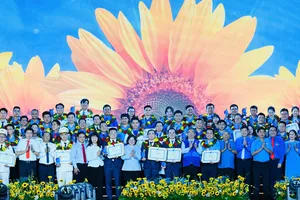
On May 20, a working delegation from the Ho Chi Minh National Academy of Politics, led by Associate Professor Dr. Hoang Phuc Lam, Deputy Director of the Ho Chi Minh National Academy of Politics, conducted an official survey and appraisal of the Ho Chi Minh City Cadre Academy after its recent merger.
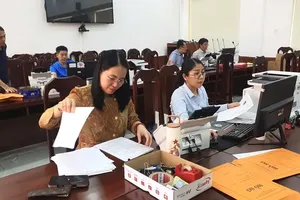
 "Delegates attend the survey and appraisal session recognizing the Ho Chi Minh City Cadre Academy after the merger as meeting National Standard Level 1 requirements. (Photo: SGGP/ Viet Dung)")
Deputy Secretary of the Ho Chi Minh City Party Committee Van Thi Bach Tuyet attended the appraisal session. During the session, the working delegation conducted a vote and officially recognized the Ho Chi Minh City Cadre Academy after the merger as meeting National Standard Level 1 requirements.
Speaking at the event, Ms. Van Thi Bach Tuyet stated that following the organizational restructuring, the Standing Committee of the Ho Chi Minh City Party Committee had directed the academy to quickly stabilize staff morale, provide appropriate support policies for personnel retiring under regulations, and assign suitable positions to newly appointed staff members in line with their expertise and professional qualifications.
The Ho Chi Minh City Party Committee has also assigned the academy to continue prioritizing its core missions of training and fostering officials while expanding its role in research, policy consultation and advisory services for the city.
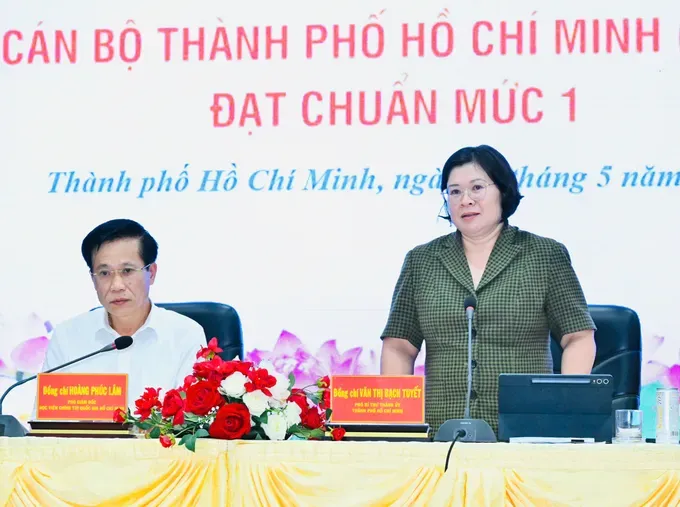
Deputy Secretary of the Ho Chi Minh City Party Committee Van Thi Bach Tuyet further proposed that the Ho Chi Minh National Academy of Politics consider expanding eligibility for intermediate-level political theory training to several key groups, including reporters and editors working for media agencies under the Ho Chi Minh City Party Committee, as well as youth union officers and youth assistant teachers at schools, with funding support provided by the city.
Concluding the session, Associate Professor Dr. Hoang Phuc Lam praised the academy’s preparations and affirmed that the institution had fulfilled the criteria required for National Standard Level 1 recognition. He also encouraged the academy to continue improving training quality and modernizing its teaching methods to better serve the city’s development needs.
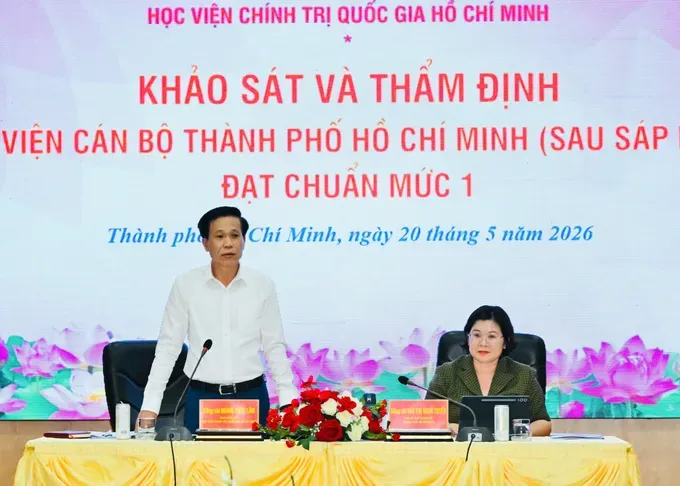
The appraisal council’s recommendations included enhancing practical training components, strengthening digital transformation in education management, and expanding cooperation with academic and research institutions nationwide.



)