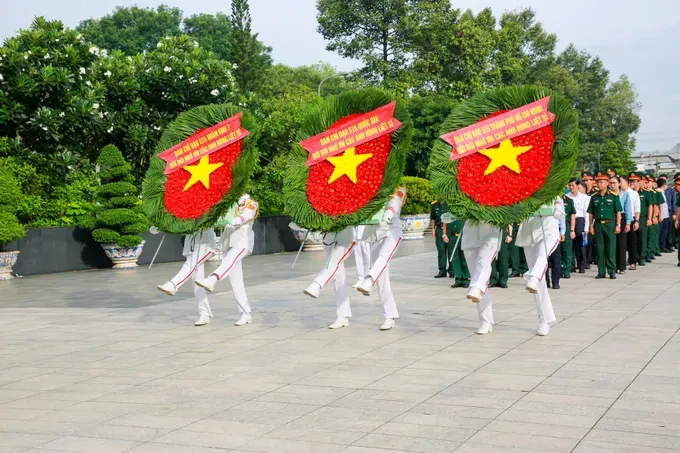
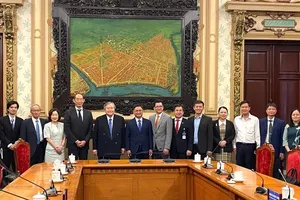
The event was held by the Steering Committee for the Search, Collection, and Identification of Martyrs’ Remains in Ho Chi Minh City (Steering Committee 515 Ho Chi Minh City).
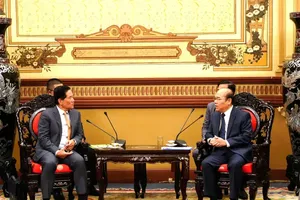
The event was attended by Major General Tran Chi Tam, Deputy Political Commissar and Head of Steering Committee 515 of Military Region 7, and Vice Chairman of the Ho Chi Minh City People’s Committee and Head of Steering Committee 515 of Ho Chi Minh City, Nguyen Manh Cuong.
The City’s Steering Committee 515 has established two sampling teams comprising 20 members, responsible for tasks including exhumation, reconstruction, transportation of remains to the sampling area, sample collection, propaganda work, ensuring security and public order, transportation logistics, handover of samples, and data digitalization.
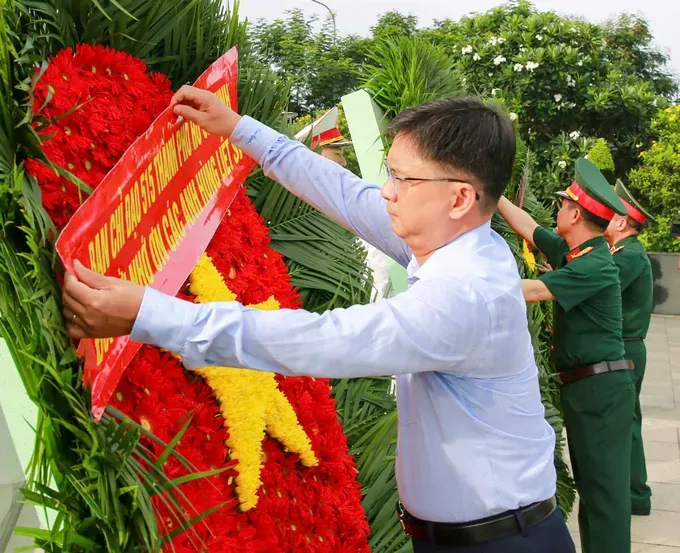
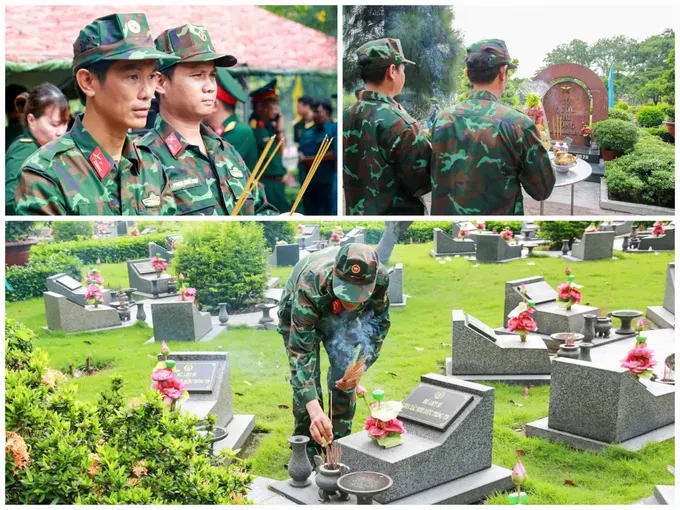
According to the plan, the pilot phase to draw lessons learned will involve collecting samples from 30 graves out of a total of 1,739 unidentified graves at the Ho Chi Minh City Martyrs’ Cemetery. The implementation is expected to take place from May 25 to May 27, 2026, excluding the time required for restoration of the graves.
Vice Chairman of the Ho Chi Minh City People’s Committee Nguyen Manh Cuong requested that the Standing Office of Steering Committee 515 of Ho Chi Minh City closely coordinate with relevant departments, agencies, and localities to strictly implement the guidelines, conclusions, and directions issued by competent authorities in the execution of the “500-day and night campaign to intensify the search, recovery, and identification of martyrs’ remains.”
In particular, it is necessary to clearly define specific tasks according to each timeline, closely linked with the responsibilities and authorities of each agency and unit, in order to ensure the acceleration of progress and effectiveness of the campaign.
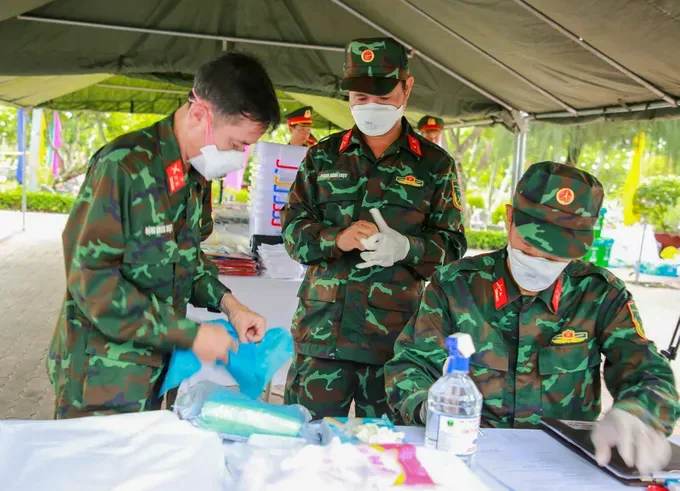
Alongside this, the Interdisciplinary Steering Task Force under Steering Committee 515 of the city is tasked with closely monitoring the situation and urging the implementation of assigned duties by working groups and teams, ensuring effective sample collection and handover of martyrs’ remains. Throughout the process, close coordination must be maintained with relevant agencies, units, and local authorities.
Mr. Nguyen Manh Cuong also requested that the sampling teams and supporting forces clearly uphold a strong sense of responsibility and actively study and exchange skills and professional expertise in both knowledge and practice through guidance and professional training provided by competent authorities at all levels.
At the same time, he emphasized strict adherence to proper procedures and principles in sample collection, ensuring that no errors occur and that all necessary conditions in terms of equipment and sampling materials are fully met in accordance with regulations, so as to successfully accomplish the assigned tasks.
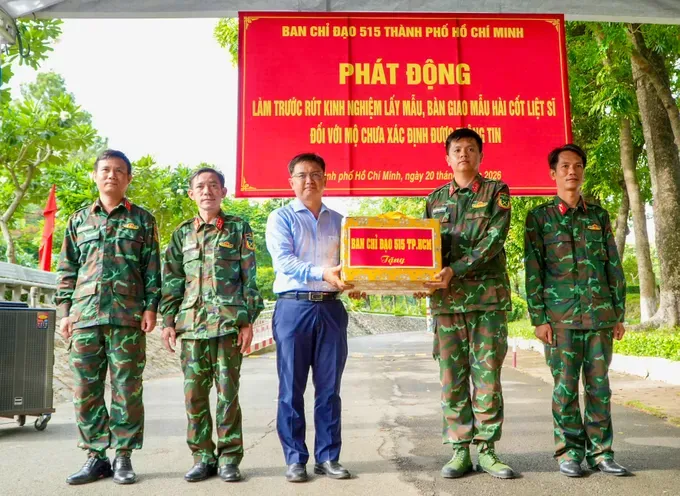
According to a report from Steering Committee 515, the city currently has 18 martyrs’ cemeteries with a total of 46,180 martyrs’ graves. Survey results show that 9,869 graves remain unidentified and require DNA sampling for identification.
At the Ho Chi Minh City Martyrs’ Cemetery alone, there are 13,562 graves, of which 1,739 unidentified graves require sampling. This is a key task in the implementation plan of the “500-day and night campaign to search for, recover, and identify martyrs’ remains.”





)