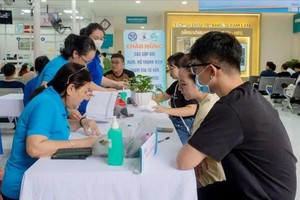
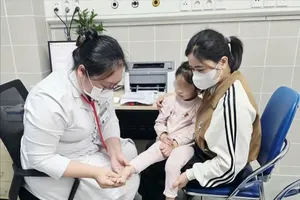
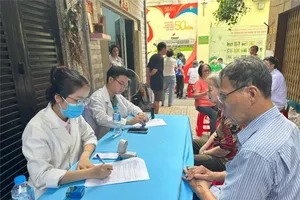
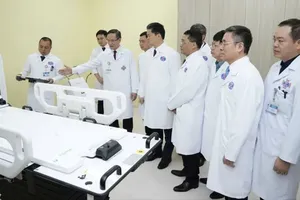
Vice Chairman Nguyen Manh Cuong of the Ho Chi Minh City People's Committee chaired a periodic briefing this morning with 168 communes, wards, and special zones on the implementation progress of the citywide periodic health checkup plan.
Reporting at the meeting, Associate Professor Nguyen Anh Dung, Deputy Director of the Ho Chi Minh City Department of Health, stated that as of November 9, a total of 9,530,366 people had undergone health examinations and screenings, reaching 74.6 percent of the population. However, progress varies significantly across localities and target groups, particularly among formal workers and university students.
Of the over 9.5 million people recorded, more than 6.53 million had periodic health checkups, over 1.42 million were managed for chronic diseases, alongside other health examination data sources. Currently, only 11 localities have achieved a health checkup rate of over 90 percent, while 54 localities remain below 60 percent.

Among formal workers, 2,391,312 people have been examined, reaching 53.2 percent of the total estimated 4.5 million workforce, though 920,478 of them do not yet have electronic health records. Among students, the checkup rate reached 93.9 percent for primary school students and 100 percent for middle school students, whereas high school students reached 62.6 percent and university students stood at 44.8 percent.
In response, the Ho Chi Minh City Department of Health is coordinating with departments, sectors, and localities to review businesses and educational institutions that have not organized health examinations, requiring them to establish implementation plans and timelines.
The health sector is arranging resources for after-hours examinations to support low-rate localities, aiming to complete health checkups for workers and students before November 30, 2026, while continuing examinations for the remaining population throughout 2026, Associate Professor Nguyen Anh Dung informed.
Vice Chairman Nguyen Manh Cuong requested relevant units to identify unexamined target groups, emphasizing that the program aims not just to meet quotas, but to analyze population health data as a basis for future healthcare solutions. He urged the Department of Science and Technology, the Department of Health, and related agencies to accelerate data synchronization and upload health information onto suitable platforms for personal tracking and long-term care management.
Regarding misinformation running rampant on social media claiming the health checkups serve to harvest blood and organs, Vice Chairman Nguyen Manh Cuong directed local authorities and the Ho Chi Minh City Police to identify and handle those who have spread the misleading information according to regulations.