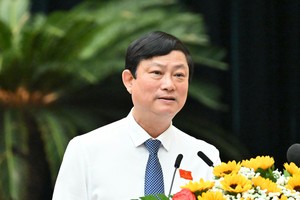
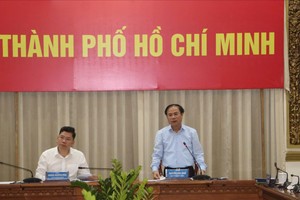
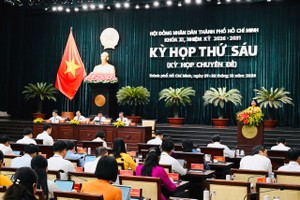
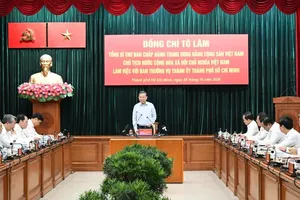
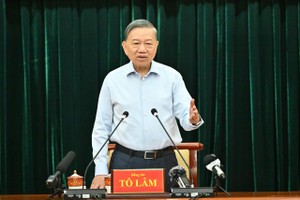
During group discussions at the sixth session of the 11th-term Ho Chi Minh City People's Council on the afternoon of October 29, delegates discussed mechanisms to attract management talent and policies to develop the city's healthcare workforce.
Remote health stations may receive higher support levels
Discussing a draft resolution on policies to attract and support healthcare workforce development in Ho Chi Minh City, deputy Do Thi Minh Quan, Secretary of the Party Committee and Chairwoman of the People's Council of Binh Quoi Ward, said policies to attract doctors to health stations in wards and communes are necessary.

She proposed combining incentives for newly recruited doctors with doctor rotation programs from public hospitals to health stations, while developing training plans and strengthening professional support from higher-level hospitals.
Regarding the proposed monthly support of VND3 million for doctors currently working at health stations, deputy Do Thi Minh Quan suggested expanding eligibility based on job positions, staffing shortages, and budget capacity. According to her, nurses, midwives, physician assistants, pharmacists, and healthcare aides are all essential to health station operations.
Deputy Nguyen Thi Nga, Deputy Head of the Culture and Social Affairs Committee of the Ho Chi Minh City People's Council, said nurses, physician assistants, and other healthcare workers already receive additional income support. The city should consider parity between health station staff and officials working in other sectors at communes and wards to ensure fairness. Therefore, priority should be given to retaining doctors, who remain the most difficult group to recruit for grassroots healthcare facilities. She added that the city is studying additional support packages tailored to special areas such as Can Gio and Con Dao.
Dr. Tang Chi Thuong, Director of the Ho Chi Minh City Department of Health, said 37 health stations in communes and wards currently do not meet the minimum staffing requirement of five doctors each. He supported applying the proposed assistance to health stations facing recruitment difficulties and lacking the minimum number of doctors.
Regarding monthly support levels, he said VND3 million per month remains low compared with income levels at hospitals and proposed extending assistance to healthcare workers currently serving at health stations.
Chairman of the Ho Chi Minh City People's Council Vo Van Minh stressed that support policies should not be applied uniformly. Higher support levels should be provided to remote and special areas such as Can Gio and Con Dao than to inner-city wards. He also called for studying comprehensive support policies for nurses, physician assistants, and pharmacists at health stations.
HCMC attracts high-quality managers to the public sector
Commenting on a draft resolution governing the hiring, recruitment, and appointment of heads of public service units and managers of state-owned enterprises under the city's authority, deputy Tang Huu Phong, Deputy Head of the Ho Chi Minh City Party Committee's Commission for Information and Education expressed support for the proposal.
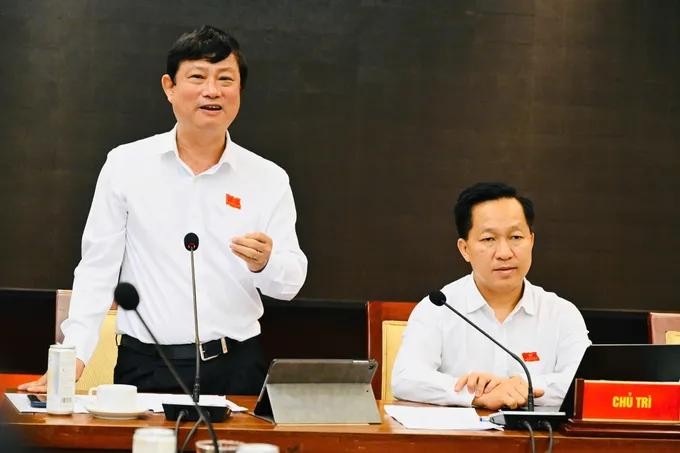
He said the city should review implementation experiences, clarify outcomes and challenges, and use those findings to refine the resolution and ensure its feasibility. He also called for clearer regulations governing the relationship between Party organizations and hired, recruited, or appointed leaders, particularly when those leaders are not Party members. While the draft addresses the role of Party organizations, he said more detailed coordination mechanisms are needed for practical implementation.
Nguyen Hoai Nam, Deputy Director of the Ho Chi Minh City Department of Health, described the proposal as a breakthrough. He noted that the healthcare sector oversees 90 public service units, and most hospital directors have advanced from being highly skilled doctors, while administrative and financial management require a different set of competencies.
The proposal would allow public institutions to hire chief executive officers who are not necessarily civil servants or public employees, creating a clearer separation between professional management and institutional administration, similar to modern governance models used by private hospitals.
However, regarding the requirement that candidates appointed or hired to lead public service units in healthcare, education, and scientific research must hold a master's degree or higher, he proposed adding the phrase "or equivalent." He explained that, in addition to master's and doctoral degrees, Vietnam's healthcare sector has professional specialist qualifications, with Specialist Level I equivalent to a master's degree and Specialist Level II equivalent to a doctorate.