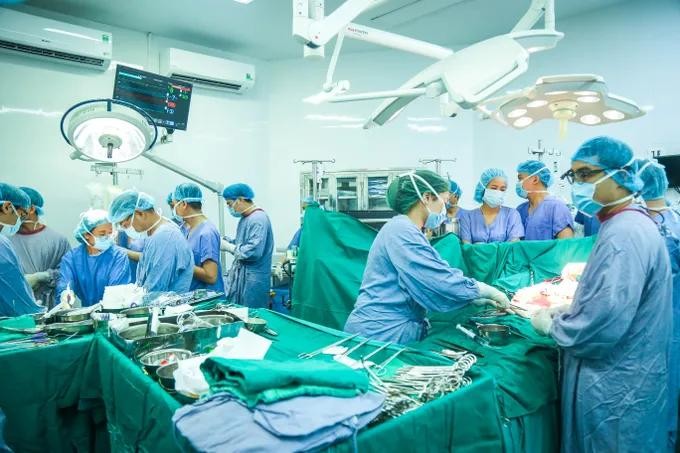
The Ministry of Health said on November 2 that it had revised several provisions of the draft Law on Donation, Removal and Transplantation of Human Tissues and Organs and Donation and Removal of Cadavers (amended) following discussions on the proposed legislation.
Under the latest draft, foreign nationals would no longer be allowed to register on organ transplant waiting lists in Vietnam, a move aimed at preventing potential exploitation of the system for organ trafficking, according to the Ministry.
The draft retains existing legal provisions governing transplants for foreign nationals but introduces stricter eligibility requirements. Foreign patients would be eligible to receive organs from Vietnamese donors only if they are directly related by blood to the donor or are relatives within three generations.
Under the 2006 Law on Donation, Removal and Transplantation of Human Tissues and Organs and Donation and Removal of Cadavers, which remains in force, foreign nationals and overseas Vietnamese may receive organs from Vietnamese donors if they have the required family relationship. The law also allows transplants involving organs voluntarily donated without a designated recipient.
However, the current legislation does not specifically provide for foreign nationals without family ties to Vietnamese citizens to register on waiting lists for organs from donors declared brain-dead or dead following circulatory failure.
The latest draft also revises organ allocation priorities, giving precedence to patients requiring emergency transplants and children. Priority would also be given to people who had previously donated organs and subsequently require transplants, as well as patients on waiting lists at medical facilities that had identified, encouraged and maintained contact with potential donors.
Where patients have equal priority, preference would go to the parents, spouses, children and siblings of people who donated organs after being declared brain-dead or following circulatory death.
The proposed amendments also introduce additional safeguards to ensure that organ donations are voluntary and free from coercion.
Under the draft, advisory councils overseeing organ removal and transplantation from living donors must have at least five members, including medical, legal and psychological experts.
Separate requirements would apply to the determination of brain death and circulatory death. The relevant councils must comprise appropriately qualified specialist physicians, and a determination may only be made if all medical members unanimously agree.







)