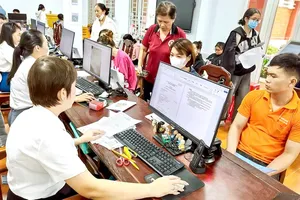
On June 9, Vice Chairman of the Ho Chi Minh City People's Committee Nguyen Manh Cuong met with the Department of Health to review the implementation of the city's universal health screening project for the 2026-2030 period, with a vision to 2045, as well as the 2026 periodic health examination plan.
HCMC records more than 162,000 health examination visits
Reporting at the meeting, Associate Professor Nguyen Anh Dung, Deputy Director of the Ho Chi Minh City Department of Health, said that as of June 7, the city had recorded 162,371 health examination visits, including 56,846 screening examinations and 105,531 periodic health check-ups.
Older adults accounted for the largest share of examinations, with 49,361 visits, followed by children under six years old with 39,008 visits. The number of examinations for adults aged 18 and above reached 12,633, while 4,499 children aged six to under 18 underwent health screenings.
Under the program, examination data is entered directly at healthcare facilities and uploaded to the city's health management platform within 24 hours. The information is then connected to the medical data warehouse and synchronized with the Digital Citizen application and VNeID, allowing residents to access their results electronically.
The city is also linking health data with population, social insurance, and education databases to identify target groups, issue examination invitations, and manage electronic health records. Officials view the initiative as a key step toward lifelong health management, shifting the focus from treating illness to proactively monitoring and protecting public health.
Associate Professor Tang Chi Thuong, Director of the Ho Chi Minh City Department of Health, said the healthcare sector has strengthened its examination capacity and that hospitals are capable of coordinating with local authorities to expand mobile health screening services at the community level. However, he noted that public participation remains lower than expected. To improve coverage, the city plans to expand mobile examination teams and bring healthcare services closer to residents.
The implementation of universal health check-ups aims not only to detect diseases early but also to be the starting point for a new health management model, centered on the people, shifting the focus from treatment to prevention, comprehensive health care, and continuous health management at the grassroots level.
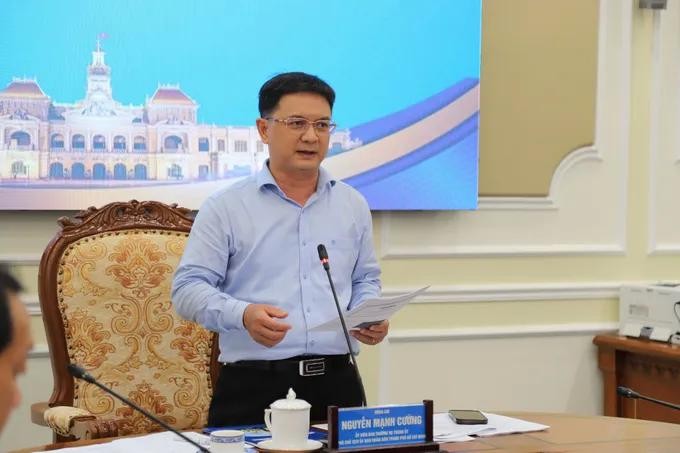
Vice Chairman of the Ho Chi Minh City People's Committee Nguyen Manh Cuong.
City shifts from disease treatment to health governance

Speaking at the meeting, Vice Chairman Nguyen Manh Cuong described the universal health examination program as a major policy of the Party and the State and an important step toward a new approach to healthcare management. After more than two months of pilot implementation, many localities have proactively developed plans and achieved encouraging initial results.
The city Vice Chairman noted that the program is unprecedented in scale, requiring the involvement of the entire political system in communication, mobilization, implementation, supervision, and coordination among government agencies, local authorities, and healthcare providers. One of the greatest challenges, he said, is reaching millions of residents, building a comprehensive health database, and organizing examinations across diverse population groups.
To improve the program's effectiveness, he called on departments, agencies, and local authorities to develop implementation plans tailored to their responsibilities and strengthen coordination with the Department of Health on professional guidance, financing, and operational execution. He also urged relevant agencies to establish intersectoral guidelines for specific groups, including students, workers, civil servants, and public employees, to facilitate examinations and data integration.
At the same time, Mr. Nguyen Manh Cuong emphasized the need to intensify public communication efforts across multiple platforms so that residents better understand the benefits of periodic health examinations.
The Vice Chairman also instructed the health sector to accelerate the development of the city's electronic health data system. Healthcare facilities were urged to integrate examination results with electronic health records to gradually establish a comprehensive and synchronized health database.
According to him, Ho Chi Minh City possesses the country's largest healthcare network, with many medical institutions operating at regional and international standards. With existing resources and close coordination among agencies, he expressed confidence that the city will achieve the program's objectives.
According to Associate Professor Tang Chi Thuong, Director of the Ho Chi Minh City Department of Health, funding for the program has already been allocated. However, this is a large-scale program, therefore, the Department of Finance is requested to promptly provide specific written guidance on expenditure limits and content so that localities can proactively implement the regulations correctly and avoid errors in settlement.
The Department of Health also requires localities to strictly update data after examinations. Examinations must be linked to complete and timely data entry; if data is not updated, the results of the implementation will not be fully recorded, affecting the overall assessment.