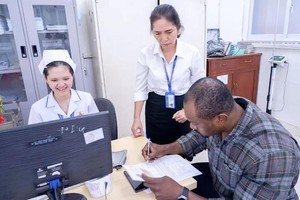
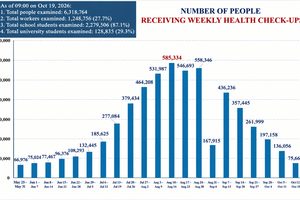
On November 3, the Ho Chi Minh City Department of Health announced that nearly 7 million residents across the city have undergone health screenings, achieving 54 percent of the 2026 target. However, progress varies considerably among population groups and localities, requiring agencies to focus resources during the year-end acceleration phase.
As of November 2, the city had recorded 6,916,175 people receiving health screenings, equivalent to 54 percent of the target. Students posted the highest screening rate at 94.44 percent, while the rate among workers reached only 36.56 percent and among university students 34.42 percent.
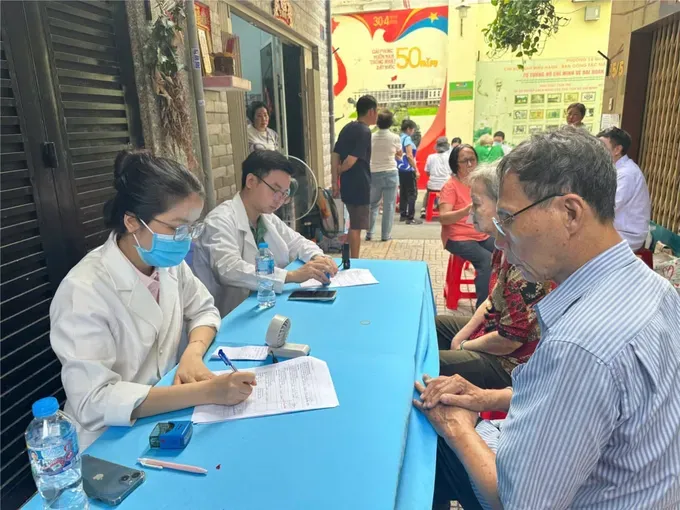
According to Associate Professor Tang Chi Thuong, Director of the Ho Chi Minh City Department of Health, the universal health screening program has achieved positive results, but implementation remains uneven among population groups, particularly workers and university students. Notably, health screening rates differ significantly among localities.
To date, four localities have recorded cumulative screening numbers equal to or exceeding their population size such as Saigon Ward, Thanh An Commune, Vinh Loc Commune and Phuoc Thang Ward. Localities with high screening rates include Long Phuoc Ward (93.76 percent), Phuoc Hoa Commune (87.70 percent), Ba Diem Commune (86.67 percent) and Hiep Phuoc Commune (85.79 percent). Across the city, 104 communes and wards have achieved screening rates above 50 percent.
On the other hand, 12 localities still report health screening rates below 40 percent. Among them, Cau Ong Lanh Ward has the lowest rate at just 32.96 percent, followed by Vinh Hoi Ward (35.07 percent), An Lac Ward (35.65 percent), Binh Tri Dong Ward (35.76 percent) and Ben Thanh Ward (36.72 percent).
In response, the Ho Chi Minh City Department of Health has identified key tasks for the remaining months of the year, focusing not only on increasing the number of people screened but also on narrowing disparities among localities, ensuring screening quality and fully updating information in electronic health records.
To speed up implementation, the department will continue advising the Ho Chi Minh City People's Committee to direct the Ho Chi Minh City Federation of Labor and the Department of Home Affairs to strengthen oversight of agencies, organizations and businesses in organizing periodic health screenings for workers in accordance with regulations. The health sector will also coordinate and allocate qualified facilities to participate in the program.
People's committees of 168 wards, communes and special zones have been instructed to review and compile detailed lists of individuals who have not yet undergone health screenings by population group, proactively develop plans for the remaining population and prioritize vulnerable groups and areas with low screening rates.
For schoolchildren and university students, the Ho Chi Minh City Department of Education and Training has been tasked with directing educational institutions to urgently complete health screenings during November 2026, prioritizing centralized screenings at schools.
At the same time, health screening facilities are required to proactively increase staffing, arrange flexible screening schedules and support localities with low screening rates. The Department of Health will continue reviewing and reallocating resources from localities that have largely completed the program to support slower-performing areas.
The Ho Chi Minh City Department of Health has also instructed health screening facilities to strengthen quality control and fully and accurately update data on the Community Health Management Platform. In addition, facilities must review and reconcile screening and treatment data regularly to minimize duplication and safeguard residents' interests.
















)