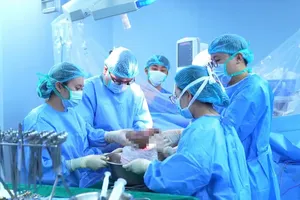
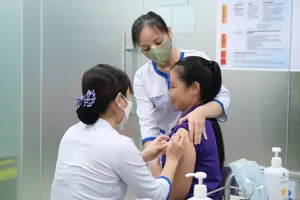
With more than 14 million residents requiring healthcare services, Ho Chi Minh City is rolling out a range of measures to strengthen grassroots healthcare, from increasing the number of doctors and investing in medical equipment to enhancing professional links with higher-level hospitals.
The goal is to improve the quality of medical examinations and treatment while ensuring that residents can access healthcare services in their local communities.
Doctors rotate to work at commune and ward health stations
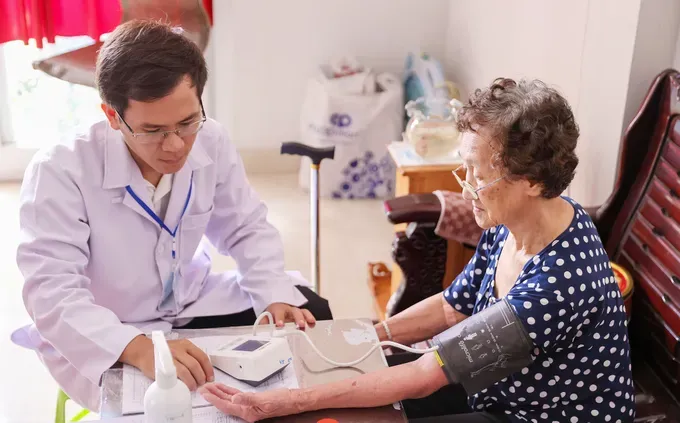
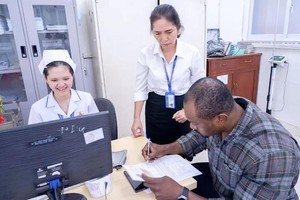
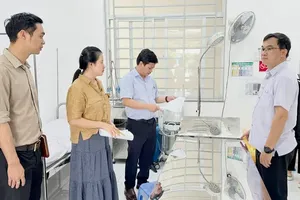
The Ho Chi Minh City Department of Health has launched a program to assign doctors on a rotating basis to health stations in communes, wards, and special administrative zones. In the first rotation, 79 doctors from hospitals and regional medical centers have been assigned to support 37 health stations facing staff shortages. The initiative is part of efforts to strengthen the high-quality healthcare workforce, improve medical examination and treatment capacity, and enhance primary healthcare for residents.
Dr. Phan Trung Viet of Gia Dinh People's Hospital, who has been assigned to Chau Pha Commune Health Station, is among the doctors taking part in the program. He said that although grassroots healthcare facilities still face limitations in infrastructure and medical equipment, and building trust with residents takes time, the assignment offers doctors an opportunity to apply their expertise and help improve the quality of healthcare services in the community.
Sharing the same commitment, Dr. Le Van Duong, MSc, of Gia Dinh People's Hospital, who has been assigned to Phu My Ward Health Station, said he would put his professional knowledge and experience into practice while working closely with the station's medical staff to examine and care for patients, provide guidance, and manage community health.
He added that he would maintain close contact with his sending hospital to seek timely professional advice, arrange consultations, obtain assistance in managing cases, or refer patients to higher-level facilities when necessary. This would help ensure that patients receive continuous, safe, and appropriate care.
Dr. Cao Tan Phuoc, Director of Thu Duc Regional General Hospital, said field surveys had found that many health stations, particularly those in areas far from the city center, continued to face difficulties in both staffing and medical equipment. Meanwhile, higher-level hospitals have teams of doctors with specialized training and access to advanced medical techniques.
This disparity in professional capacity has led many residents to seek care at higher-level hospitals, even for common illnesses. Therefore, assigning hospital doctors to work at local health stations is not merely a short-term measure to address staffing shortages but also an effort to narrow gaps in access to healthcare services across different areas.
More importantly, through training, guidance, and the transfer of medical techniques, local healthcare workers can gradually strengthen their capabilities and sustain improvements in service delivery even after the rotating doctors complete their assignments.
Strengthening professional capacity
According to Associate Professor Dr. Tang Chi Thuong, Director of the Ho Chi Minh City Department of Health, the doctor rotation program is intended not only to address immediate staff shortages but also to facilitate the transfer of experience and strengthen the professional capabilities of local healthcare workers. Through medical examinations and treatment, professional guidance and assistance in managing common medical conditions, and doctors from higher-level hospitals will help modernize the operations of local health stations and gradual building of public confidence in community-based healthcare facilities.
To improve the quality of grassroots healthcare, Associate Professor Dr. Tang Chi Thuong said close coordination was needed among the health sector, local authorities, and health stations. These three pillars form a “three-legged stool” model aimed at ensuring regular and continuous healthcare for residents in their communities.
The Ho Chi Minh City Department of Health has assigned general hospitals to partner with health stations while mobilizing specialized hospitals to provide support in their respective fields. Assistance focuses on rotating doctors, training, transferring medical techniques, conducting consultations, and coordinating patient referrals. Implementation must be based on actual needs, enabling health stations to gradually strengthen their professional capacity, take a more proactive role in medical examinations and treatment, and manage residents' health.
Local authorities, meanwhile, are required to provide direct oversight, ensure adequate facilities, equipment, and operating conditions, and mobilize community participation in healthcare. Activities such as disease prevention and control, general health checkups, and care for older people and vulnerable groups must be carried out regularly.
Health stations must also take the initiative in receiving support, renewing their operating methods, applying electronic health records, managing chronic diseases, and providing continuous healthcare tailored to the needs of different population groups.
The ‘three-legged stool’ model can only remain stable when each stakeholder fully fulfills its responsibilities and works toward the shared goal of improving the quality of healthcare for residents. With close and effective coordination, grassroots healthcare can develop sustainably, ensuring that people receive long-term health monitoring and care in their local communities, Associate Professor Dr. Tang Chi Thuong emphasized.
On October 30, at the sixth session of the 11th Ho Chi Minh City People's Council for the 2026-2031 term, councilors passed a resolution stipulating policies to attract, support, and develop the city's healthcare workforce.
Under the resolution, doctors recruited to health stations with fewer than five doctors, which remain understaffed after two recruitment announcements, will be eligible for a one-time recruitment incentive. The incentive is equivalent to 80 times the monthly regional minimum wage applicable to Region I for resident doctors, those holding master's degrees or Specialist Level I qualifications and above, and 40 times that amount for other doctors.
Doctors recruited and directly assigned to work at Thanh An Island Commune Health Station will receive 1.2 times the corresponding incentive, while those assigned to Con Dao Special Administrative Zone Health Station will receive 1.5 times the applicable amount.
Recipients of these incentives must commit to working for at least 60 months. Those who voluntarily resign or transfer to another workplace before completing the commitment period must reimburse the funds received.
The resolution will take effect from November 10, 2026, through December 31, 2030.








)