On November 6 in Hanoi, the Department of Disease Prevention under the Ministry of Health organized the Dengue Fever Conference 2026, gathering more than 700 domestic and international delegates.
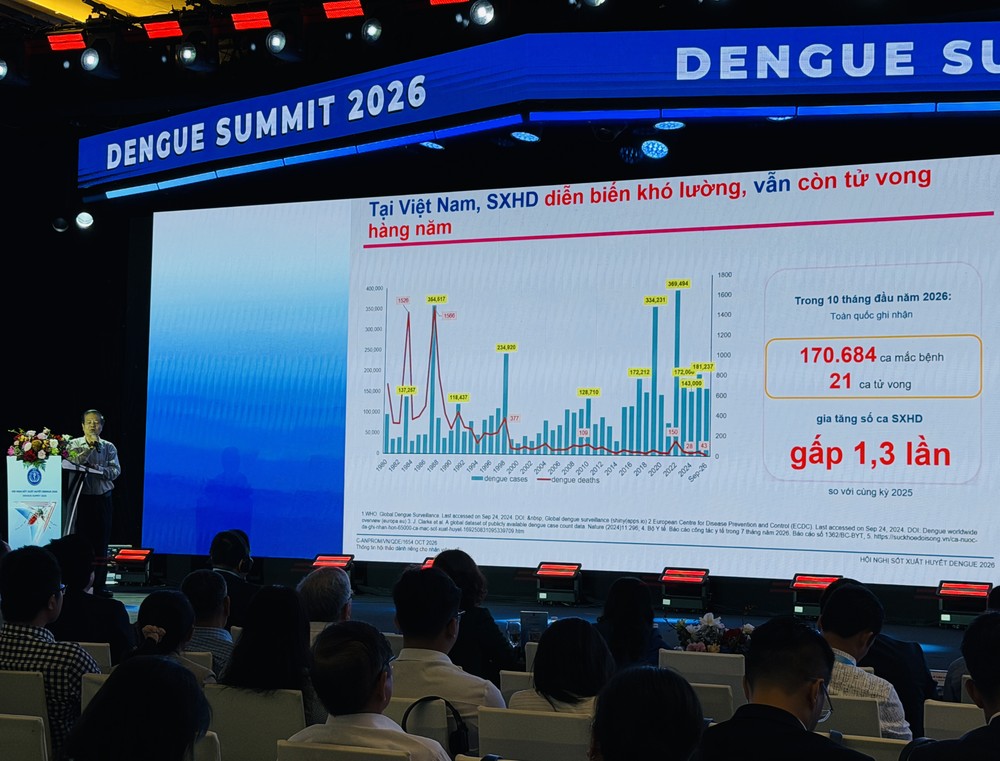
Speaking at the conference, Dr. Hoang Minh Duc, Director of the Department of Disease Prevention, stated that during the first 10 months of 2026, the country recorded more than 170,600 Dengue cases and 21 deaths. Case counts increased by 26 percent compared to the same period in 2025. The Southern region accounted for 66.8 percent of total cases, the Central Highlands region 17.5 percent, the Central region 9.8 percent, and the Northern region 5.9 percent.
According to Director Hoang Minh Duc, despite implementing numerous disease prevention and control measures, Dengue fever remains endemic in Vietnam. Facing the increasingly unpredictable development of the epidemic, the health sector is reviewing and evaluating the effectiveness of existing solutions, updating scientific advances, and seeking more proactive and suitable preventive measures.
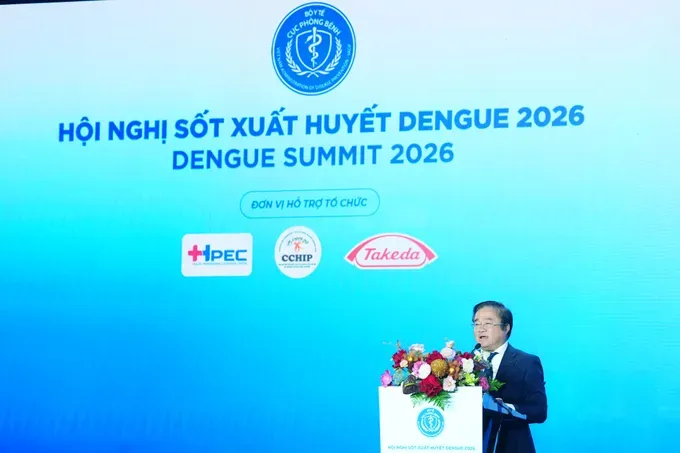
Analyzing epidemic developments, Professor Nguyen Van Kinh, former Director of the National Hospital for Tropical Diseases, noted that following the 2022 outbreak, Dengue cases have continued to rise. Notably, the disease no longer follows clear seasonal patterns or cycles as before.
Currently, all four Dengue virus serotypes (DENV-1, DENV-2, DENV-3, and DENV-4) circulate in Vietnam. Among them, serotypes 1 and 2 predominate, accounting for approximately 90 percent of cases. In particular, serotype 3 re-emerged in late 2024 after going undetected for many years.
Surveillance data in the Southern region in September 2026 showed that DENV-2 accounted for 69 percent and DENV-1 accounted for 27.5 percent of samples with identified virus serotypes. Because the virus serotypes do not confer cross-immunity, an individual can contract Dengue up to four times.
According to Professor Nguyen Van Kinh, more than 90 percent of people infected with the Dengue virus present no clinical symptoms yet can still serve as sources of transmission. Furthermore, climate change, urbanization, and mosquito resistance to chemicals make the epidemic more difficult to forecast and control.
He also noted that the disease typically progresses through a fever stage and a critical stage. Between the third and seventh days of illness, when patients begin to defervesce, complications can still occur. Therefore, patients should not become complacent when fever subsides and must continue monitoring warning signs and attend follow-up examinations according to doctor instructions.
With no specific treatment available for Dengue fever, Professor Nguyen Van Kinh emphasized the need to combine vaccination, mosquito and larva control, and timely medical treatment to reduce cases and limit mortality. Vaccination represents one of the preventive measures requiring attention, combined with eliminating standing water containers, reducing mosquito breeding sites, and enhancing public communication so citizens proactively prevent the disease.

















)




