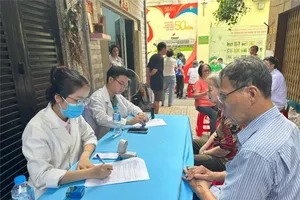
Implementing a policy to strengthen and improve grassroots healthcare capacity, Ho Chi Minh City's health sector is deploying doctors from hospitals and regional medical centers to work on rotation at communes, wards and special-zone health stations.
In the first phase of 2026, 79 doctors were assigned to support 37 health stations.
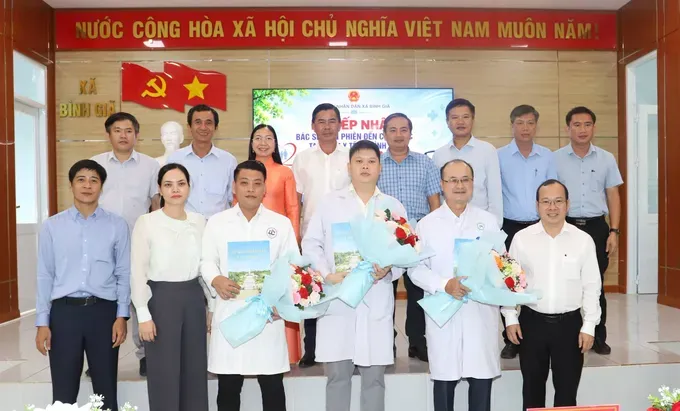
In early November, many localities began receiving the medical personnel assigned by the city's health sector.
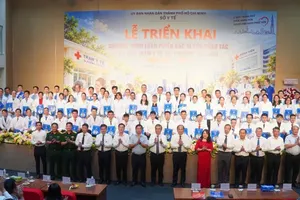
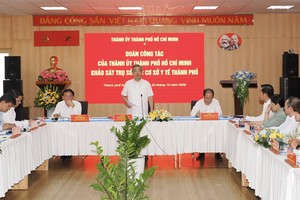
In Chau Pha Commune, the Commune People's Committee held a ceremony to welcome three doctors from Gia Dinh People's Hospital and the Ho Chi Minh City Traditional Medicine Hospital to work on rotation at the Commune Health Station.
Dr. Nguyen Thi Kim Yen from the Ho Chi Minh City Traditional Medicine Hospital said she would strive to apply her expertise, experience and dedication while working closely with grassroots healthcare staff to fulfill assigned tasks.
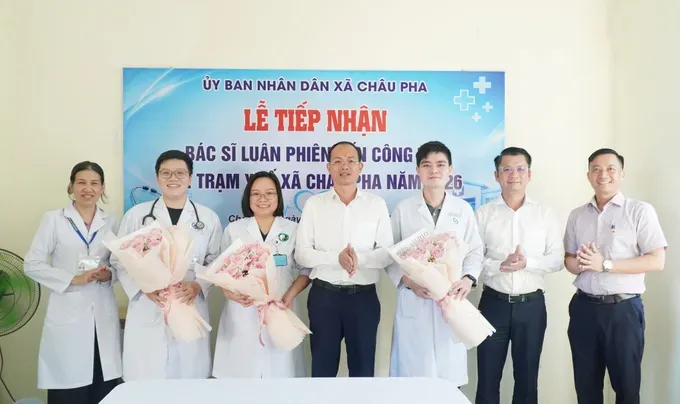
Representing the local government, Deputy Secretary Phan Minh Hop of the Party Committee and Chairman of the People's Committee of Chau Pha Commune said the program demonstrates the city's health sector's support in strengthening the number of experienced and qualified doctors at the grassroots medical stations.
He expressed hope that the doctors would quickly adapt to their new working environment, apply their professional expertise and medical ethics, and actively assist local healthcare workers in improving the quality of medical examination and treatment services.
Similarly, Nghia Thanh Commune received three doctors from Nguyen Tri Phuong Hospital and Tan Dinh General Hospital in this phase.
According to Nguyen Tien Trung, Deputy Secretary of the Nghia Thanh Commune Party Committee and Chairman of the communal People's Committee, local authorities have instructed the Commune Health Station to proactively assign appropriate duties and create favorable conditions so that the doctors can work effectively and maximize the benefits of the additional human resources.
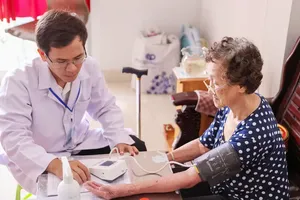
With expertise in general medicine, internal medicine and general internal medicine, the rotating doctors in Nghia Thanh Commune will provide medical examinations, health consultations, diagnostic support and treatment for common conditions such as hypertension, diabetes, cardiovascular diseases, asthma and chronic obstructive pulmonary disease. Their presence is expected to help residents gain easier access to healthcare, consultation and treatment services in their local area.
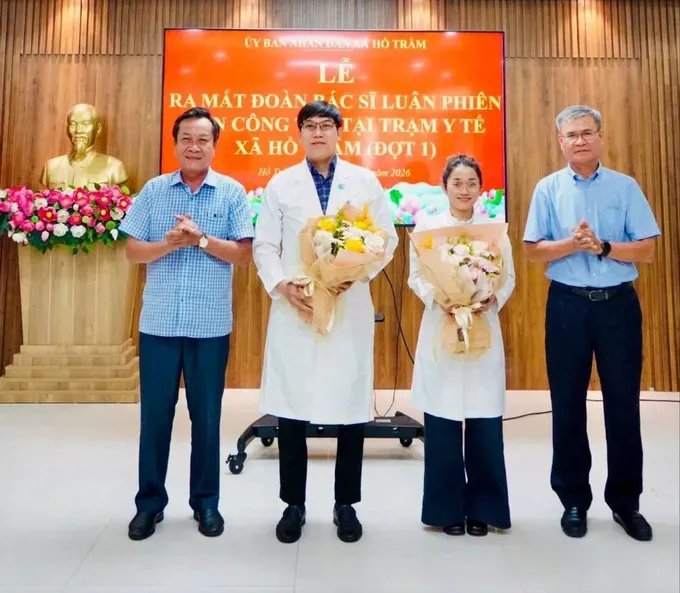
In Ho Tram Commune, the assigned team includes Dr. Kim Thi Thuy Da, an internal medicine specialist from Thu Duc Regional General Hospital, and Dr. To Van Vinh, an obstetrician-gynecologist from Tu Du Hospital.
Their assignments will run through the end of 2026.
The doctor rotation program has received strong support from local authorities and active participation from major hospitals. In this phase, Ba Ria General Hospital has assigned four doctors to support the health stations in Kim Long and Binh Gia communes.
Dr. Pham Huu Doan, Deputy Director of Ba Ria General Hospital, emphasized that sending doctors to Commune Health Stations helps address immediate staffing shortages while contributing to the long-term goal of strengthening primary healthcare services.
In addition to providing direct medical care, the doctors will offer practical training, transfer medical techniques, assist with initial emergency treatment, and support the management of chronic non-communicable diseases in the community.
Support activities are also being expanded to strengthen professional links between big hospitals and health stations. Ba Ria General Hospital plans to establish a remote consultation and telemedicine system connecting hospital specialists with health stations. The hospital will also organize regular training programs and provide support in standardizing professional procedures, infection control, pharmaceutical management and medical equipment management.



)