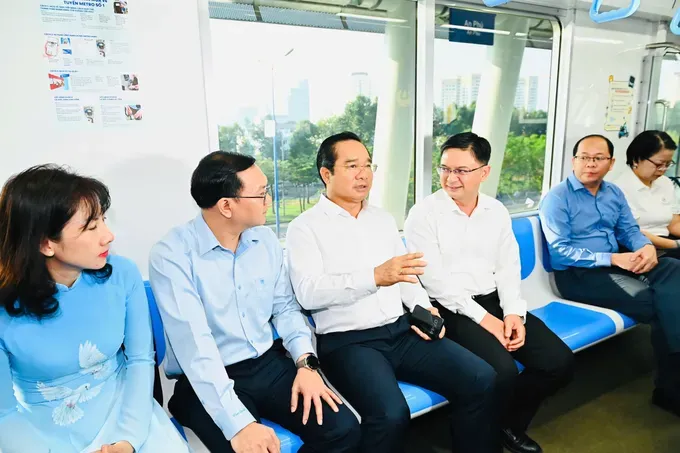
The delegation opted to travel via Metro Line 1, highlighting the ease of access to the center using public transportation.
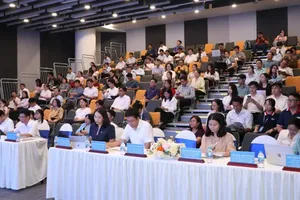
Also present at the ceremony were Vice Chairman of the Ho Chi Minh City People’s Committee Nguyen Manh Cuong, Deputy Head of the Ho Chi Minh City Party Committee's Propaganda and Mass Mobilization Commission Ta Quoc Trung, and leaders from various municipal departments and agencies.
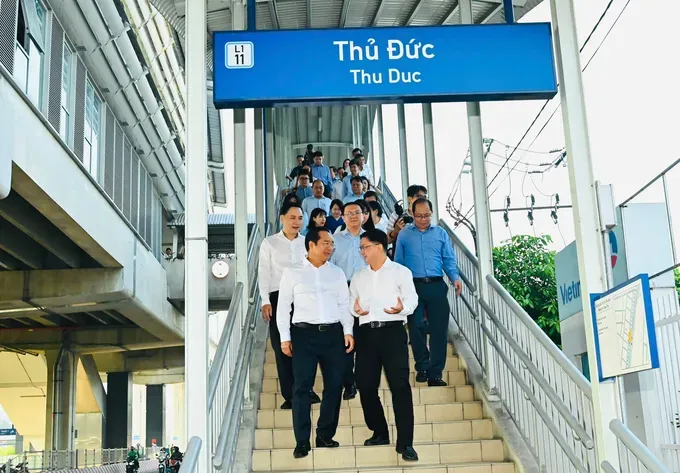
Upon arriving at Thu Duc Station, the delegation disembarked and walked to the Ho Chi Minh City Public Administration Service Center located at 43 Nguyen Van Ba Street, Thu Duc Ward. The distance from the station to the center is only a few hundred meters, requiring less than five minutes on foot.
Spanning two floors and divided into six distinct zones, the Ho Chi Minh City Public Administration Service Center houses 61 counters where officials directly receive applications across a wide range of sectors, including Justice, Home Affairs, Health, Construction, Tourism, Urban Planning and Architecture, Natural Resources and Environment, Industry and Trade, Education and Training, and Social Insurance, among others.
According to the design and pilot testing of the service counters, the average processing time for each application, from the moment a citizen receives a queue number to the issuance of a receipt, is estimated at five to ten minutes.
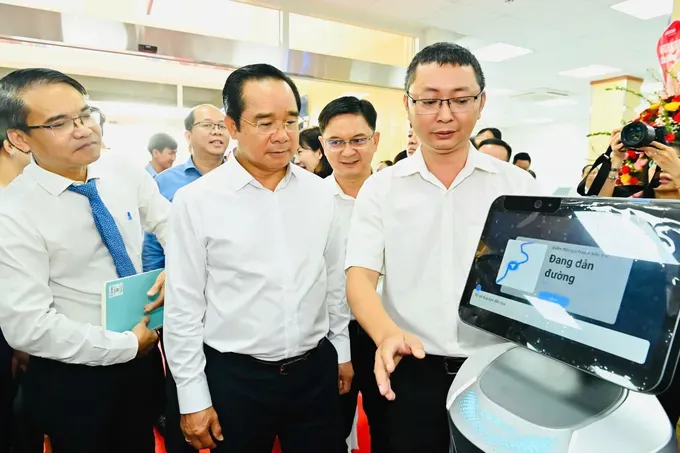
In addition, the center has prioritized dedicated areas for people with disabilities and other vulnerable groups, along with waiting spaces, computer stations, information kiosks, and technology-driven experiences such as robots and chatbots to serve both citizens and businesses.


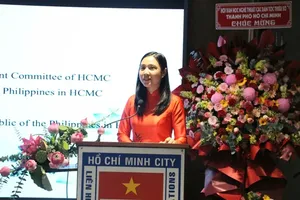
At the inauguration ceremony, Vice Chairman of the Ho Chi Minh City People’s Committee Nguyen Manh Cuong emphasized that administrative reform, particularly the simplification of administrative procedures, has long been a central and continuous priority for the city, directly linked to the goal of enhancing service quality for residents and enterprises.
The city has implemented coordinated measures and initiatives to enhance the effectiveness of administrative reform, aiming to ensure that 100 percent of administrative procedures are independent of geographic boundaries and that all procedures for citizens and businesses can be completed online. The establishment and operation of the Public Administration Service Center stand as a clear demonstration of the city’s efforts to transform its management approach toward a service-oriented administration.
The Vice Chairman of the Ho Chi Minh City People’s Committee urged municipal departments and agencies to promptly provide support and resolve any emerging challenges, ensuring that the reception and processing of administrative procedures operate smoothly and efficiently.
He emphasized the importance of selecting personnel with professional expertise, a strong sense of responsibility, and exemplary conduct, while proactively developing training and guidance programs for officials and public servants working at the center. The city also plans to urgently upgrade its information technology infrastructure to ensure seamless connectivity from the municipal level down to local wards, in line with the approved project plan. The operations of the Public Administration Service Center are closely linked to the city’s broader strategies for digital transformation and innovation.
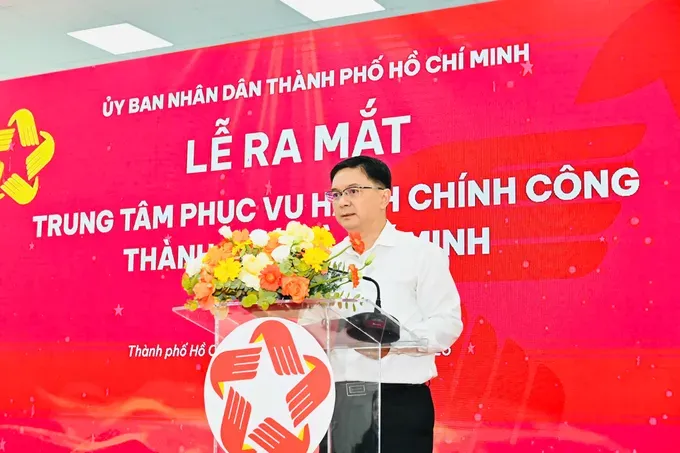
In addition, the Ho Chi Minh City Public Administration Service Center continues to serve as a key advisory hub for city leaders on administrative procedure reform, proactively researching and proposing process improvements strongly supported by information technology and digital data applications.
Mr. Nguyen Tuan Anh, Director of the Public Administration Service Center, stated that the center expects every officer and public servant to continually enhance their sense of responsibility, strengthen professional expertise, and improve conduct and service attitude. Data is regarded as a vital resource to generate tangible value in their work.
The center will measure its success by the satisfaction of citizens, organizations, and businesses, using it as both a benchmark and a daily motivation, thereby contributing to greater efficiency and effectiveness in the city government’s leadership and administration.






)